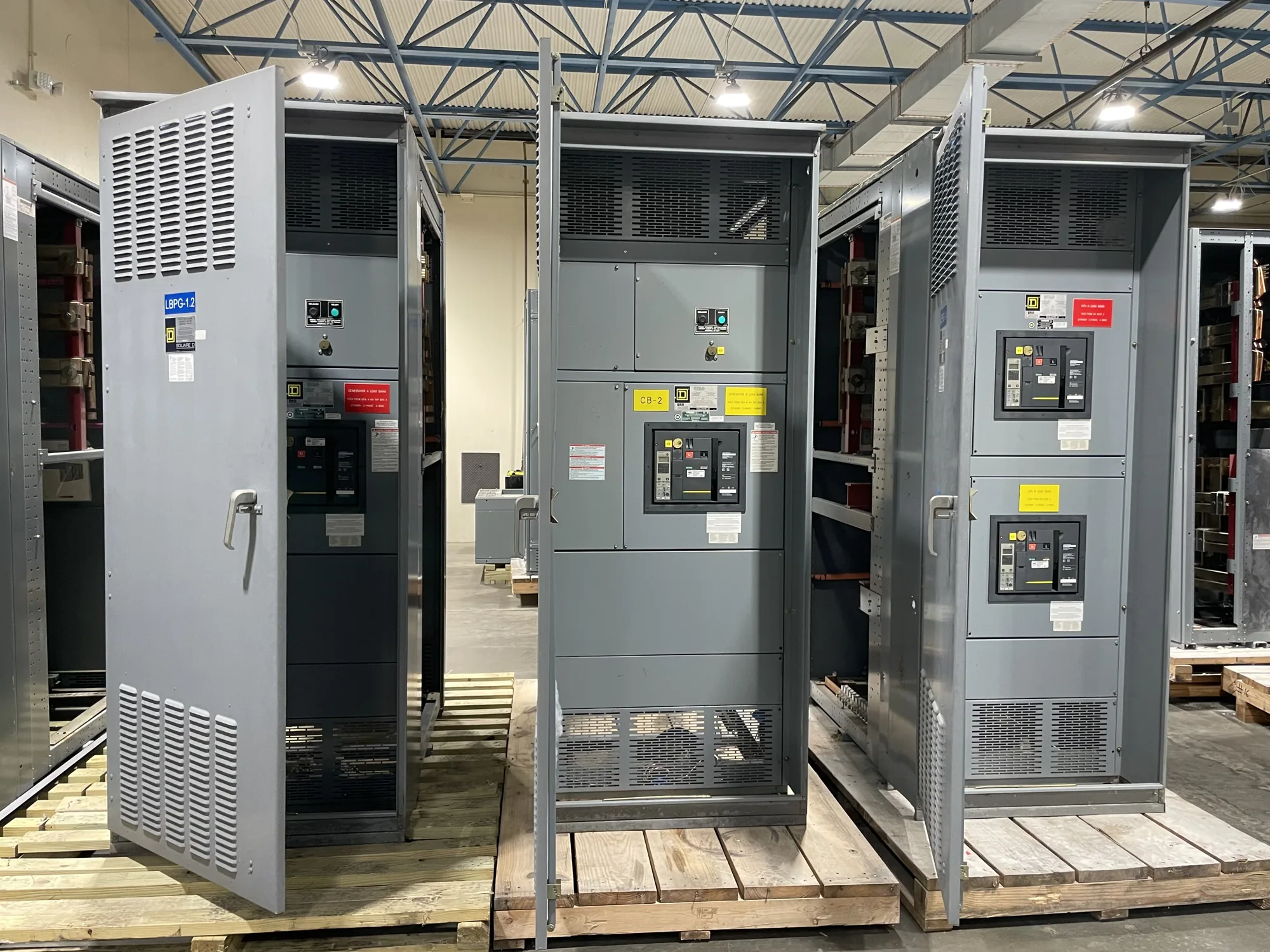
Define the project and equipment scope
A custom switchgear quote is a request to engineer and manufacture new equipment around a stated project requirement—not simply to price a generic lineup. Begin by identifying the facility or application, the equipment’s role in the distribution system, and the scope you expect the manufacturer to supply. State whether the request concerns switchgear, a switchboard, or another assembly, since product type affects design, applicable requirements, and how the quote should be evaluated.
Describe the project stage and what is known versus still under review. Identify the intended installation environment, anticipated quantity, desired configuration, and any connected equipment that defines the assembly’s boundaries. If the project includes separate work by an electrical contractor, engineer, or other supplier, say where those interfaces fall. A precise scope helps prevent a price from being based on assumed components, excluded engineering, or an incomplete understanding of the installation.
Provide electrical data and protection requirements
Include the current one-line diagram, or a clearly marked preliminary version if the design is not final. Show incoming and outgoing sources, bus arrangement, feeder destinations, tie breakers, and connections to transformers or generators when applicable. Supply the system voltage class and the electrical ratings required by the project documents. Do not rely on a broad description such as “standard service”; the responsible project engineer should identify and confirm the ratings and protection needs for the actual system.
Provide available fault-current information and its source, along with the project’s specified protection devices, trip functions, metering, and coordination expectations. Identify whether the manufacturer is expected to select or coordinate any components, or whether those decisions are established by the engineer. Clarify any monitoring, communication, or interlocking requirements, including the intended interface with external controls. These details influence component selection and wiring, and they should be treated as design inputs—not inferred from a product name or a prior project.
Resolve layout, access, and site interfaces
Attach dimensioned equipment-room plans, elevations, and access information where available. Note aisle clearances, door and wall constraints, ceiling height, cable entry directions, conduit locations, and the intended route for moving the assembly into place. Identify whether the lineup must divide into shipping sections or align with existing equipment. Physical constraints can affect enclosure arrangement, section dimensions, internal separation, and connection details, so early disclosure is more useful than requesting a layout change after design review.
Describe termination needs, including cable or bus connections, entry direction, and any known conductor or lug requirements. State environmental conditions and enclosure requirements specified for the installation, while leaving project-specific suitability for confirmation against the actual design. Clarify who provides foundations, external conductors, field wiring, and equipment connections. Those boundaries help the manufacturer prepare a quote that distinguishes supplied assembly features from site work and avoids treating an unverified interface as included.
Specify controls, documentation, and review stages
List control and auxiliary circuits, indicating what devices are required and what signals must enter or leave the assembly. Provide available control schematics, sequence descriptions, or interface points, and flag items awaiting approval. Name the documents needed for review, such as arrangement drawings, elementary diagrams, wiring information, or bills of material, as appropriate to the scope. Confirm which submittals are expected and who will review them; do not assume a particular document package without stating it.
Set out the approval sequence and revision process. Identify the person or organization authorized to return consolidated comments, how changes will be marked, and whether revisions to the one-line or specification are still anticipated. Ask how design changes after approval could affect scope, price, or schedule, and require the quote to state its assumptions and exclusions. Clear revision control protects both parties from pricing one design while engineering proceeds from another.
Balance customization with scope and schedule
Customization can address project-specific arrangement, component selection, controls, and interfaces, but each requested feature needs a defined purpose and basis. A compact layout may conflict with access or cable-bending needs; added monitoring may require more control wiring and coordination; and a late change to protection or connections may affect multiple drawings. Ask the manufacturer to identify assumptions and unresolved inputs so the team can compare alternatives on a consistent technical scope.
Provide a target need date and relevant project milestones, such as drawing review, installation, or energization planning, without treating a requested date as a confirmed delivery commitment. Availability and actual lead times depend on the order and must be confirmed. Ask which schedule assumptions depend on complete data, approval timing, component availability, or design changes. Also identify requested factory documentation or testing so applicability and scope can be reviewed for the specific assembly rather than presumed.
Build a complete request package
Before submitting, assemble the latest one-line and specifications; voltage class and required ratings; fault and protection data; load or feeder information; dimensional drawings; cable and bus interfaces; control requirements; environmental details; and requested documents. Mark each item with its revision and date. Include a concise list of open questions and identify which requirements are mandatory versus preferred. This makes gaps visible and gives the manufacturer a sound basis to request clarifications before developing a quote.
South Carolina Switchgear Builders manufactures new switchgear and switchboards to specification, with US-built equipment, all-American components, and nationwide shipping. State the equipment type and configuration you need, then ask the manufacturer to confirm whether the requested design is within its offering. Any ratings, listing, standards, testing, delivery timing, and project-specific configuration must be verified against the actual specification and supplied equipment. A well-defined request creates a practical starting point for technical review, a scoped quotation, and coordinated next steps.