Define the replacement scope before comparing suppliers
Replacing installed switchgear starts with a clear division of responsibility. A manufacturer can design and supply a new assembly to an approved project specification; that supply scope is not the same as removing existing gear, modifying the room, installing conductors or completing the cutover. Identify the equipment being replaced, the new assembly required and the parties responsible for each field activity before seeking a proposal.
Also establish whether the project replaces one lineup, a section, or associated switchboards and distribution equipment. The answer affects electrical boundaries, physical arrangement, transition points and procurement documents. Record what must remain in service, what can be isolated, and whether temporary arrangements are being considered by the owner’s engineer and contractor. Keep those construction decisions distinct from the manufacturer’s equipment scope.
Document the installation and its interfaces
Existing drawings are a useful starting point, but they may not capture field changes or current room conditions. Gather the latest one-line diagram, elevations, wiring and control information, equipment nameplates, and available records for the existing assembly. Arrange a site survey by the project team when dimensions or access routes are uncertain. Confirm doorway and corridor constraints, floor conditions, working clearances, cable-entry locations and available space for the proposed lineup.
Electrical interfaces need comparable care. Provide the project engineer’s specified voltage class, system arrangement, bus and feeder requirements, incoming and outgoing conductor details, and protective-device functions. Share available fault-current information and coordination requirements for review by the responsible engineer. Do not assume an old breaker designation, enclosure footprint or connection pattern establishes suitability for new equipment; compatibility and ratings depend on the complete design and must be confirmed for the proposed assembly.
Resolve protection and operational requirements
Replacement is an opportunity to check whether the new equipment matches the facility’s present operating needs, but it is not a reason to guess at protection settings or interrupting capability. The owner and responsible electrical engineer should identify required functions, coordination objectives, metering, controls, interlocks and any connection to monitoring systems. Supply the relevant drawings and specifications so those requirements can be evaluated as a coordinated system rather than as isolated component selections.
Ask which design assumptions need approval before fabrication, including dimensions, cable approach, device arrangement, control power and accessory details. If the project involves a low-voltage switchboard, determine whether UL 891 applies to the intended assembly and verify listing applicability for that specific design. Do not transfer switchboard requirements to medium-voltage switchgear; equipment class, ratings, listing and standards must be established from the actual specification.
Coordinate outages, construction and delivery
An outage plan shapes the procurement schedule even though equipment supply does not itself perform the changeover. The owner and contractor should identify permissible outage windows, temporary operating needs, demolition sequence and the point at which existing conductors can be disconnected. They should also plan who will receive, stage, move and install the new assembly, and what inspections or project approvals must occur before energization.
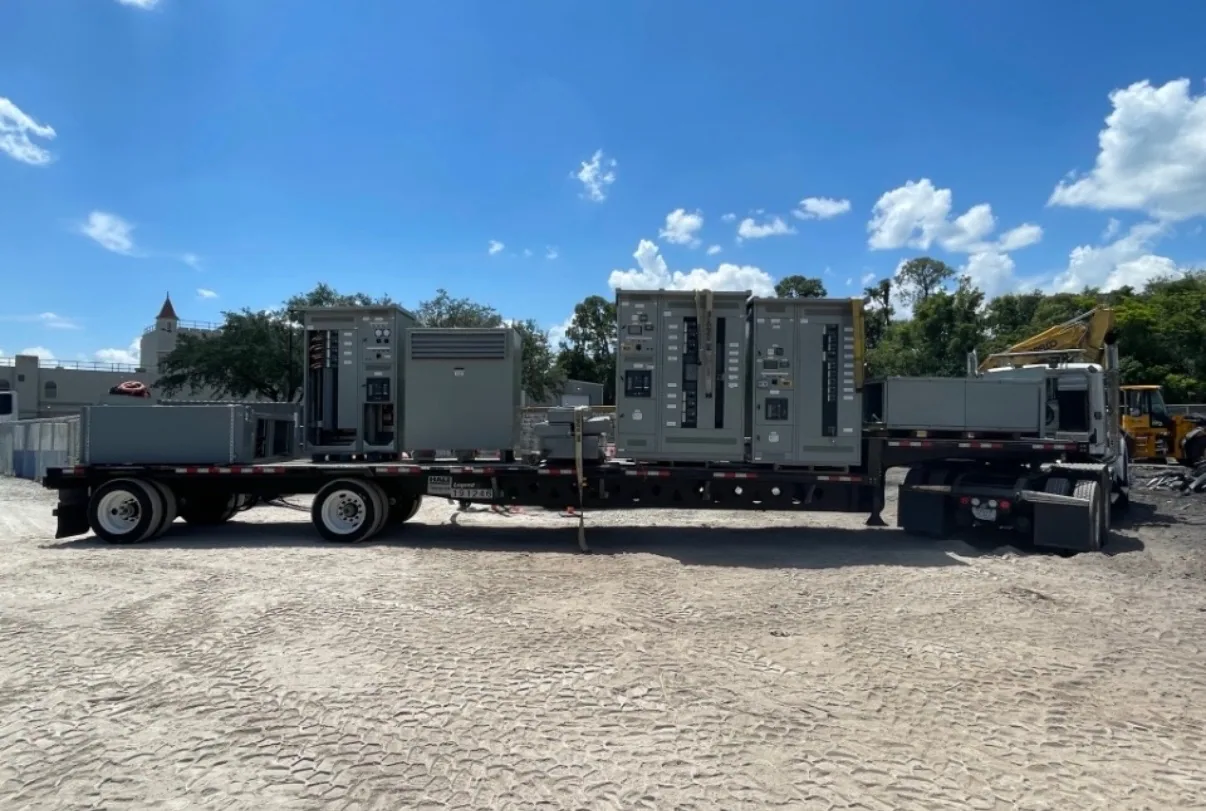
Discuss delivery constraints early: receiving hours, unloading equipment, storage conditions, access for handling and any phased shipment requirements. Availability and lead time depend on the confirmed configuration and order, so request current timing for the specific scope rather than relying on a general estimate. Delivery dates, testing, ratings and other project-dependent details must be confirmed against the final specification and supplied equipment.
Understand trade-offs and scope boundaries
A close dimensional match may simplify planning, but it should not override electrical requirements or safe access. Conversely, a redesigned lineup may better suit the project’s documented needs while requiring more room changes, conductor work or coordination. Compare alternatives against verified site measurements, system requirements, outage limits and construction implications. Ask the engineer and contractor to resolve conflicts rather than treating an assumed fit as an approved design.
South Carolina Switchgear Builders supplies new equipment, including custom configurations to specification, and ships nationwide. The manufacturer’s equipment proposal should state what is included and identify information or approvals still needed. Removal of existing equipment, field installation, wiring, testing at the site and energization belong to the project’s qualified contractors and personnel under applicable safety procedures; confirm those responsibilities directly with the parties performing the work.
Prepare a complete request for quotation
For a useful quotation, provide the one-line diagram, equipment schedule, applicable project specification, site dimensions and survey notes, interface details, and known load and fault information. Include required protective functions, controls, accessories, enclosure conditions, applicable standards and any project-specific documentation. Mark unverified information clearly, state the desired delivery window, and identify who can answer technical questions and approve drawings.
Before ordering, review the proposed scope, drawings, ratings, device and bus arrangement, connections, dimensions, exclusions and delivery assumptions with the project team. Record open items and assign each to the owner, engineer, contractor or supplier. This disciplined handoff helps the new assembly fit the intended electrical design and construction plan, while keeping procurement separate from field work. With the site facts and responsibilities established, the team can evaluate a replacement proposal on a clear, project-specific basis.