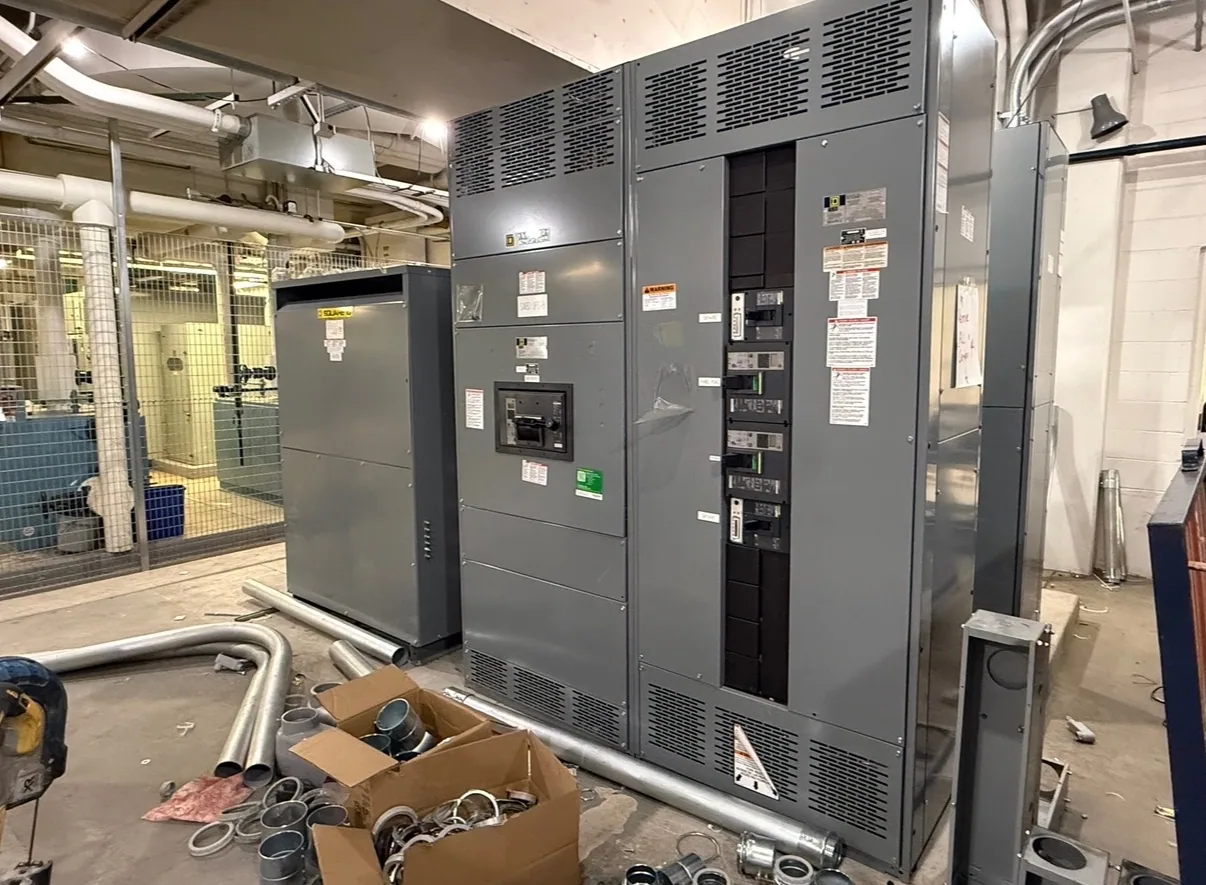
Start with the project scope — Switchgear Distributor vs Manufacturer: Purchasing New Equipment
When purchasing new switchgear, a distributor and a manufacturer can provide different routes to an order. A distributor may coordinate equipment from one or more suppliers and can be a commercial point of contact. A manufacturer builds or supplies its own equipment and can address configuration questions within its product scope. The right route depends on the specified equipment, project interfaces, procurement requirements, and who will own each decision.
First identify what the project actually needs. Establish whether the request is for low-voltage equipment, such as a 480 V class assembly, or medium-voltage equipment, such as 5 kV or 15 kV class switchgear. Define the intended application, incoming and outgoing connections, protective devices, metering, enclosure, and any required accessories. These are project-specific design inputs, not assumptions to leave for a sales channel to resolve without engineering review.
What each purchasing path may cover
With a distributor, ask whether the proposed scope is limited to equipment procurement or includes coordination among manufacturers, submittal handling, delivery planning, or other agreed services. Clarify which organization designs and builds the assembly, who answers technical questions, and who is authorized to approve changes. Distributor capabilities and supplier relationships vary, so verify the actual arrangement rather than assuming that every distributor offers the same support.
In a direct manufacturer purchase, communication about the manufacturer’s equipment can be more direct, but the buyer still needs to define responsibilities carefully. Confirm which components and services are included, whether the manufacturer reviews project information, and what remains with the consulting engineer, electrical contractor, or other project participants. South Carolina Switchgear Builders manufactures and supplies new switchgear and switchboards, with custom-to-specification options; the order documents must establish the equipment and services for the particular project.
Evaluate technical support and accountability
Ask who will be your named commercial contact and who will respond to technical questions. Determine how questions are routed when an issue involves the equipment design, a project drawing, or an interface with another supplier’s work. A single point of contact may simplify coordination, but it does not automatically make that party responsible for every design decision or connected system. Put review, approval, and escalation roles in writing.
Compare the proposed documentation package before placing an order. Depending on the specification, that may include equipment descriptions, drawings for review, component information, operating materials, or other project submittals. Ask what is included, when documents are expected, how comments are incorporated, and who must approve them. Confirm that the final approved configuration matches the purchase documents; a quote or preliminary drawing should not be treated as approval of unconfirmed design details.
Compare price, warranty, and delivery terms
Compare offers on the same technical and commercial basis. Check equipment boundaries, included options, exclusions, freight terms, taxes, payment milestones, and any separately priced services. A lower initial figure may reflect a different scope or assumptions. Request a clear explanation of deviations, substitutions, and items that remain unresolved, then have the responsible project parties evaluate whether each difference is acceptable.
Read warranty terms in the actual proposal and order documents. Identify the warranting party, coverage period, start point, remedy, and any conditions or exclusions; do not infer these terms from a seller’s role or a product description. Likewise, confirm availability and delivery dates for the specific configuration in writing. US-built equipment, all-American components, short lead times, and nationwide shipping may be available, but actual availability and lead time depend on the order and require confirmation.
Confirm ratings, standards, and boundaries
Request confirmation that the proposed equipment addresses the project specification, including applicable ratings, configuration, and environmental requirements. These details must be checked against the actual design and supplied equipment. If a low-voltage switchboard is specified with UL 891 requirements, ask whether the particular assembly is eligible and listed as required. Do not apply that standard to medium-voltage switchgear or assume every switchboard assembly has the same listing status.
Keep purchasing support distinct from engineering approval and field work. The buyer should identify who is responsible for system studies, coordination, installation, acceptance activities, and ongoing maintenance. Those responsibilities depend on the contract and project team. Installation, testing, and maintenance should be performed by qualified personnel following applicable safety procedures; no purchasing channel should be treated as a substitute for those responsibilities.
Prepare a comparable request and close the order
Send each prospective supplier the same revision-controlled information: equipment class and application, one-line diagram, available fault and system data, device and metering requirements, enclosure conditions, connection details, project schedule, and required submittals. Include known constraints and clearly mark items awaiting engineering confirmation. This gives the manufacturer or distributor a better basis to identify exceptions and helps prevent proposals from appearing comparable when they are not.
Before commitment, confirm the seller of record, equipment manufacturer, full scope, price basis, warranty, document review process, delivery terms, and the person authorized to approve changes. Ask how revised drawings, changed requirements, and schedule impacts will be handled. A distributor can be the purchasing route; a manufacturer can be the source of the equipment. The sound choice is the path that clearly assigns these responsibilities and supports a verified specification from quotation through delivery.