Start with the existing installation and the project boundary
Replacing switchgear begins with understanding what the existing equipment serves and what the project will change. Have qualified project personnel document the lineup, connected distribution, available drawings, nameplate information, and known operating constraints. Record visible condition concerns without treating a visual survey as proof of internal condition or as a substitute for engineering review.
Define whether the scope covers the complete lineup, selected sections, or a broader distribution change. Note interfaces with transformers, feeders, downstream panels, protective devices, control circuits, grounding, and building systems. The responsible engineer should determine which existing conditions can be retained and which require redesign. A clear boundary helps prevent mismatches between new equipment and the surrounding installation.
Plan surveys, access, and removal constraints
Before finalizing dimensions, confirm the room layout and the actual route from receiving point to installation location. Document doorways, corridors, elevators, floor openings, overhead obstructions, turning space, and any limits on handling or temporary staging. Compare these conditions with the equipment arrangement under consideration; shipping sections and field assembly options depend on the specified design and must be confirmed with the manufacturer.
Also identify demolition interfaces: what must be disconnected, removed, protected, or retained, and who has responsibility for each task. Existing drawings may be incomplete or reflect earlier modifications, so the project team should verify relevant site conditions through appropriate procedures. Keep equipment access, working clearances, and installation requirements within the responsible designer’s review rather than assuming the old layout automatically fits a new lineup.
Set the electrical basis before requesting a design
Give the engineer and manufacturer the system information that governs the replacement: voltage class, phase and frequency where specified, source arrangement, grounding approach, feeder details, load requirements, and the protection or metering functions needed. Identify whether the project calls for low-voltage switchgear, a switchboard, or medium-voltage equipment. The terminology matters because construction, application, and applicable standards differ; confirm the intended product category instead of relying on a legacy label.
Short-circuit requirements and protective-device coordination should be established by the responsible engineering team. Provide available fault-current information, study assumptions, and device requirements when known, and ask which ratings or design details remain to be confirmed. Do not infer that a new assembly can simply copy a nameplate value from existing equipment. Ratings, configuration, listing applicability, and standards must be checked against the specific system and proposed assembly.
Choose a cutover approach around operating needs
Outage planning is a project decision, not just a delivery detail. Identify loads that cannot be interrupted, acceptable outage windows, temporary-power needs, sequence constraints, and dependencies on other construction work. The owner, engineer, electrical contractor, and operations team should agree who develops the switching and cutover plan, who authorizes it, and what approvals or testing are required before returning equipment to service.
Compare a single planned outage with staged work only after the electrical design and site conditions are understood. Staging may affect the lineup arrangement, temporary connections, access, and the duration or complexity of field work; it is not automatically safer or less disruptive. Installation, testing, and maintenance belong to qualified personnel following applicable safety procedures. The equipment manufacturer can use the defined requirements to develop a product proposal, but should not be assumed to direct site work.
Coordinate specification, manufacturing, and delivery
A useful request package includes current one-line diagrams, equipment schedules, available elevations or room plans, the written specification, and a list of deviations or open questions. Add required functions, enclosure and environmental conditions, cable entry and termination information, control needs, and any project documentation requirements. Mark uncertain data clearly so the responsible engineer can resolve it rather than allowing an assumption to become an unintended design requirement.
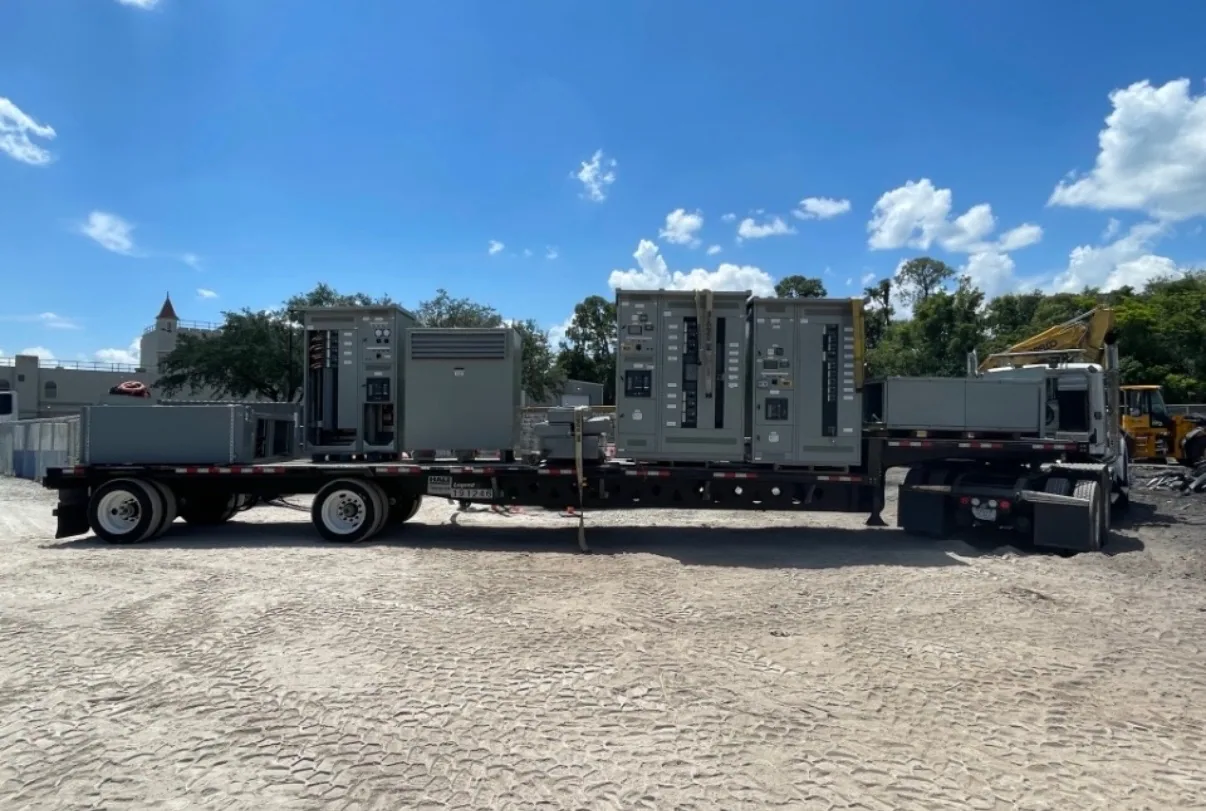
South Carolina Switchgear Builders manufactures new equipment to specification, with US-built equipment and all-American components. Availability and lead times depend on the order and must be confirmed for the actual configuration. Coordinate the required-on-site date with engineering approvals, submittal review, construction readiness, receiving capacity, and the planned outage. Delivery timing is project-specific; do not schedule cutover around an unconfirmed date.
Assign responsibilities and manage decisions
The owner should identify operating priorities, procurement authority, site constraints, and approval milestones. The engineer establishes and validates the electrical design basis and resolves technical requirements. The contractor assesses installation sequencing, demolition interfaces, access, and site readiness. The manufacturer needs an agreed specification and timely answers to design questions. The carrier and receiving team need confirmed shipping, unloading, and handling arrangements appropriate to the approved shipment.
Keep a decision log for unresolved ratings, interfaces, drawing changes, submittal comments, and schedule dependencies. For each item, name the party responsible for answering it and the date it must be resolved to avoid delaying the next project decision. Confirm in writing any changes that affect configuration, approvals, shipment, or the cutover plan. This simple discipline helps distinguish a firm requirement from an assumption still awaiting review.
Prepare a replacement-project checklist
Before requesting a proposal, assemble the equipment scope, verified site dimensions and access route, electrical design information, required functions, available drawings, outage constraints, target delivery window, and project contacts. Include known demolition boundaries and identify which interfaces still require field verification. Ask the engineer to flag missing system data and the contractor to identify practical installation constraints before the proposed arrangement is treated as final.
Then request a configuration review and quote based on the documented scope, with questions about submittals, design-dependent ratings, applicable listing, shipping sections, and order-specific availability addressed explicitly. Compare proposals against the approved requirements rather than title or price alone. Once the design and responsibilities are clear, the project team can align procurement, construction readiness, and cutover planning around the new equipment.