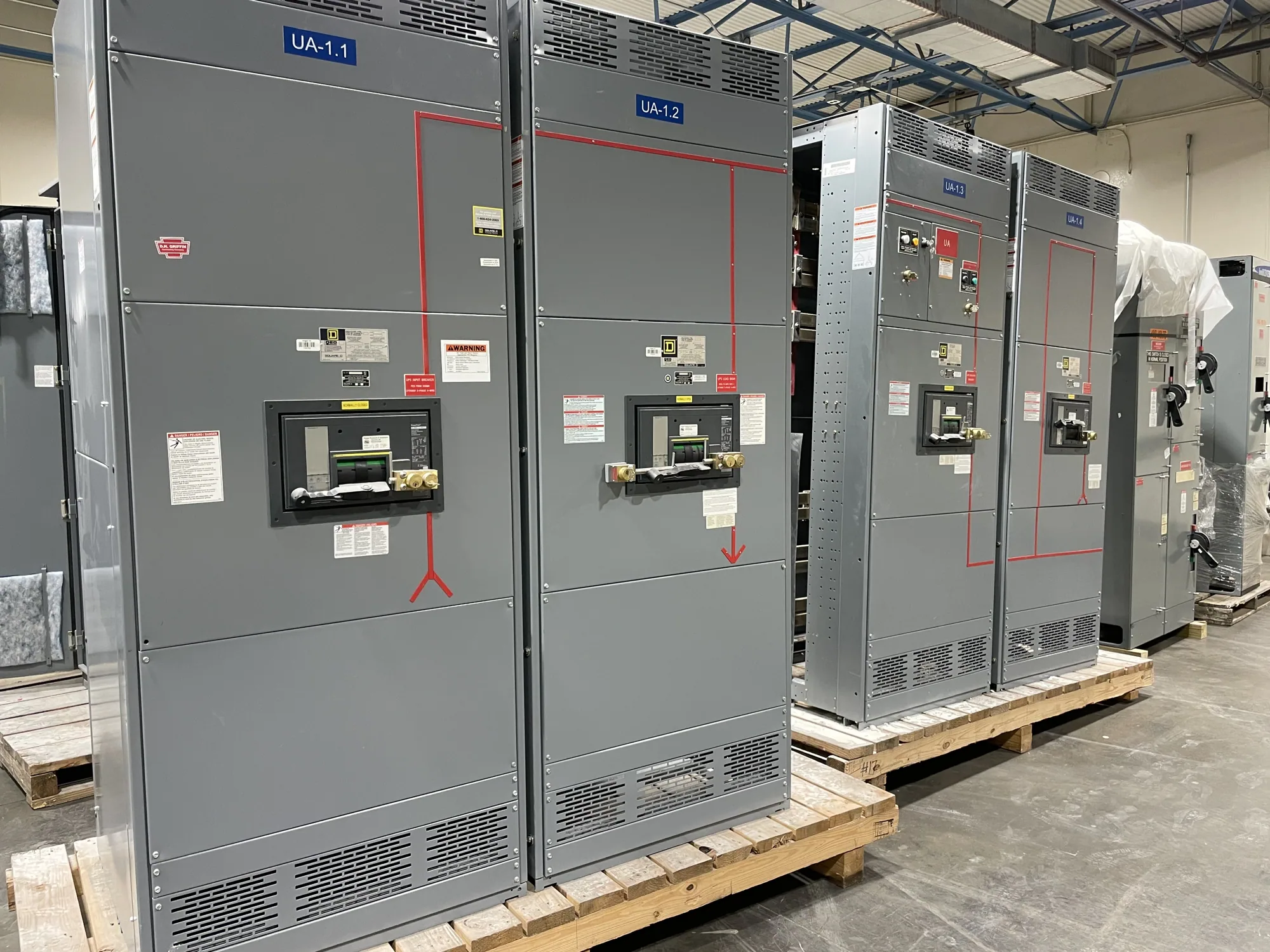
Start with the installation environment
Indoor switchgear is designed as an assembly for installation within a building or another suitable indoor space. Outdoor switchgear is designed for an outdoor installation, with an enclosure and configuration specified for the project’s exposure and operating conditions. These labels describe intended installation, not a simple preference in appearance. The equipment must be selected and verified for the actual environment and electrical system.
Neither category is automatically better. A building may offer controlled access and shelter, while a suitable outdoor arrangement may avoid dedicating interior floor area. Those potential advantages depend on the site, design and operating plan. Compare complete, specified equipment and installation requirements rather than assuming that an indoor assembly can be moved outside or that an outdoor assembly will suit every exposed location.
Enclosure and site conditions
For an indoor installation, assess the room or dedicated space available for the proposed assembly. The project team should confirm dimensions, equipment access, working clearances, cable entry routes, ventilation needs and any environmental conditions that could affect the design. Consider how equipment will be moved into position and whether doors, corridors or structural openings constrain delivery. Room layout and future access can matter as much as the equipment footprint.
For an outdoor installation, identify the actual exposure rather than treating all outdoor locations as alike. Provide the manufacturer and responsible engineer with information about the proposed position, surrounding structures, access route, site conditions and any known environmental concerns. The specified enclosure and construction must be reviewed for the intended location. Do not infer suitability from the word “outdoor”; confirm the required enclosure details and options against the project specification.
Access, operation and maintenance
Plan how qualified personnel will approach, operate, inspect and maintain the assembly under the project’s safety procedures. Indoor equipment may be reached through a controlled building area, but room access, clear space and coordination with other building systems still require review. Outdoor equipment may require a planned access route and appropriate space around its enclosure. In either case, the project team should confirm operating access and maintenance provisions for the specific design.
Also consider how the location affects routine work and coordination. Ask who is responsible for site preparation, placement, connections, commissioning activities and future maintenance. Electrical installation, testing and maintenance should be carried out only by qualified personnel following applicable safety procedures; the selection page is not a substitute for project-specific work planning. Confirm that the selected arrangement can be integrated into the intended site without relying on unverified assumptions about access or service conditions.
Electrical requirements remain central
Installation location does not determine the electrical design. Identify the system voltage class, distribution function, incoming and outgoing connections, required configuration and other project-defined electrical characteristics. State whether the application calls for low-voltage switchgear or a switchboard, or for medium-voltage switchgear, as applicable to the project. Do not treat “indoor” or “outdoor” as a voltage class, rating or assurance of compatibility.
Ratings, protective devices, construction details, standards, testing and any listing must be checked against the actual equipment specification. For eligible low-voltage switchboards, UL 891 may apply, but applicability and assembly listing must be verified for the specific design. That standard should not be applied to medium-voltage switchgear or assumed to cover all switchgear. Ask the responsible project engineer and manufacturer to resolve applicable requirements before the equipment is finalized.
Compare trade-offs without a shortcut
A useful comparison begins with project constraints: Is suitable indoor space available? Would an outdoor installation better fit the site plan? What enclosure and environmental requirements apply? How will equipment reach its final position, and how will qualified personnel access it later? Which installation, coordination and specification items need confirmation? The answers help narrow the choice, but they do not replace a design review of the complete assembly.
For example, a project with limited building space might consider an outdoor arrangement, while a site with a suitable electrical room might evaluate indoor equipment. Neither scenario establishes the correct selection by itself. The actual decision depends on electrical requirements, site conditions, the specific enclosure design, access planning and project criteria. Compare documented, project-specific configurations; do not assume that an indoor product can be used outdoors by adding a cover or that every outdoor design meets a particular exposure requirement.
Prepare a useful equipment request
When requesting a new equipment configuration, provide the intended indoor or outdoor location and describe relevant site conditions. Include available layout drawings, space and access constraints, cable entry preferences, system voltage class, required equipment function and project-defined ratings or standards. Identify the project schedule and any coordination milestones, but request confirmation rather than assuming availability or a delivery date. A complete request gives the manufacturer and engineering team a clearer basis for reviewing fit and specification.
Before purchase, confirm the final configuration, dimensions, enclosure details, applicable ratings, listing or testing requirements, connection arrangement and responsibilities for site coordination. South Carolina Switchgear Builders manufactures new switchgear and switchboards to specification, with US-built equipment, all-American components and nationwide shipping; configuration and availability depend on the order, and actual lead times must be confirmed. Resolve open engineering questions against the project documents before selecting indoor or outdoor equipment, then coordinate the approved design with the people responsible for installation and operation.