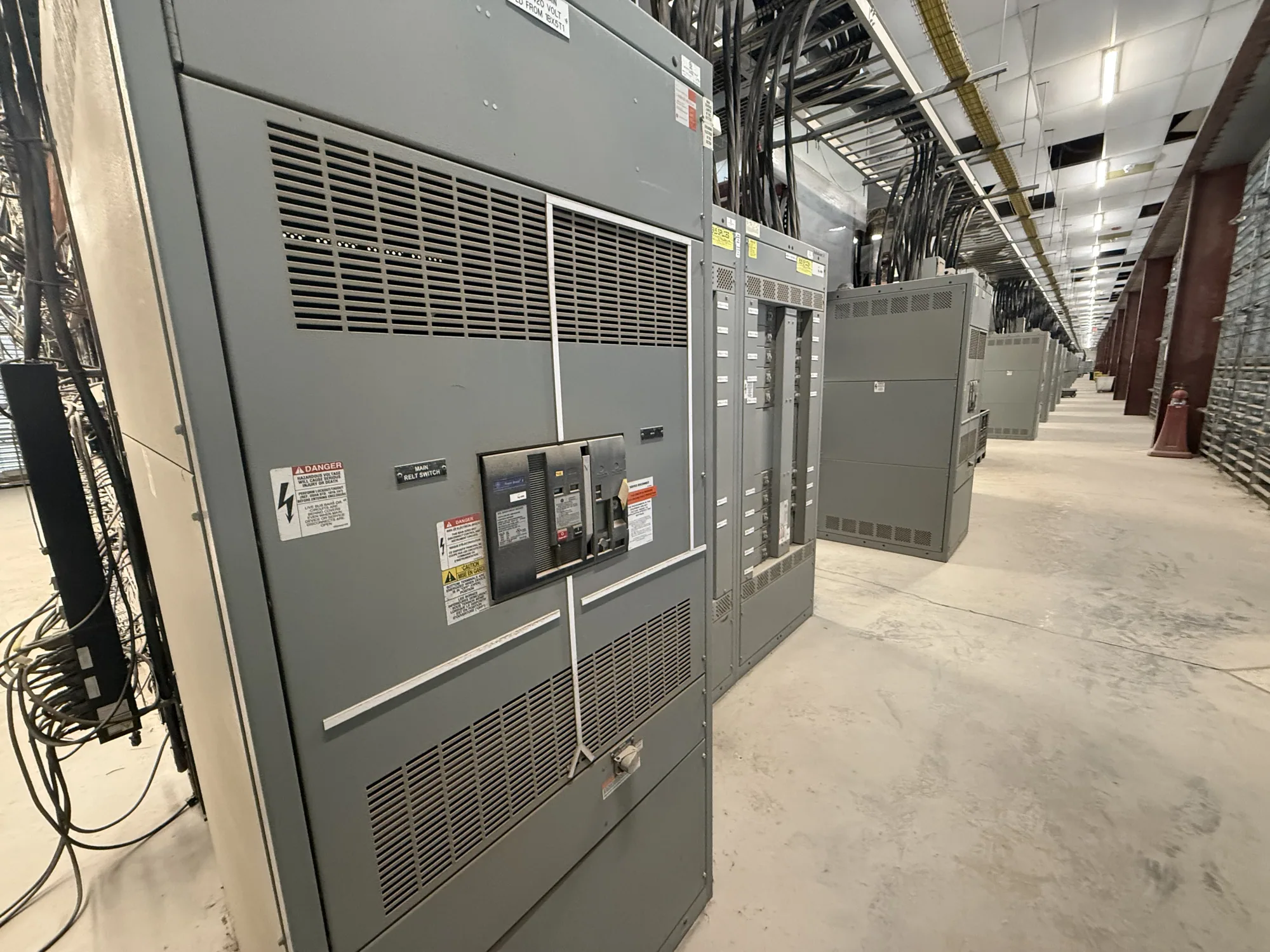
Start with the system voltage, not the equipment label
Low-voltage and medium-voltage switchgear serve different points in an electrical distribution system. The relevant distinction begins with the system’s nominal voltage and the equipment’s specified voltage class: 480 V class equipment is low voltage, while 5 kV and 15 kV class equipment are medium voltage. These examples identify classes, not a universal cutoff or a substitute for the project engineer’s classification.
Switchgear is part of a coordinated system, so selecting a category from a building type or a short description can be misleading. The engineer should establish where the assembly connects, what it must control and protect, and how it coordinates with upstream and downstream equipment. The intended application and electrical studies, where required, inform the specification; the product name alone does not determine suitability.
How the design context differs
Low-voltage switchgear is specified for low-voltage distribution applications, including systems using 480 V class equipment. Depending on the project, the lineup may need to accommodate incoming and feeder devices, metering, control, and connections to downstream distribution. The actual arrangement, interrupting capability, bus requirements, and protective devices must come from project documents and be checked against the system conditions.
Medium-voltage switchgear is designed for medium-voltage system applications, such as systems specified in a 5 kV or 15 kV class. Its insulation and clearances, switching devices, protective relaying, grounding approach, and interfaces are tied to that class and the application. These requirements are not interchangeable with low-voltage design choices. The responsible engineer must define the applicable ratings and protection scheme for the actual installation.
Compare protection and insulation requirements
Voltage class is only one part of equipment selection. Buyers should provide the nominal system voltage, frequency, available fault-current information, grounding method, and the operating duties expected of the assembly. The engineer should confirm required continuous current, interrupting or withstand ratings, protective-device characteristics, and coordination with connected equipment. Those values are project-specific; they should not be inferred from a voltage label or a generic product description.
Insulation and enclosure decisions also depend on the design and installation environment. Share indoor or outdoor placement, ambient conditions, altitude if relevant, space limitations, cable entry and exit preferences, and access or maintenance constraints. Ask the project engineer to establish which construction details and environmental provisions belong in the specification. A manufacturer can configure new equipment to specification, but design-dependent ratings, availability, testing, listing, and standards applicability require confirmation for the proposed assembly.
Use a neutral decision matrix
Rather than ranking one voltage class as generally better, compare the project’s system interface, required protection, physical arrangement, operating responsibilities, and lifecycle needs. A low-voltage solution may fit where the distribution system and loads are designed for that class. Medium-voltage equipment may be appropriate where the system design calls for medium-voltage switching and protection. Neither choice can be established without the electrical design and confirmed equipment requirements.
For example, a project with a specified 480 V class distribution lineup should not switch to a medium-voltage assembly simply because it serves a large facility. Conversely, a medium-voltage service or distribution scheme cannot be treated as a low-voltage application based on downstream loads alone. The engineer must define the point of transformation, equipment boundaries, and system duties. This example illustrates the comparison method, not a recommendation for any particular site.
Clarify the scope of the comparison
Voltage class does not describe every construction distinction. Terms such as metal-clad and metal-enclosed refer to equipment construction and compartmentation, not a replacement for determining the system voltage class. A buyer should identify both dimensions in the specification where relevant, then verify that the proposed configuration matches the design. Likewise, switchboards and switchgear are distinct equipment categories; UL 891 applies to eligible low-voltage switchboards, and applicability and assembly listing must be verified for the specific design.
Do not assume that a standard, listing, test, or rating applies to every assembly within a category. Ask which requirements govern the project and request confirmation that the proposed equipment configuration addresses them. For medium-voltage equipment, do not apply low-voltage switchboard criteria by analogy. Standards and acceptance requirements should be reviewed against the actual specification, equipment type, and project jurisdiction by the responsible parties.
Prepare the information for a manufacturer quote
For a useful quotation, provide the one-line diagram and equipment schedule, nominal voltage class, system frequency, required bus and device ratings, fault-duty information, grounding details, and protection or metering requirements. Include the number and function of sections, connection locations, cable or bus interfaces, enclosure conditions, dimensions, and any specified control or communication needs. Identify the governing project documents and note open questions instead of filling gaps with assumptions.
Also state the project phase, requested submittal information, delivery destination, and coordination milestones. Confirm who will review drawings, approve deviations, integrate protection settings, and coordinate installation and acceptance activities. Availability and lead time depend on the order and must be confirmed; delivery dates, testing, ratings, listing, and standards applicability likewise need project-specific review. South Carolina Switchgear Builders manufactures new equipment in the United States, uses all-American components, and ships nationwide; configurations are custom to specification.
Make the decision through engineering review
Before placing an order, have the responsible electrical engineer reconcile the equipment proposal with the one-line diagram, studies, specifications, and interfaces to adjacent gear. Resolve discrepancies in voltage class, ratings, protective functions, construction, and connection details in writing. Installation, testing, and maintenance should be performed by qualified personnel using applicable safety procedures. A clear specification gives the manufacturer a sound basis to quote and helps the project team evaluate the right equipment for its system.