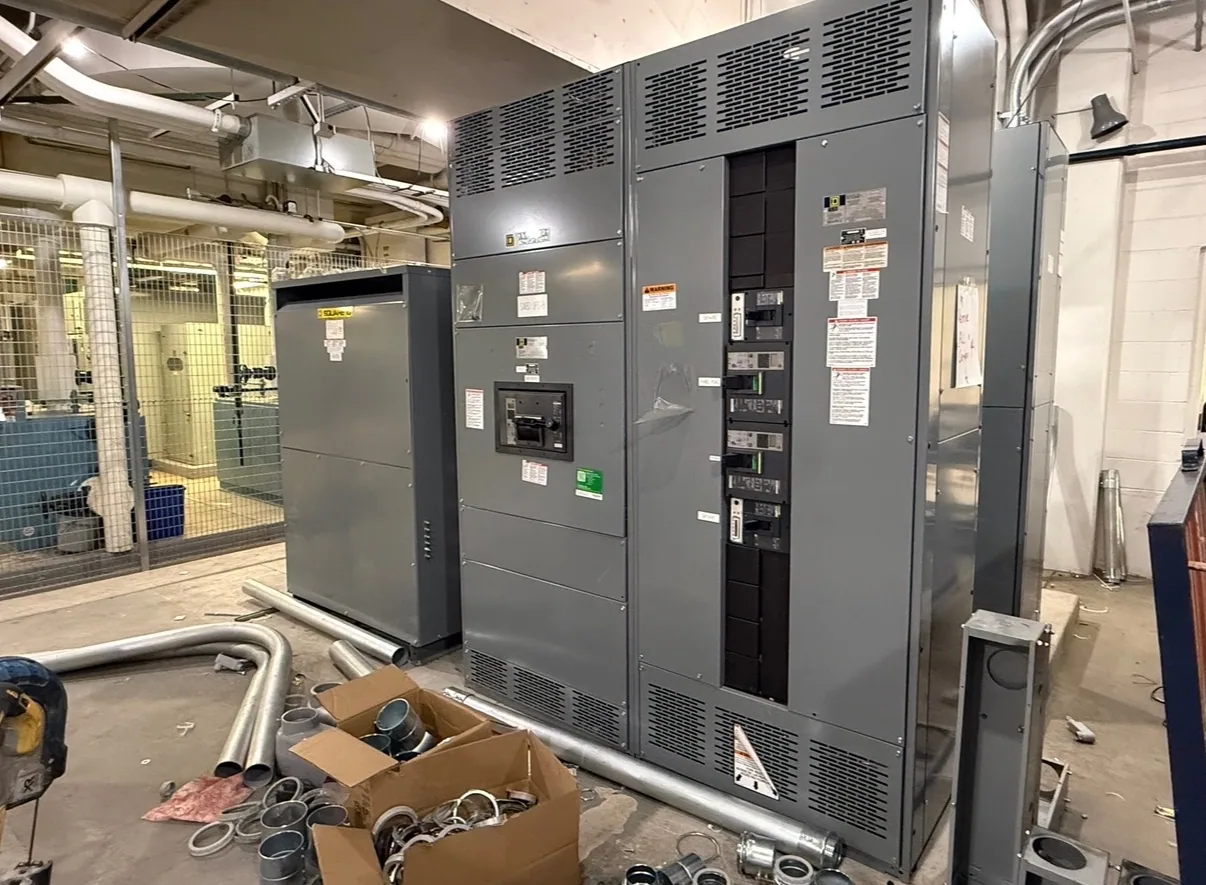
Start with what the equipment must do
Switchgear and motor control centers (MCCs) serve different primary purposes in an electrical system. Switchgear is arranged around power distribution and circuit protection: it can receive power and distribute it through main and feeder circuits, according to the design. An MCC groups motor-related units, such as starters and associated control components, so multiple motor circuits can be organized in a coordinated assembly.
These are functional distinctions, not a simple quality ranking or a rule that one assembly replaces the other. A facility may need distribution equipment, motor-control equipment, or both. The project’s one-line diagram, loads, operating requirements, and protection strategy determine the equipment scope. Confirm the intended function with the responsible electrical engineer before comparing proposals or choosing an assembly name.
Distribution duties and motor-control duties
For low-voltage switchgear, the design conversation often centers on incoming power, bus arrangement, feeder circuits, protective devices, available space, and access for operation and maintenance. The actual configuration depends on the specification. A buyer should identify which sources and loads connect to the assembly, how feeders are organized, and what coordination or metering provisions the project requires the engineer to evaluate.
An MCC is organized around motor circuits and their control needs. The engineer may need to define the motors served, starting and operating requirements, control interfaces, and how each unit is to be arranged. The appropriate devices and configuration depend on motor and system data; do not assume every MCC includes the same components or capabilities. A motor-control assembly does not automatically take the place of the project’s main distribution equipment.
Where the systems meet
In a facility with several motor loads, distribution equipment may feed an MCC, while the MCC provides the grouped motor-control functions. That boundary needs to be explicit: identify the upstream source, the feeder and protective-device responsibilities, and where control wiring or signals connect. The engineer should resolve how equipment interfaces with other distribution assemblies and the facility’s control system before procurement.
There can be overlap in the broader job without making the terms interchangeable. Both assemblies involve electrical power and may include switching or protective functions, but their intended duties, unit layouts, and specified components differ. If a project description calls for “switchgear” but the actual need is a group of motor starters—or vice versa—clarify the scope rather than relying on informal labels. Also distinguish low-voltage switchgear from other product categories when defining the requested equipment.
Compare by requirements, not by label
A useful decision method is to list required functions first. Ask whether the purchase must receive and distribute power among feeders, control multiple motors, or support both roles through separate coordinated assemblies. Then compare proposed configurations against the one-line diagram, load and motor schedules, available fault-current and protection information, physical constraints, and the project’s operating and maintenance expectations.
Consider a facility adding a process line with several motors. The design might call for a distribution feeder supplying an MCC, but that is a scenario to engineer, not a universal prescription. The result depends on the source, system design, motor characteristics, protection coordination, and space. If a single assembly is proposed to cover several functions, request a clear scope description and have the responsible engineer confirm that it meets each requirement.
Trade-offs, space, and coordination
Equipment layout affects more than footprint. Consider room access, cable entry and exit, working clearances as determined by the project, routes for control conductors, and whether future changes are anticipated. An arrangement that makes motor units convenient to organize may not address the project’s main distribution needs; a distribution-focused lineup may not provide the motor-control organization required. Ask for dimensions and connection details tied to the proposed design.
Protection and coordination also require project-specific review. The engineer should establish device functions and settings within the system study and applicable design requirements, rather than infer them from the equipment category. Confirm any requested ratings, testing, standards, or listing against the exact assembly and specification. UL 891 may apply to eligible low-voltage switchboards, but it should not be treated as a general switchgear or MCC designation; verify applicability for each supplied design.
Information to prepare before requesting equipment
For a useful quotation, provide the project location and schedule needs, equipment function, one-line diagram, nominal system voltage and phase, available fault-current information, feeder and motor schedules, and any stated ratings or standards. Include enclosure and environmental requirements, space constraints, cable-entry preferences, control interfaces, metering needs, and requested documentation. Mark unresolved items as open questions instead of assuming a standard configuration will satisfy them.
Identify the scope boundary as well: what equipment is upstream and downstream, which party supplies connected devices or wiring, and what interfaces must be coordinated. Ask the manufacturer to identify assumptions, exclusions, configuration options, and information needed to finalize the design. Custom equipment can be specified to project requirements, but availability and lead time depend on the order and should be confirmed. US-built equipment, all-American components, and nationwide shipping are available propositions to discuss for the specific order, not substitutes for technical review.
Make the decision with the project team
Before placing an order, reconcile the equipment proposal with the latest drawings and schedules. Have the responsible engineer confirm functional scope, feeder and motor requirements, protection approach, ratings, dimensions, interfaces, and any applicable listing or testing requirements against the actual design. Resolve differences between the specification and quotation in writing, and coordinate delivery timing with the project schedule rather than assuming a standard lead time.
The practical distinction is straightforward: switchgear addresses power distribution and protection, while an MCC groups equipment for motor control. The engineering decision is more specific: determine which functions the facility needs, where they belong, and how the assemblies connect. With complete project data and a clearly defined interface, the buyer can request equipment that fits the system instead of choosing by terminology alone.