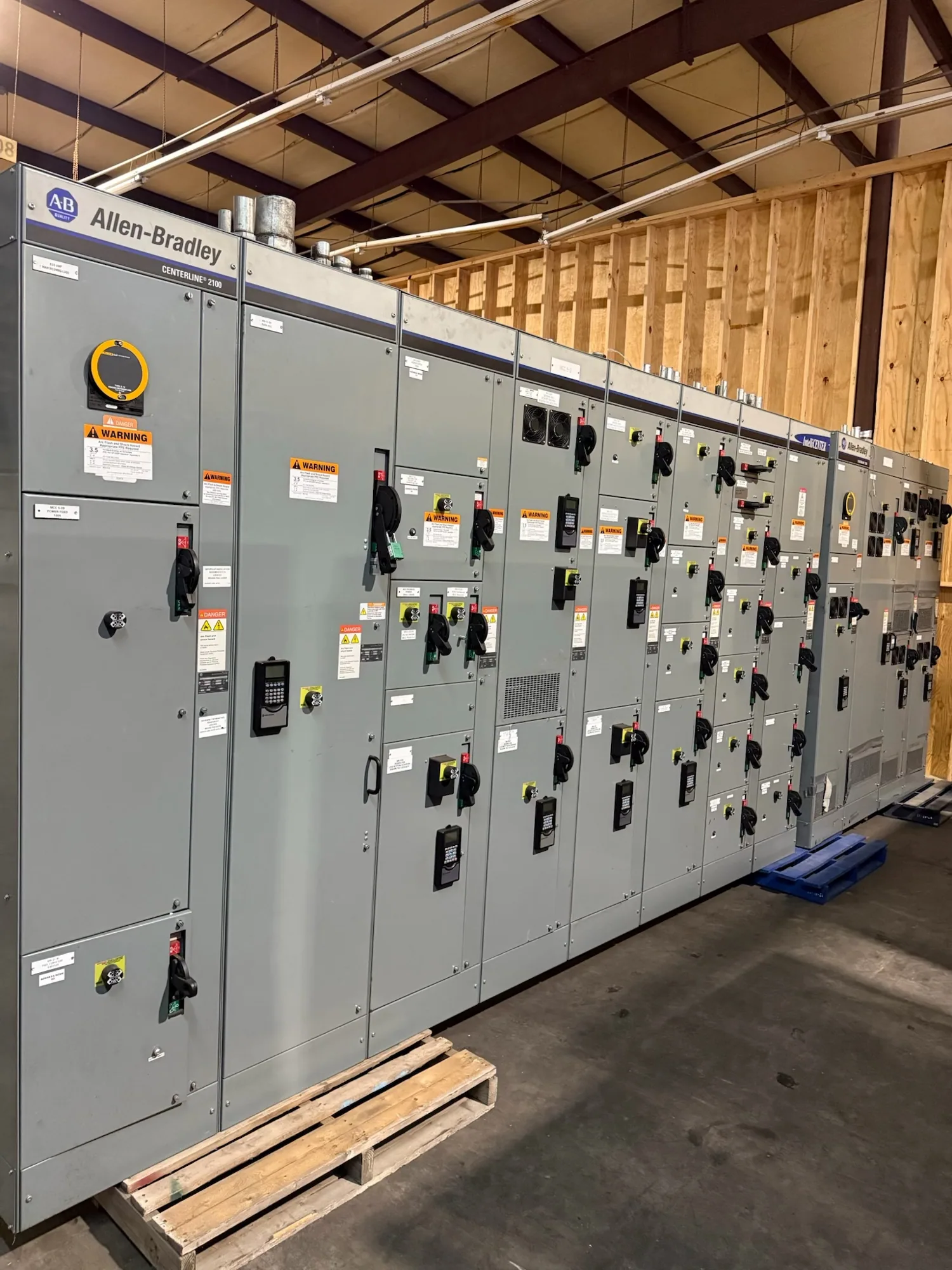
Can the rating be increased after purchase?
Sometimes a design may be modified to support a higher current rating, but an owner should not assume that existing switchgear can be upgraded after purchase. The assembly’s continuous-current rating reflects the coordinated design of its bus, connections, devices, enclosure, and operating conditions. A change to one component does not establish a new rating for the complete assembly.
For equipment already ordered or installed, ask the original manufacturer to review the exact assembly and proposed change. The manufacturer and the project’s responsible electrical engineer must determine whether a revised configuration is technically supportable and what documentation, evaluation, or replacement may be required. Until that review is complete, use the equipment only within its established ratings and project requirements.
Why a larger breaker may not be enough
A breaker’s current rating and a switchgear assembly’s continuous-current rating are related but distinct specifications. Replacing a breaker with one having a higher rating does not automatically increase the switchgear rating. The bus and its joints, incoming and outgoing connections, supports, temperature rise, enclosure arrangement, and other design details may limit the assembly. The exact constraints depend on the specific equipment.
Likewise, a busbar that appears physically substantial is not proof that the complete gear can carry more current. Material, cross-section, spacing, connection design, bracing, and heat dissipation all interact. The surrounding installation and specified ambient conditions may also matter. A responsible review considers the entire current path and the design documentation, rather than relying on appearance or a single component’s nameplate.
Listing, documentation, and design authority
Equipment documentation identifies the ratings and configuration evaluated for the supplied assembly. Field changes can affect whether that documentation remains representative, and listing implications depend on the particular product and modification. Do not assume that a change preserves an assembly listing or that a replacement component is approved for the intended configuration. Ask the manufacturer what changes, if any, it can support and how the resulting equipment would be documented.
For eligible low-voltage switchboards, UL 891 may be relevant, but applicability and assembly listing must be confirmed for the specific design. It does not apply as a general claim to all switchgear, and it should not be applied to medium-voltage equipment. Any ratings, standards, testing, and listing status must be checked against the actual assembly and project specification; they cannot be inferred from a proposed upgrade alone.
Evaluate the actual load and operating conditions
Before pursuing a higher rating, establish why the change is being considered. Is the expected load increasing, has a study identified a continuous-load limitation, or is the concern a future expansion? A qualified engineer should review the load profile, applicable design requirements, protective-device coordination, available capacity, and relevant ambient conditions. The requested current rating should follow from the engineering need, not from an assumption that more capacity is always a simple improvement.
For example, a facility planning to add production equipment may find that its existing switchgear has inadequate capacity. Installing a larger breaker alone may leave the bus or connections as the limiting element, or conflict with the documented assembly configuration. Depending on the review, practical options could include a manufacturer-supported redesign, a separate distribution arrangement, or replacement equipment. The right path depends on the existing design and the project; none is a universal field upgrade.
Compare modification with replacement planning
Ask the manufacturer whether the existing assembly can be evaluated from its model, serial information, drawings, nameplates, and order records. Provide the current configuration, requested rating, load information, site conditions, and the reason for the change. If records are incomplete, explain what is missing rather than treating an uncertain rating as confirmed. The project engineer can determine what additional inspection or engineering information is needed.
If a supported modification is unavailable or does not meet project needs, replacement planning may offer a more predictable way to specify capacity for the intended load. That comparison should account for scope, interfaces, outage planning, physical dimensions, cable or bus connections, and coordination with upstream and downstream equipment. For new switchgear, provide the manufacturer with the application requirements early so the design can be custom to specification; availability and lead times must be confirmed for the order.
Questions to resolve before approving a change
- What is the documented continuous-current rating of the complete assembly, and which nameplate or approved drawing establishes it?
- What specific load or expansion requires a different rating, and what has the project engineer determined?
- Would the proposed change affect busbars, connections, protective devices, enclosure conditions, or other coordinated components?
- Can the manufacturer support the change and provide documentation for the resulting configuration?
- What listing, standards, testing, or acceptance requirements apply to this particular equipment and project?
- Would replacement better address capacity, equipment condition, interfaces, and project schedule?
Do not authorize a rating change based solely on a component substitution, informal calculation, or revised label. Have qualified personnel and the responsible engineer review the proposal through applicable safety and project procedures. A documented manufacturer assessment can clarify whether a modification is feasible; if it is not, a properly specified replacement provides a clear basis for the next design decision.