Why motor starts matter to distribution design
Motor starting influences industrial distribution because a motor may draw substantially different current during acceleration than during steady operation. The magnitude and duration depend on the motor, driven load, starting method, source strength and operating conditions. Those short-duration demands can affect voltage at the motor and elsewhere on the system, protective-device response, and the design review for switchgear, switchboards and motor-control equipment.
Starting is not the same as continuous loading. A continuous-current rating addresses equipment carrying current under its specified conditions; it does not, by itself, establish how the system will perform during a motor start. The project team must consider normal operating load and starting events together, using equipment data and an electrical study appropriate to the facility.
Start with project-specific motor and system data
Useful motor information includes nameplate data, horsepower or other stated output, rated voltage, full-load current, locked-rotor current or starting-current data, starting time, and the driven equipment’s load characteristics. Provide the number of motors, which may start together, how frequently they start, and whether a restart follows an interruption. For proposed equipment, identify the motor-control and protection arrangement if known.
Source and distribution details matter as well. The responsible engineer needs the available source information, transformer and feeder data, conductor lengths and sizes, existing loads, and the locations of sensitive equipment. A new line or process may interact with existing motors and controls. Where data is unknown, identify the gap rather than treating an assumption as a confirmed design condition.
Starting method changes the electrical picture
Across-the-line starting applies the motor directly to the supply. It can produce high initial current and a corresponding voltage dip, while offering a straightforward control approach. Whether that is acceptable depends on the motor and network, the driven load, and the effects on other equipment. The study should examine the actual start and system conditions rather than rely on a general rule.
Reduced-voltage methods, such as soft starters or autotransformer arrangements, change the starting current and available starting torque in different ways. A variable-frequency drive can control acceleration and operating speed, but adds equipment, settings and coordination questions. These options are not interchangeable: torque requirements, acceleration time, process needs, electrical characteristics and protection all influence selection. Confirm the proposed method with the project engineer and equipment suppliers.
Voltage effects, sequencing and protection
During acceleration, voltage drop can occur across the source, transformer, feeder and distribution path. A dip may affect the starting motor’s torque and the operation of other loads, including contactors, controls or production equipment. The amount and consequence are system-specific. An engineer can evaluate the motor-terminal voltage and other relevant points under the proposed starting and operating scenarios.
Starting current also informs protective-device selection and coordination. A device must permit intended acceleration while providing protection appropriate to the equipment and circuit; settings should not be guessed from motor horsepower alone. Starting several motors at once may create a different demand from starting them in sequence. An operating sequence, interlocks, restart logic and expected process changes should therefore be part of the design discussion.
Illustrative tradeoff in a manufacturing line
Consider an automotive manufacturing line adding a large conveyor motor near other production loads. If the conveyor starts while nearby equipment is operating, the project engineer may compare the proposed start method and sequence against voltage conditions and protection requirements. A soft starter might reduce initial current, but the load must still accelerate as required. A drive may offer process control, yet requires review of its application and electrical interfaces.
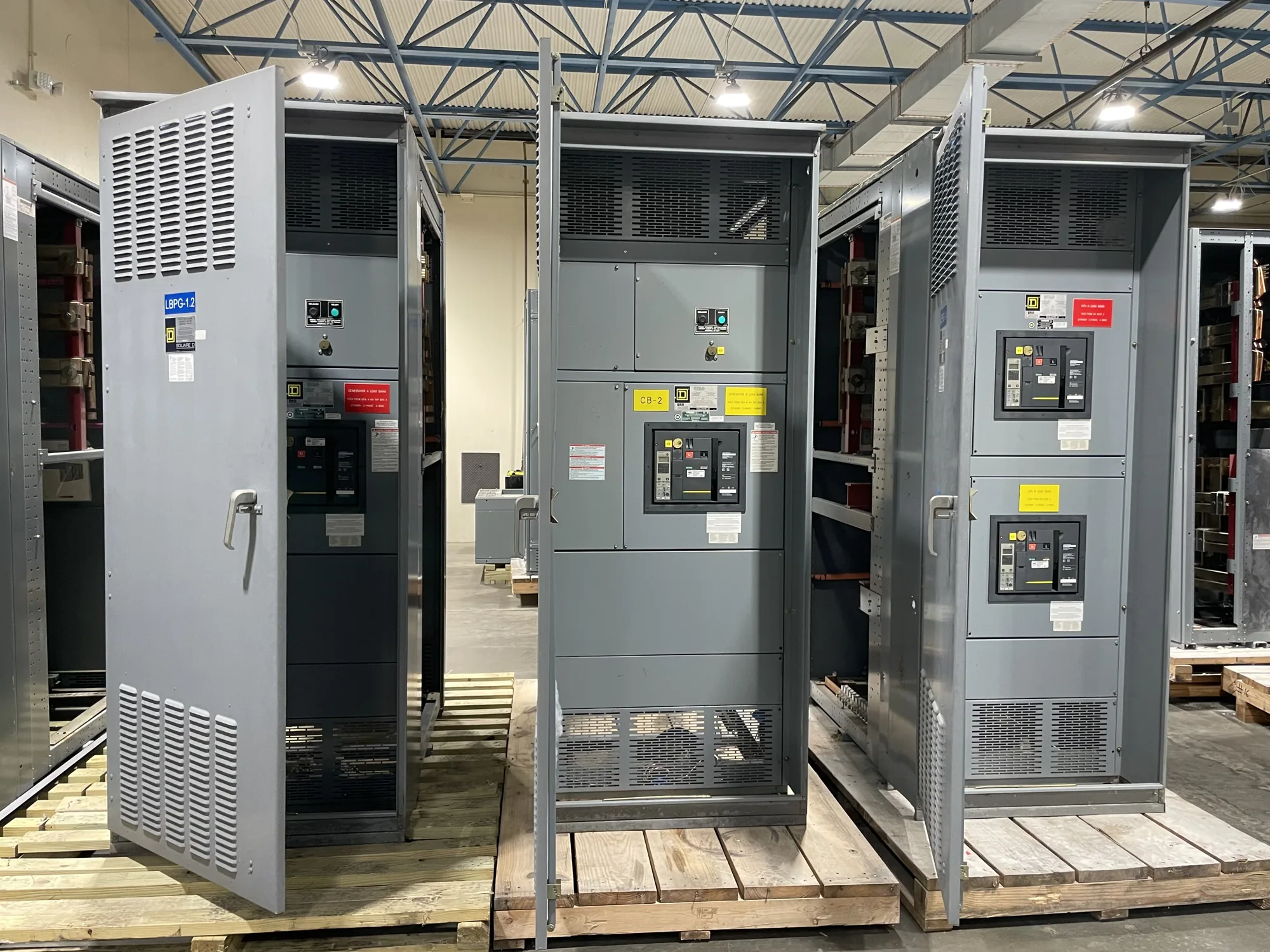
This example does not establish a preferred solution or a particular equipment rating. The engineer must use the actual motor, source and process data, and the manufacturer must review the resulting equipment specification. A motor-control center may be appropriate for grouped motor circuits, while distribution switchgear or a switchboard serves other functions in the system. Their roles and configurations should be defined rather than treated as interchangeable.
What to provide and verify before equipment selection
For a useful review, provide a one-line diagram or clear system description, motor schedule, starting method, load sequence, source and feeder information, environmental and installation conditions, and any known expansion plans. Ask which study assumptions govern simultaneous starts, voltage performance and protective coordination. Identify who supplies control devices, protective settings and field connections, and how interfaces between distribution and motor-control equipment will be documented.
Also confirm the required continuous-current rating independently of starting analysis, along with the applicable voltage class, configuration, ratings and project standards. Ask the equipment manufacturer to evaluate the actual specification; listing, testing and availability are design- and order-dependent and must be confirmed for the assembly. South Carolina Switchgear Builders manufactures new equipment to specification, is US-built with all-American components, and ships nationwide. Availability and lead times depend on the order and should be confirmed.
Make the next design conversation specific
Before requesting equipment, ask the project engineer to confirm the motor-starting study assumptions, acceptable voltage conditions, device coordination and operating sequence. Then give the manufacturer the approved equipment requirements and clarify boundaries with motor-control suppliers and installers. Installation, testing and maintenance should be handled by qualified personnel following applicable safety procedures. With the motor data and system responsibilities clearly defined, the team can evaluate equipment that fits the application without mistaking a continuous rating for a complete starting assessment.