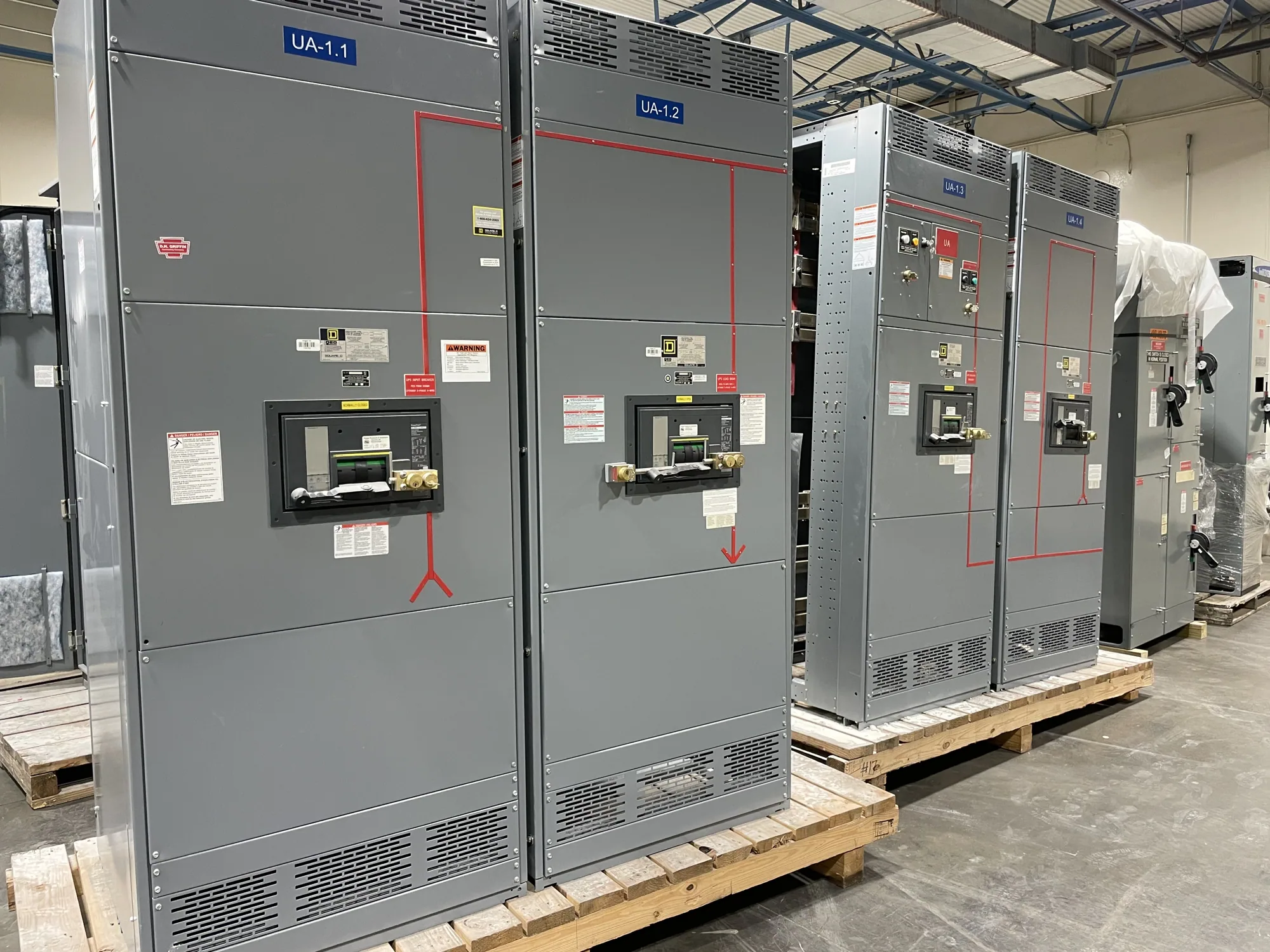
Short answer: related, but not the same
A motor control center (MCC) is not the same equipment as switchgear, even though both can be part of an electrical distribution system. An MCC brings motor-control and related components together in a common assembly. Switchgear is a broader equipment category used for functions such as switching, protection, and control of electrical circuits. The exact configuration and capabilities depend on the specified design.
The terms can be used loosely in conversation, but they are not interchangeable when developing plans, a bill of materials, or a purchase specification. A project may need an MCC, low-voltage switchgear, both, or another arrangement. The one-line diagram, load requirements, operating scheme, and responsible engineer’s design should determine the equipment—not a label used informally.
What an MCC is designed to do
An MCC is organized around motor loads. Its sections typically contain units selected for specified motor-control functions, with the details depending on the application. A unit might be arranged for a motor starter or another designated control method; a variable frequency drive may be part of the design when speed control is required. The project specification must define the intended functions rather than assume a standard unit configuration.
This grouped arrangement can help keep motor-control equipment together for a facility area or process. Buyers should identify the motors and driven loads, required control methods, operating conditions, and any integration needs. The engineer and manufacturer can then review the proposed lineup, unit arrangement, and interfaces against the project documents. Neither the name “MCC” nor the presence of motor starters alone establishes every protection, coordination, or control requirement.
What switchgear is designed to do
Switchgear is selected for the electrical system functions assigned to it, which may include switching and protecting circuits. Low-voltage switchgear is distinct from medium-voltage switchgear, and the project’s voltage class must be stated accurately. For example, 480 V class equipment is low voltage, while 5 kV and 15 kV class equipment are medium voltage. Do not infer voltage or construction from a general equipment name.
Switchgear and an MCC may appear in the same facility but serve different points or purposes in the distribution arrangement. One assembly could feed downstream equipment, while an MCC serves motor circuits, but the actual relationship must come from the approved electrical design. A buyer should not assume that an MCC replaces switchgear, or that switchgear includes the motor-control units required for a particular process.
Standards and assembly details matter
Applicable standards depend on the equipment type and the specific assembly. UL 891 applies to eligible low-voltage switchboards; it should not be treated as a blanket standard for all switchgear or applied to medium-voltage switchgear. Switchboards, switchgear, and MCCs are not synonyms. Ask which equipment category the design specifies and have any listing or standards claims verified for the actual proposed assembly.
Likewise, do not assume that a particular rating, testing scope, or feature follows automatically from the product category. The engineer should establish system requirements and confirm that the offered configuration addresses them. The manufacturer should review the supplied specification and clarify any design-dependent items before an order is finalized. Codes and standards questions belong to the project’s responsible professionals and must be resolved for the specific equipment and installation.
Consider a process-area example
Suppose a facility plan includes several motors serving a process area, plus distribution equipment that feeds downstream circuits. The motors may point toward an MCC because grouped motor-control units are central to the need. The distribution function may call for separately specified switchgear or other equipment. This is an illustrative distinction, not a recommendation: the one-line diagram and engineering requirements determine the actual arrangement.
A common misunderstanding is that any enclosure containing breakers is “switchgear,” or that any assembly serving motors is automatically a complete MCC solution. Equipment names do not settle circuit duty, protective-device selection, coordination, controls, or physical interfaces. A qualified engineer should confirm system requirements, while the manufacturer checks that the proposed equipment matches the supplied drawings and specification.
What to provide when requesting equipment
For a useful review, provide the equipment type under consideration, system voltage and phase information, available project drawings, the one-line diagram, and the load or motor schedule. Identify required motor-control methods, drive needs, control interfaces, environmental conditions, space constraints, and connections to adjacent equipment. Include applicable project specifications and any required standards or listing criteria for the particular assembly.
Also explain the project stage, expected quantity, destination, and coordination milestones. These details help the manufacturer identify questions, evaluate a custom-to-specification configuration, and discuss availability and delivery timing. Lead times depend on the order and must be confirmed; they should not be assumed from a general product description. For installation, testing, and maintenance, use qualified personnel following applicable safety procedures.
Choose by function, then verify the design
Ask the project engineer: Which loads does each assembly serve? Is the primary need motor control, distribution switching and protection, or both? What voltage class and equipment category are specified? Which features, interfaces, ratings, standards, and assembly documentation must be confirmed? These questions clarify scope before equipment is quoted and reduce the risk of comparing unlike assemblies.
When the design calls for new equipment, South Carolina Switchgear Builders manufactures and supplies custom-to-specification switchgear, switchboards, and motor control centers, with US-built equipment, all-American components, and nationwide shipping. The right choice is not determined by terminology alone: align the requested assembly with the engineered function, verify project-specific requirements, and coordinate the final configuration before release.