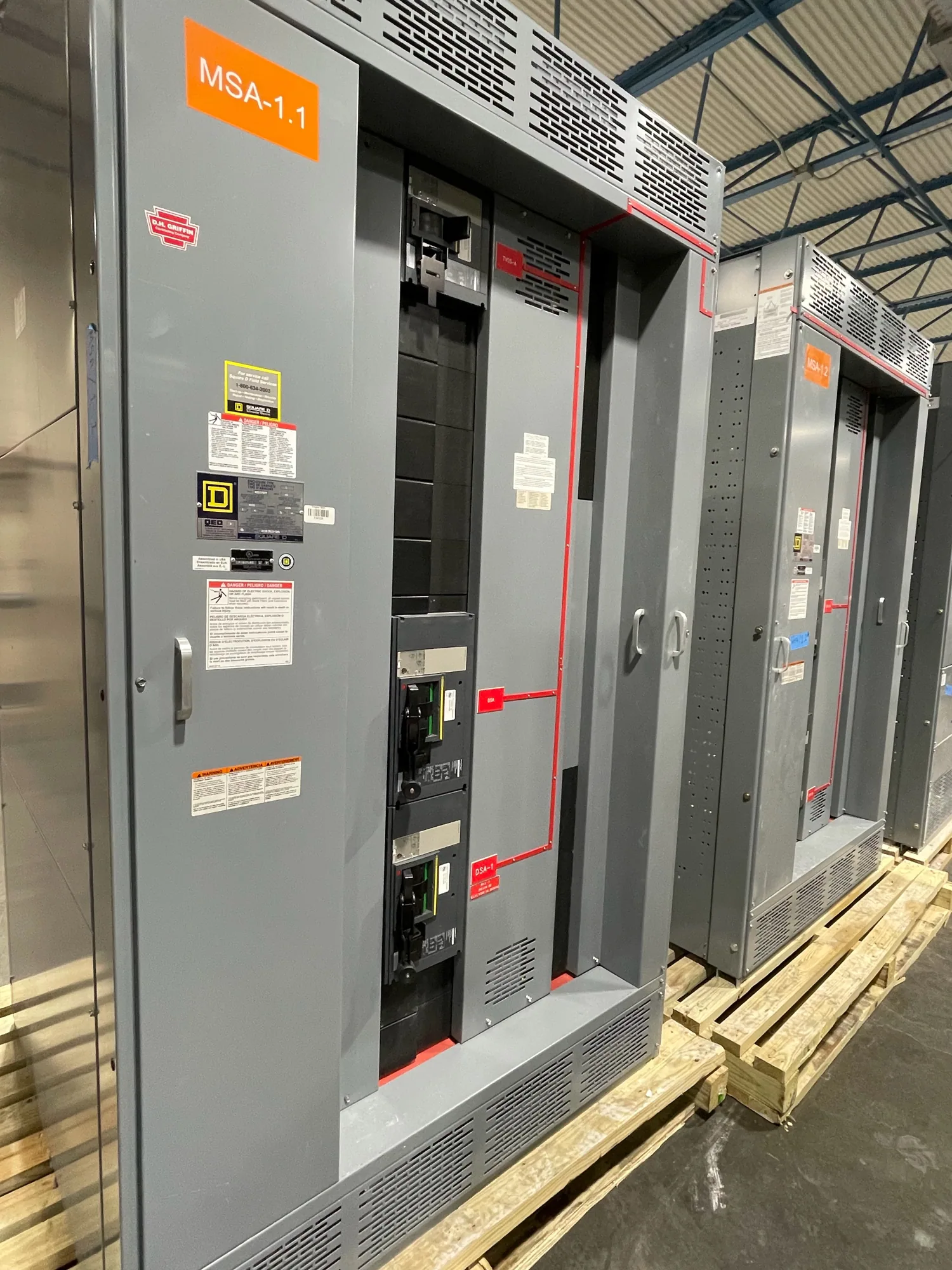
Start with the system the equipment must serve — What power-system information matters for hospital switchgear?
Hospital switchgear cannot be specified from a building name or voltage alone. The useful starting point is a current, engineer-reviewed one-line diagram showing where the proposed equipment sits in the distribution system, what it connects to, and which downstream loads it serves. Identify whether the request concerns service-entrance switchgear, a distribution lineup, or another assembly; these terms are not interchangeable.
Also establish the project scope: new construction, a renovation, an addition, or replacement within an existing system. For work in an operating facility, describe the existing equipment interfaces and boundaries, while leaving any shutdown or field-work planning to the facility team and qualified professionals. A clear scope helps prevent a proposal from assuming devices, connections, or functions that are outside the equipment package.
Document normal and alternate sources
Provide the characteristics and arrangement of each intended power source, such as utility service, generator, or another project-defined source. Include the nominal system voltage and phase, grounding arrangement, source and feeder details available to the design team, and the points where sources connect to the proposed lineup. The responsible engineer should confirm the applicable electrical ratings and whether the proposed assembly suits the actual system.
Explain how normal and alternate power are intended to interact. State whether transfer equipment is included in the switchgear scope or furnished separately, what source-selection arrangement is planned, and which loads or sections are intended to receive alternate power. Do not assume that every hospital load transfers in the same way. The one-line diagram and project sequence of operation should resolve the intended boundaries and control interfaces.
Define essential-system loads and boundaries
Identify the essential electrical system portions served by the equipment, using the project documents and the classifications established by the responsible design team. Provide load schedules or other documented demand information, the intended distribution sections, and any known requirements for future capacity or spare provisions. These details help the engineer evaluate how the lineup fits the distribution plan; they do not replace a load study or professional design judgment.
Call out loads with distinct operating or starting characteristics when they affect the design, and identify which panels, feeders, or downstream assemblies fall within the project scope. Clarify whether life-safety, critical, equipment, or other designated branches are involved rather than grouping them under a vague label such as “emergency.” The applicable adopted codes and project criteria must be confirmed by the authority having jurisdiction and the responsible professionals.
Share fault-current and protection information
Switchgear selection and protective-device coordination depend on system conditions and the project’s protection scheme. Supply the available fault-current information at the equipment location, its source and date, and any known upstream protective-device data. Where that information is incomplete, ask the responsible engineer what analysis or utility information is needed before ratings and device selections can be finalized. Do not substitute a presumed value.
Provide the intended protective-device types, settings or setting ranges when established, and the coordination objectives for relevant source and feeder paths. Selective coordination is a system-level engineering question, not a feature that can be assumed from a product name. The engineer must review the devices, available data, operating modes, and adopted requirements together. Confirm which studies, documents, and setting responsibilities are included in the project scope.
Resolve an illustrative source-interface question
Consider a project where a hospital distribution section is planned to receive power from normal and generator sources. The key question is not simply whether a lineup can accept two inputs. The design team must define the transfer method, source interlocking or control responsibilities, which loads are supplied in each operating state, and how the equipment interfaces with separate transfer devices, if any.
That distinction matters when equipment scopes are divided among suppliers. A switchgear manufacturer can review a specified assembly and its stated interfaces, but should not be expected to infer the facility’s sequence of operation or determine the hospital’s essential-system design. Provide the approved one-line, control requirements, interface points, and responsible-party assignments so the proposed equipment can be checked against the intended arrangement.
Confirm enclosure, standards, and submittal criteria
Describe the installation environment and physical constraints: indoor or outdoor location, available room and access, cable entry direction, and any environmental exposure relevant to enclosure selection. Include project-specific requirements for construction, labeling, testing, documentation, and finish when they are established. If moisture, cleaning practices, or washdown exposure are relevant, state the actual conditions rather than relying on a generic healthcare designation.
List the governing project specifications and adopted requirements for the design team to review. Do not assume a particular listing, rating, or standard applies to every configuration. Applicability depends on the equipment type and specific design, and must be verified for the proposed assembly. Ask which drawings, schedules, studies, and review milestones the manufacturer needs, and which submittals must be approved before fabrication.
Prepare a useful request for review
Before requesting a proposal, assemble the latest one-line diagram, voltage and grounding information, source data, load schedules, available fault-current documentation, protection and coordination criteria, physical constraints, and project specifications. Mark assumptions and open items clearly. Include the intended equipment scope, required interfaces, project location, and target schedule; availability and actual lead times depend on the order and must be confirmed.
Then ask the engineer and manufacturer to identify missing information, confirm the proposed equipment boundaries, and document design-dependent items requiring approval. South Carolina Switchgear Builders manufactures new, custom-to-specification equipment in the United States using all-American components and ships nationwide. A complete, coordinated information package gives the project team a sound basis to evaluate the proposed switchgear before equipment details are finalized.