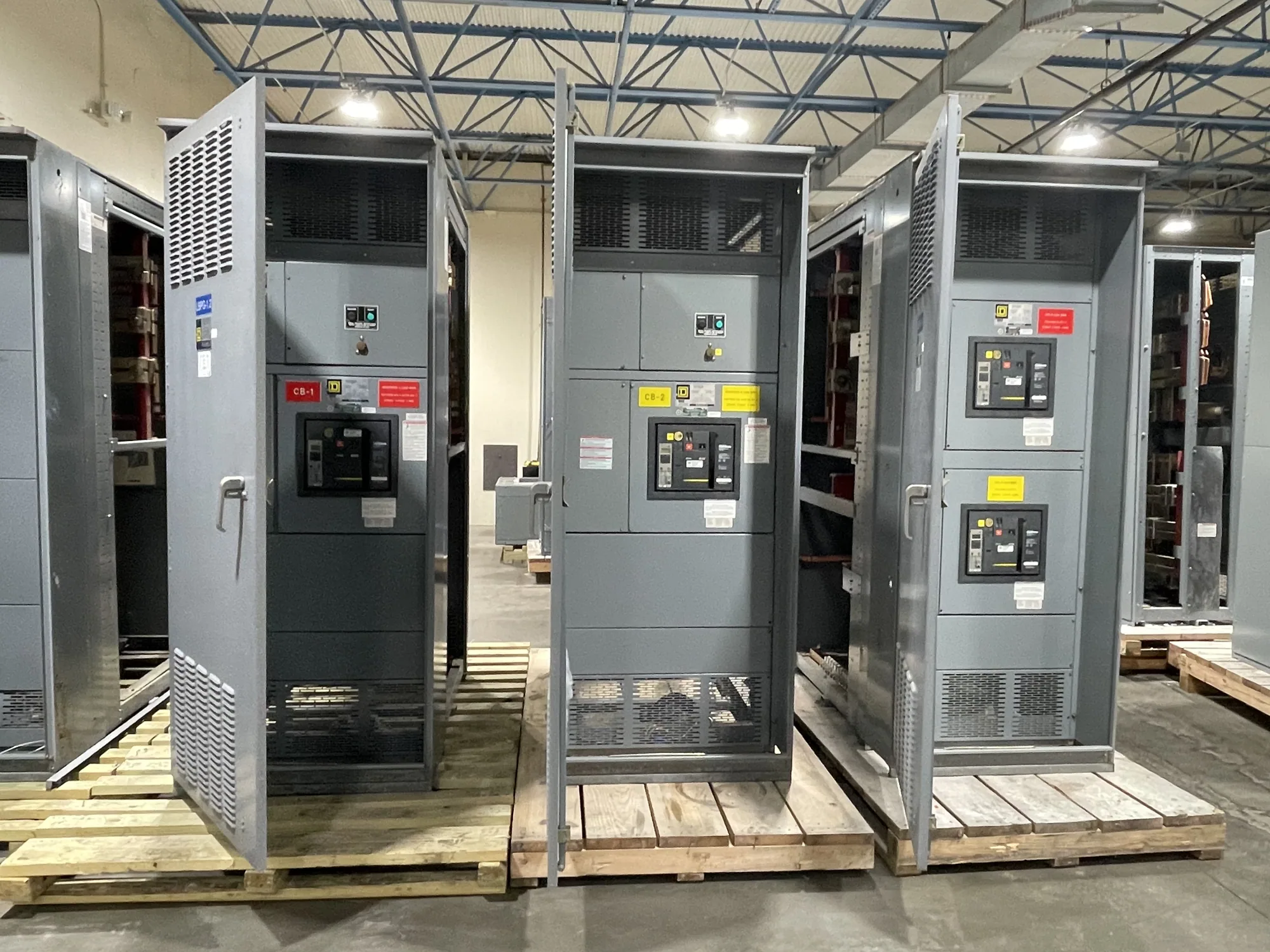
Short answer: no
Metal-enclosed switchgear is not necessarily metal-clad switchgear. “Metal-enclosed” describes equipment housed in a metal enclosure, while “metal-clad” identifies a more specific construction class with requirements defined by the applicable product standard. The terms are related, but they are not interchangeable. A metal-clad lineup is metal-enclosed; the reverse does not follow.
This distinction matters when writing a purchase specification, comparing proposals, or checking whether equipment matches an existing installation. A product description that says only “metal-enclosed” does not, by itself, establish that the equipment meets metal-clad construction requirements. Likewise, a general reference to switchgear does not settle the voltage class, ratings, arrangement, or applicable standard.
What the terminology tells you—and what it does not
The enclosure term tells you something about the equipment’s housing, but it is not a complete description of its internal construction. Metal-clad is a defined category, not merely a synonym for a rugged metal cabinet or a visual style. Its meaning depends on the relevant standard and the specific design claimed to conform to that classification.
Do not infer construction class from a product photo, a front-view drawing, or a salesperson’s informal use of a term. Enclosure appearance alone may not reveal internal separation, component arrangement, or other construction details addressed by the governing requirements. Ask for the exact product designation and supporting project documentation, then have the responsible engineer compare them with the specification.
Standards and voltage class must match the equipment
Start by identifying the equipment type and voltage class. A 480 V class assembly is low-voltage equipment; 5 kV and 15 kV class equipment are medium-voltage equipment. The relevant standards and construction terminology can differ by product category and voltage class, so one classification should not be carried over automatically to another.
Ask the project engineer which standard and edition apply, and whether the requested metal-clad classification is appropriate for the specified equipment. The manufacturer should confirm whether the proposed configuration is designed and documented to meet the project’s stated requirements. Do not treat a generic standards reference as proof that every lineup, option, or modification qualifies; applicability must be checked against the actual design and supplied assembly.
Why the distinction affects a purchase
Construction classification can affect how a lineup is specified, evaluated, and coordinated with its installation. Buyers need a clear description so proposals can be compared on equivalent terms rather than on labels alone. If one document calls for metal-clad equipment and another describes only metal-enclosed switchgear, resolve that gap before approval. A mismatch can create design-review questions, procurement delays, or an assembly that does not meet the project’s intended requirements.
Consider a project replacing or extending medium-voltage distribution equipment. The one-line diagram may show the electrical arrangement, but it may not define the required construction class or all mechanical and interface details. The project team should state the intended class, applicable standard, system ratings, lineup arrangement, and connection requirements. The manufacturer can then identify questions or exceptions for review rather than assuming that a broad enclosure description answers them.
Common misunderstandings to avoid
“Metal enclosed” does not automatically mean “metal clad,” and “metal clad” is not simply a marketing upgrade. Nor does the classification alone tell a buyer whether a design suits the application. System voltage, continuous-current and interrupting requirements, bus arrangement, protection and control needs, environmental conditions, and connection interfaces all require project-specific review.
Another common mistake is to treat standards language as a blanket certification for any product carrying a familiar name. Listing, testing, ratings, and standard applicability must be confirmed for the actual equipment and configuration. Ask what documentation supports the proposed classification and whether any specified options change the assembly under review. The responsible engineer should resolve technical exceptions before the purchase order is finalized.
Questions to settle before requesting a quote
Provide the manufacturer with the equipment type, voltage class, system information, one-line diagram, required construction classification, and the standard or specification the project invokes. Include lineup dimensions or constraints, incoming and outgoing connection details, bus requirements, protection and metering expectations, operating conditions, and any interface requirements. Identify which details are fixed and which remain subject to engineering review.
Then ask: Is the proposed equipment classified as metal-clad under the cited requirements? Which standard and edition are being applied? What project ratings and configuration are included in the proposal? What drawings and technical documents will be available for review? Are any requested features exceptions to the specified design? Confirm availability and delivery timing for the actual order rather than assuming a standard configuration is immediately available.
Confirm the classification in the project documents
For new equipment, the clearest path is to use precise language in the specification and RFQ, then verify the response against the drawings and technical submittal. South Carolina Switchgear Builders manufactures new switchgear and switchboards to specification, with US-built equipment, all-American components, and nationwide shipping; configuration and availability depend on the order and must be confirmed.
If the documents use “metal-enclosed” and “metal-clad” inconsistently, ask the engineer of record and manufacturer to reconcile the wording before procurement. That simple review helps ensure the requested product category, construction, and project requirements align. Installation, testing, and maintenance should be handled by qualified personnel following applicable safety procedures.