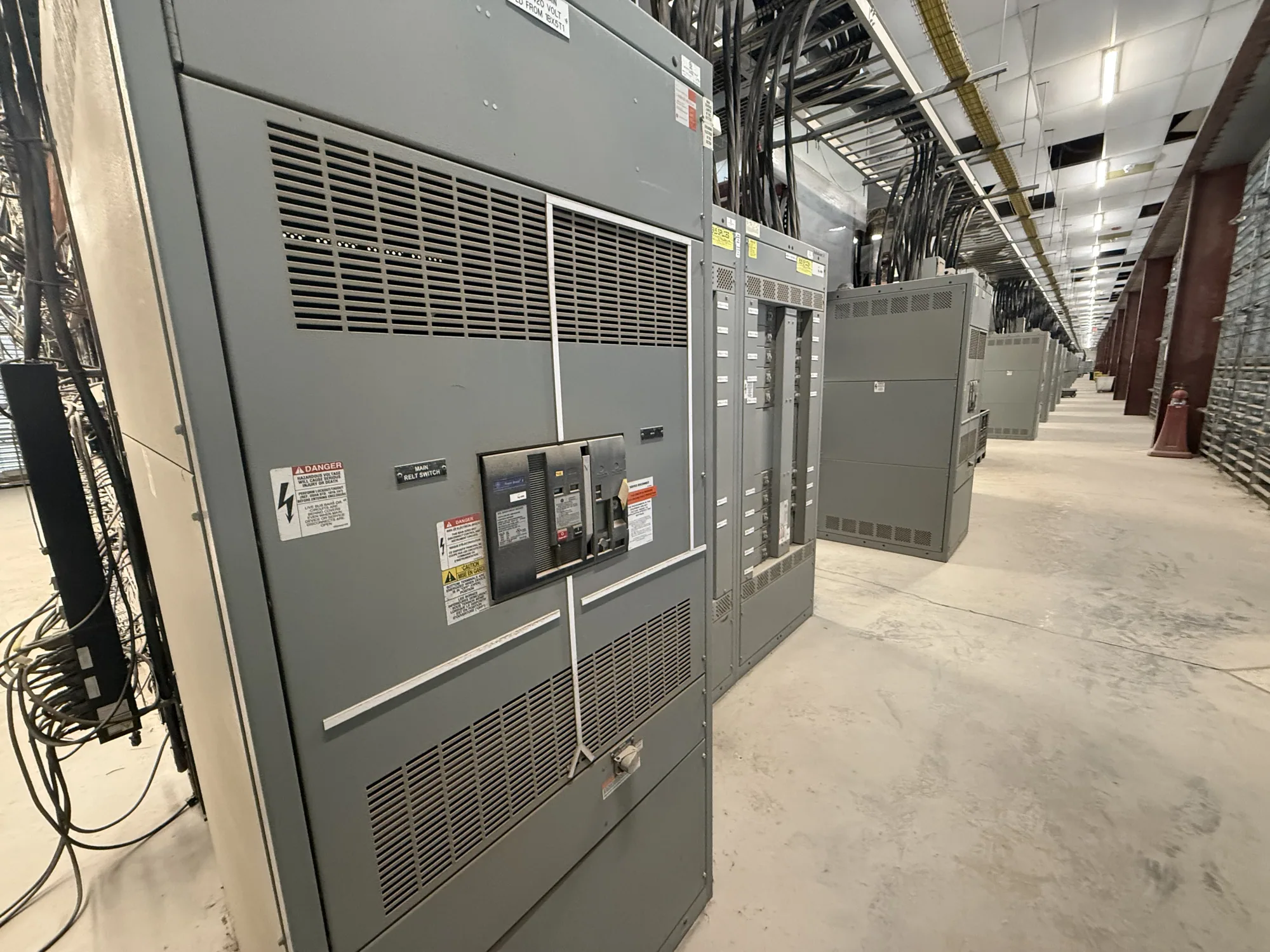
Why ambient conditions affect current ratings
Current flowing through switchgear conductors and connected components produces heat. Equipment is designed to manage that heat within specified limits, but the surrounding environment affects how readily it can dissipate. If site conditions differ from the conditions used to establish a rating, the equipment may not be able to carry that current continuously under the same assumptions.
That is why a current rating should not be treated as an isolated number. It is meaningful only in the context of the equipment design, its documented operating conditions, and the way it will be installed. Ambient conditions do not automatically change every rating by a fixed amount; the responsible engineer must determine whether the stated rating applies to the actual project.
Temperature and heat removal
Ambient temperature is the temperature around the equipment, not necessarily the temperature inside the enclosure or at a particular conductor. A hotter surrounding environment can reduce the temperature difference available for heat to move away from warm components. Whether that affects permitted continuous current, and by how much, depends on the specific assembly and its documentation.
Consider a switchgear lineup specified for a conditioned electrical room that may instead be installed in a space with higher temperatures or limited ventilation. The initial current requirement might be unchanged, but the operating environment is not. The project team should ask whether the proposed configuration is suitable for the expected ambient range and whether any rating adjustment or design change is required. Do not apply a generic derating factor without equipment-specific support.
Installation details can change the picture
Site conditions include more than room temperature. Enclosure construction, available clearance, adjacent equipment, air movement, elevation, exposure to sunlight or weather, and contaminants can affect equipment selection and thermal conditions. Which factors matter depends on the product and installation. The project engineer and manufacturer should review the actual application rather than assume every factor has the same effect on every design.
An enclosure rating describes protection against specified environmental exposures; it does not, by itself, establish a continuous current rating for every installation. Likewise, a ventilation feature or a particular enclosure style should not be assumed to eliminate thermal concerns. Confirm both the enclosure requirements and the current-carrying capability for the complete equipment configuration and site conditions.
Understand what the current rating describes
Continuous current rating concerns the current equipment can carry continuously under its stated conditions. It is distinct from short-circuit withstand capability, interrupting ratings, and protective-device settings. Those topics interact in system design, but one rating cannot substitute for another. A suitable continuous rating does not alone establish that the assembly is appropriate for the available fault current or the required protection scheme.
For a new switchboard or switchgear order, provide the required continuous current and the environmental assumptions behind it. The manufacturer can review the requested configuration against the specification, while the responsible electrical engineer determines whether it fits the system and installation. Ratings, options, testing, and any applicable listing must be confirmed for the specific design rather than inferred from a general product description.
Common misunderstandings to avoid
One common error is to read a nameplate or catalog rating as unconditional, regardless of temperature or mounting arrangement. Another is to assume that a hot location always requires a particular reduction. Neither conclusion is safe without the relevant documentation. Manufacturer instructions may define conditions, limitations, or adjustment methods; if those details are unavailable or unclear, request clarification before finalizing equipment selection.
It is also important not to conflate a protective-device coordination study with a thermal review. Coordination evaluates how protective devices operate relative to one another under system conditions. It may help establish device and system requirements, but it does not replace confirmation that the equipment’s continuous current rating suits its environment. The project engineer should coordinate these separate checks.
Information to provide for a project review
Share the expected minimum and maximum ambient temperatures, whether the equipment is indoors or outdoors, and any known ventilation or space constraints. Include elevation and exposure to moisture, dust, corrosive substances, solar heating, or other environmental factors when relevant. Identify the installation arrangement, enclosure expectations, equipment type, system voltage, required continuous current, and any known operating profile.
Ask which site assumptions the proposed rating depends on, whether the equipment documentation requires adjustment for the stated conditions, and what design options could address a mismatch. Confirm the exact rating and environmental suitability in the project submittal. If conditions may change over the equipment’s service life, explain that uncertainty early so the design review can address it rather than relying on an undocumented margin.
Coordinate the rating before ordering
Before requesting a quotation, align the equipment specification with the engineer responsible for the electrical system and installation. Provide complete site-condition information, identify unresolved assumptions, and request confirmation that the proposed assembly meets the required continuous current under those conditions. Review the resulting documentation before approval and coordinate delivery and installation planning with the project schedule.
Ambient conditions matter because current ratings depend on a defined equipment design operating in a defined environment. Use the manufacturer’s documentation and project-specific engineering review to determine whether those assumptions match the site. That approach avoids unsupported derating rules, keeps distinct ratings in their proper roles, and gives the project team a clear basis for selecting new equipment.