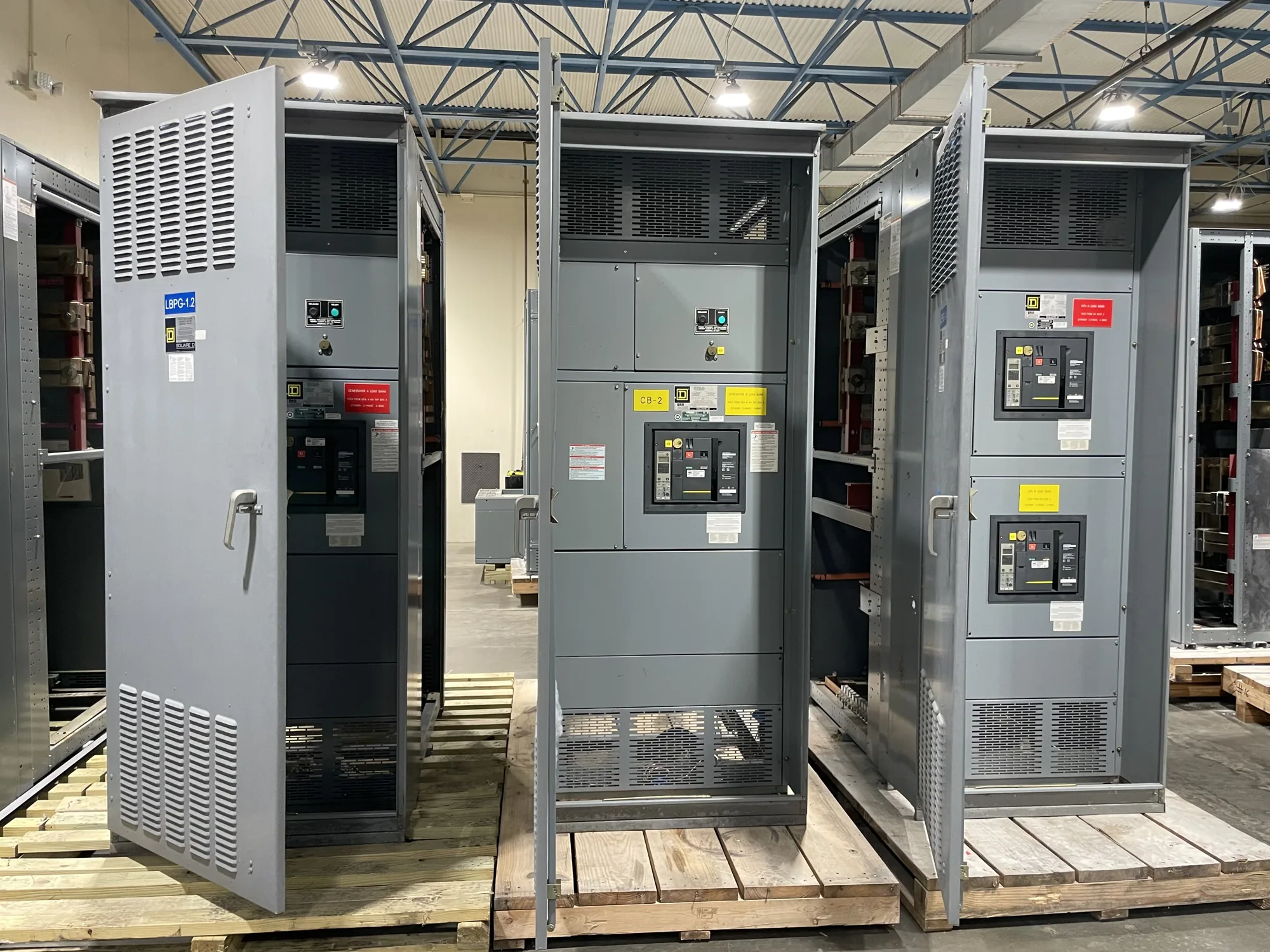
Ampacity is conditional, not a standalone number
Ampacity means the amount of electric current a conductor or other specified component can carry under stated conditions without exceeding applicable limits. Those conditions matter: the material, construction, insulation, installation environment, and governing product or conductor rules can all affect the permitted value. A number called an ampacity is meaningful only when its basis is clear.
In an equipment project, the word may refer to a conductor, busbar, cable, or another part of the electrical path. It should not be treated as an automatic rating for an entire switchgear assembly. Assembly ratings, device ratings, and conductor ampacity describe related but distinct design limits. The responsible engineer determines which requirements apply to each part of the system.
Why ampacity matters in low-voltage switchgear
For a low-voltage switchgear project, including equipment in the 480 V class, the planned load current is compared with the ratings of the relevant conductors, bus, and switching or protective devices. The design must account for the intended operating conditions and applicable requirements. Choosing equipment from one current figure alone can obscure whether every part of the distribution path is suitable.
Consider a conceptual project with a calculated normal load current. The engineer would identify that load and then check the proposed conductors, busbar, and devices against their respective ratings and the conditions stated for their use. This example assumes no particular load profile, installation, conductor construction, or equipment rating; those details must be established for the actual project. The point is that load current informs selection but does not, by itself, establish ampacity.
Continuous current rating is related but different
Continuous current rating describes current an item of equipment is specified to carry continuously under its applicable conditions. Ampacity commonly describes the allowable current of a conductor or component under defined conditions. Project documents may use these terms near one another, but they are not interchangeable in every context. Confirm exactly what item a stated rating covers and how its conditions are defined.
Likewise, a switchboard or switchgear assembly rating does not automatically establish the ampacity of every field-installed conductor connected to it. A bus rating, a protective device rating, and a conductor's permitted current each answer different questions. The engineer should reconcile these values in the design rather than assume that one rating governs all components. Applicable standards and product documentation should be checked for the particular configuration.
Conditions that can change the allowable current
Temperature is one consideration because current produces heat, and equipment or conductor limits are tied to specified operating conditions. Installation method, grouping, enclosure conditions, surrounding environment, material, insulation, and termination limits may also affect the applicable value. Whether and how any correction or adjustment applies depends on the exact design and relevant rules; no single derating assumption fits every installation.
These details are why a supplier needs more than a requested ampacity or a general description of the load. Provide the project voltage class, system arrangement, load information, expected operating pattern, installation conditions, and any project specifications already established. The responsible engineer should identify governing requirements and determine which ratings and conditions the equipment design must meet.
Common misunderstandings to avoid
Ampacity is not simply the largest current someone expects to use, nor does a conductor's ampacity alone prove that an assembly is suitable. It is also not a universal value attached to a material without regard to its construction and use. Avoid comparing values unless they refer to the same type of component, rating basis, and operating conditions.
Busbar is the conductive path that distributes power within equipment; its current rating is related to, but not identical with, a conductor ampacity value used elsewhere in a system. A protective device's rating also has its own purpose and must be coordinated with the design. If specifications use these terms loosely, ask the engineer to identify the exact component and governing criteria rather than infer equivalence.
Information to clarify before specifying equipment
- What load current and operating pattern should the design accommodate, and how were they determined?
- Which component does each requested current value describe: conductor, busbar, device, or complete assembly?
- What installation, ambient, enclosure, termination, and temperature conditions must be considered?
- Which applicable requirements and project documents establish rating and adjustment criteria?
- Are the requested continuous current rating and conductor ampacity being used consistently in the specifications?
Share the answers, one-line diagram, and relevant project documents with the equipment manufacturer. For new low-voltage switchgear or switchboards, configuration, ratings, listing applicability, and delivery timing must be confirmed against the actual specification. South Carolina Switchgear Builders manufactures new equipment to specification, with US-built equipment, all-American components, and nationwide shipping; availability and lead time depend on the order and must be confirmed.
Use the term precisely in project discussions
When reviewing a design or quotation, ask for the rating basis and the conditions attached to each current value. That simple distinction helps the project team compare like with like, identify missing installation information, and avoid treating a component rating as an assembly-wide answer. Qualified project personnel should resolve design questions and handle installation, testing, and maintenance under applicable safety procedures.
Ampacity is best understood as an allowable-current limit tied to a defined item and specified conditions. Apply that definition alongside, not in place of, continuous current ratings and equipment documentation. Clear terminology at the planning stage gives the engineer and manufacturer a sound basis for evaluating new electrical distribution equipment against the needs of the project.