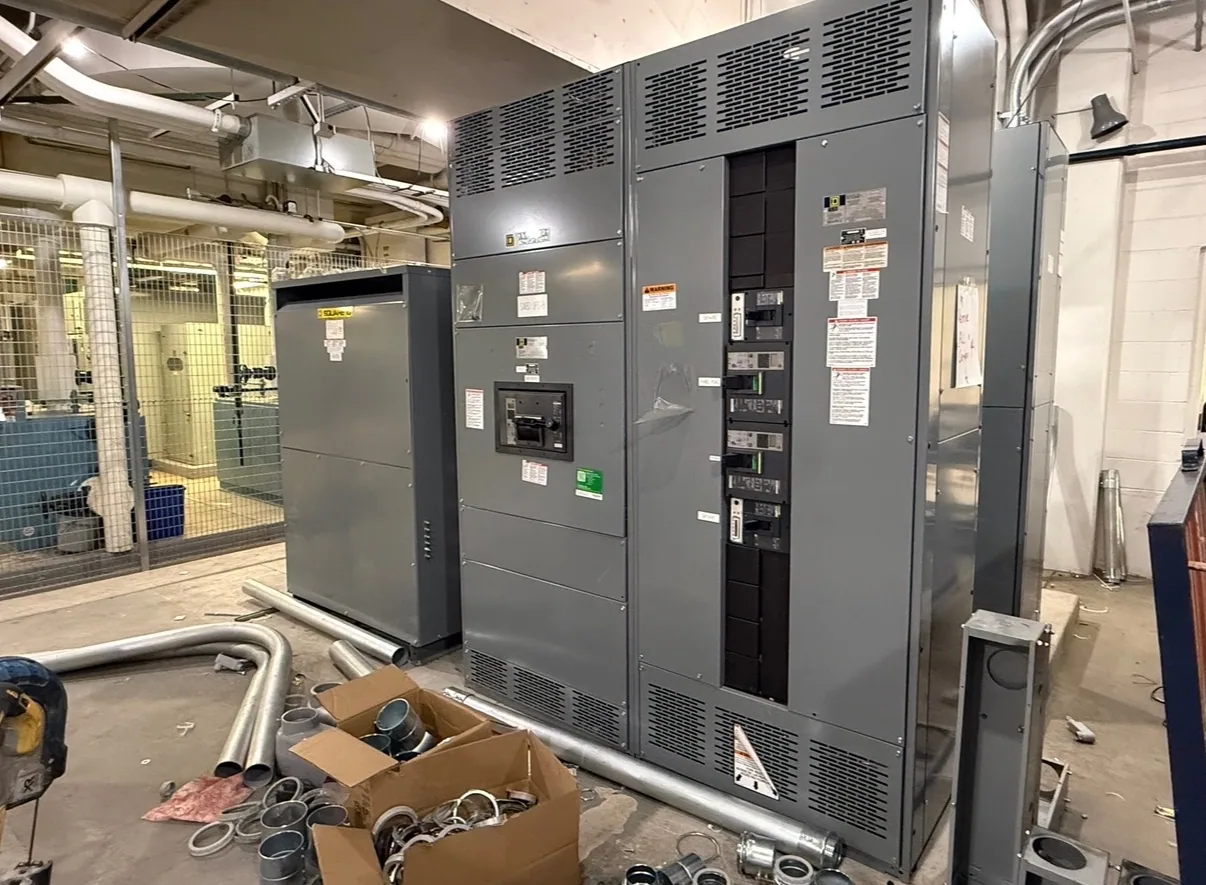
What condensation control means
In electrical distribution, condensation control refers to design and maintenance measures intended to address moisture accumulation on or within equipment. Condensation can occur when humid air contacts a surface cooler than the air’s dew point. The term describes an objective, not one universal device or guaranteed outcome: suitable measures depend on the equipment design, the installation environment, and the project requirements.
For switchgear and switchboards, moisture deserves attention because conductive paths, corrosion, insulation condition, and reliable operation may be affected by environmental exposure. A condensation-control provision might involve enclosure design, heating or other environmental features, installation choices, or inspection practices. The responsible engineer and equipment supplier must confirm which, if any, apply to the specified assembly. No single measure replaces a site-specific review.
Why site conditions shape the specification
Temperature and humidity patterns matter together. A room that cools significantly overnight, a space with intermittent heating, or equipment exposed to humid outdoor air may face different condensation risks than a consistently conditioned electrical room. Provide expected ambient conditions and note seasonal or operating changes. If measurements are available, share how and where they were taken rather than assuming a brief reading represents the full year.
Describe the complete installation environment, not just the building name or general location. Relevant details can include indoor or outdoor placement, enclosure exposure, nearby water sources, ventilation, altitude, salt-laden air, and corrosive contaminants. These conditions may also raise separate questions about enclosure selection, corrosion resistance, or equipment ratings. The project engineer should determine which requirements apply and document them in the equipment specification.
Applying the concept to medium-voltage switchgear
Consider a conceptual project specifying new medium-voltage switchgear in a room that is not continuously conditioned. Assume the owner expects substantial day-to-night temperature changes, but has not yet documented seasonal humidity or the room’s ventilation pattern. That information gap does not establish that condensation will occur; it does mean the design team should evaluate the actual conditions before selecting any moisture-control provision.
The buyer can give the manufacturer the equipment location, expected temperature and humidity ranges, whether conditions vary during shutdowns, and any known water or salt exposure. The project engineer can then identify design requirements and ask the supplier to confirm what the proposed configuration includes. Medium-voltage equipment must be specified for its intended application; do not assume that a feature used on another assembly is suitable or available in a particular design.
Options, trade-offs, and common misunderstandings
Possible approaches should be evaluated as part of the complete design. For example, heating may be considered to keep selected surfaces above conditions associated with condensation, but its need, control method, power source, and compatibility with the assembly require confirmation. Ventilation or enclosure changes can affect environmental protection and may not suit every location. Any proposed measure needs to fit the equipment design and the documented operating conditions.
Condensation control is not the same as making equipment waterproof, eliminating humidity, or specifying corrosion resistance. A measure intended to address moisture accumulation does not automatically prevent water entry or protect every material from corrosive exposure. Likewise, an indoor location is not necessarily free of condensation risk. Related environmental requirements should be evaluated distinctly, with the engineer determining the relevant specifications and the manufacturer confirming design-specific capabilities.
Information to prepare for the equipment supplier
- Identify the equipment type, application, and planned indoor or outdoor location.
- Share expected ambient temperature and humidity, including seasonal changes, shutdown conditions, and any available monitoring records.
- Describe ventilation, conditioning, water exposure, altitude, salt air, and corrosive contaminants that may affect the installation.
- State the project’s required environmental provisions and ask which features are included, optional, or outside the proposed scope.
- Request confirmation that the specified configuration, ratings, and applicable documentation match the project requirements.
Also coordinate enclosure dimensions, access, control-power needs, and maintenance provisions with the project team. If a heater or other accessory is proposed, clarify its location, supply, controls, and inspection expectations before drawings are finalized. The manufacturer can build new equipment to the confirmed specification, but availability and actual lead times depend on the order and must be confirmed.
Coordination from design through maintenance
Resolve environmental questions early enough to carry them consistently through the equipment specification, drawings, submittal review, and installation planning. Identify who will confirm site assumptions and who will approve any proposed changes. South Carolina Switchgear Builders manufactures new equipment in the United States and ships nationwide; project-specific configurations and delivery timing require confirmation against the order.
After installation, inspection and maintenance should follow the equipment documentation and applicable safety procedures, performed by qualified personnel. A change in room conditioning, ventilation, or water exposure can make earlier assumptions worth reviewing. Treat condensation control as an ongoing design consideration: document the environment, agree on suitable provisions, and verify that the supplied equipment and maintenance plan address the conditions the project actually expects.