What a feeder means
In electrical distribution, a feeder is a circuit that carries power from a source, service equipment, or another distribution point toward downstream equipment. Depending on the system, that destination may be a panelboard, another switchboard, a motor control center, or other distribution equipment. The precise boundary and definition depend on the applicable electrical rules and the installation’s design; the word alone does not identify every device or conductor included.
For equipment planning, “feeder” describes a circuit’s role in the distribution arrangement, not a complete equipment specification. It does not, by itself, establish conductor size, protective-device rating, continuous-current rating, voltage class, fault-current capability, or the type of gear required. Those details must be determined from project conditions, applicable rules, and the responsible engineer’s design.
Where a feeder fits in a distribution system
A useful way to understand the term is to follow the power path. A source supplies distribution equipment; a feeder leaves that point and supplies downstream equipment; circuits leaving downstream equipment may supply individual loads. The layout can contain several stages, so a circuit that is a feeder relative to one piece of equipment can be upstream or downstream in the broader system. Confirm the relationship on the project one-line diagram rather than relying on labels in isolation.
A feeder should not automatically be called a branch circuit, or vice versa. The terms identify different circuit functions under applicable electrical rules, and their boundaries matter when applying design requirements. In a simple example, a switchboard feeder may supply a downstream panel, while circuits from that panel supply loads. The actual classification depends on the installation and governing rules, so an engineer should confirm it where the distinction affects design or procurement.
Why feeder details matter in low-voltage switchgear
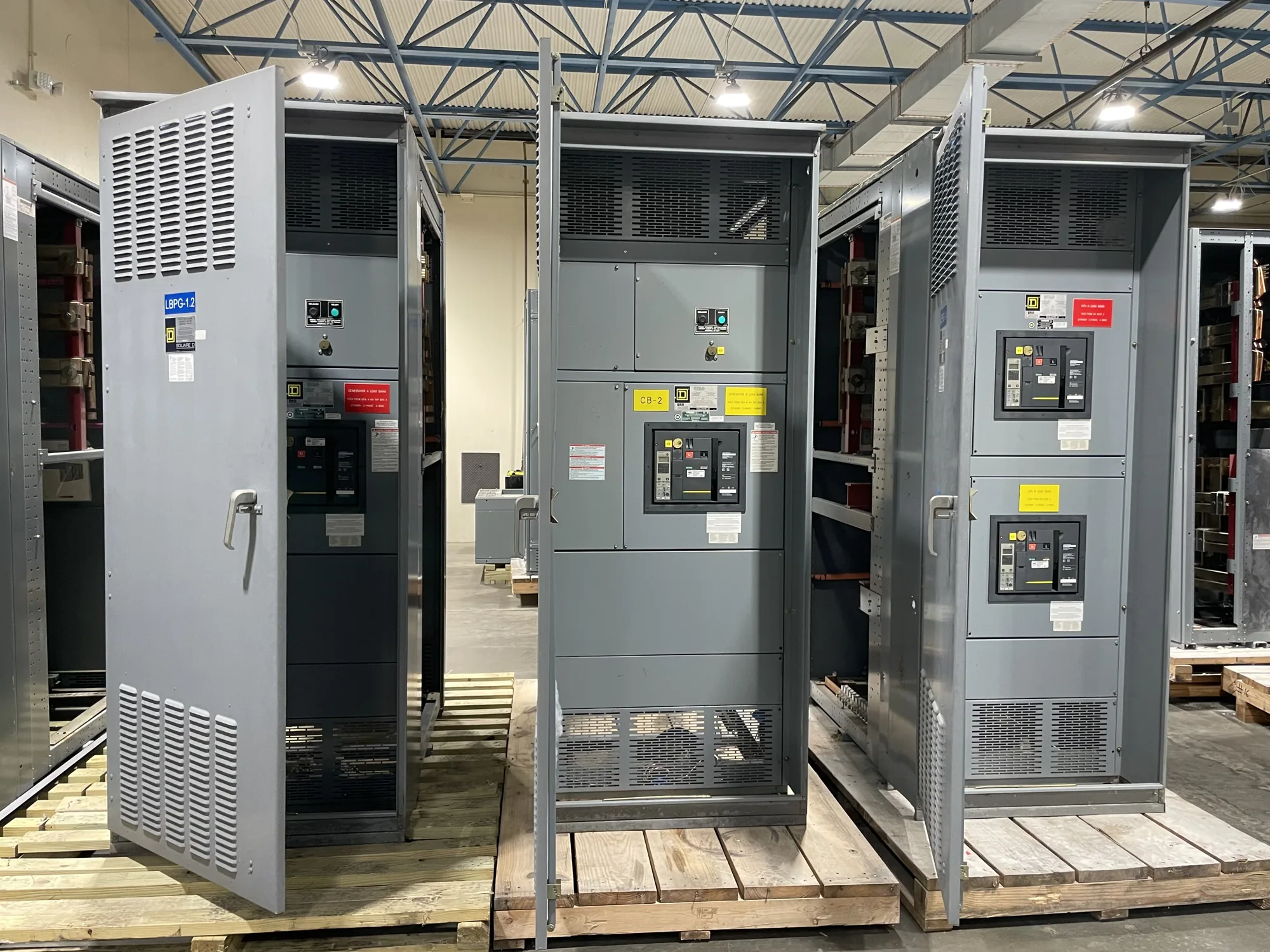
In a low-voltage switchgear project, feeder circuits influence the arrangement and specification of outgoing sections, protective devices, bus, terminals, and connections to downstream equipment. The switchboard or switchgear must be evaluated as a coordinated assembly, not as a collection of unrelated nameplate numbers. Whether a particular assembly configuration is suitable, and what ratings or listing apply, must be verified against the actual design and project specification.
Normal load current is an important input, but it is not the only one. The engineer should establish the expected load, whether it is continuous, operating conditions, applicable code requirements, and any relevant future capacity needs. Continuous-current ratings for equipment and components must be selected and coordinated for the specified conditions. Do not assume that a feeder’s anticipated load alone proves a device, bus, or complete assembly is appropriately rated.
Ratings, conditions, and engineering trade-offs
Heat and installation conditions can affect equipment selection. Ambient temperature, enclosure arrangement, ventilation, conductor characteristics, and the way components are grouped may matter, depending on the design and manufacturer’s instructions. These factors can influence allowable loading or require adjustments. The responsible engineer and supplier should review the actual installation conditions; a glossary definition cannot establish a derating factor or operating temperature limit for a specific assembly.
Protection and fault-current considerations also need separate review. The feeder’s protective device and the equipment it supplies must fit the system design and applicable requirements. Project documents should identify relevant source and downstream information for engineering evaluation. Do not infer interrupting capability, short-circuit ratings, selectivity, or protection settings from the term “feeder.” Each is a design-dependent matter to confirm for the proposed equipment and system.
Conceptual example and common misunderstandings
Consider a conceptual arrangement in which a low-voltage switchboard supplies a downstream panel. Assume only that the switchboard-to-panel circuit is being discussed as a feeder; no voltage, current, conductor size, protective-device rating, or equipment rating is assumed. The engineer would determine how that circuit is classified under applicable rules, establish its design loads and conditions, and specify compatible protection and distribution equipment. The example explains terminology, not a design recommendation.
A common misunderstanding is that every conductor leaving a switchboard is necessarily a feeder under every applicable rule. Another is that “feeder” means a particular breaker size or a standard switchgear section. Neither follows from the definition. Related terms such as branch circuit, continuous-current rating, and low-voltage switchgear answer different questions: circuit role, equipment current capability, and equipment category. Keep those distinctions clear in drawings and procurement documents.
Information to confirm before specifying equipment
For a project discussion, bring the one-line diagram and identify the source, feeder destination, connected load, and operating assumptions. Ask the engineer to confirm circuit classification, applicable rules, voltage class, load calculations, continuous-load treatment, protection requirements, and installation conditions. Include the required equipment arrangement and interfaces, such as incoming and outgoing connections, enclosure constraints, and coordination with downstream gear, wherever these have been established by the design team.
Ask the equipment supplier to review the written specification for the requested configuration, component and assembly ratings, listing applicability, and any project-specific testing requirements. Confirm what information remains open rather than treating an unanswered item as an assumed capability. Availability and delivery timing depend on the order and must be confirmed. A clear, coordinated feeder description helps the engineer and manufacturer evaluate the intended equipment without confusing a vocabulary definition with a complete specification.
Using the term in project documents
Use “feeder” consistently on drawings, schedules, and equipment specifications, and show what it supplies. Pair the label with the electrical and mechanical details needed for design review rather than expecting the word to communicate ratings or construction. Where a project involves low-voltage switchgear or switchboards, identify the intended equipment type and request confirmation that the proposed assembly aligns with the approved design. Final decisions belong to the responsible project professionals.