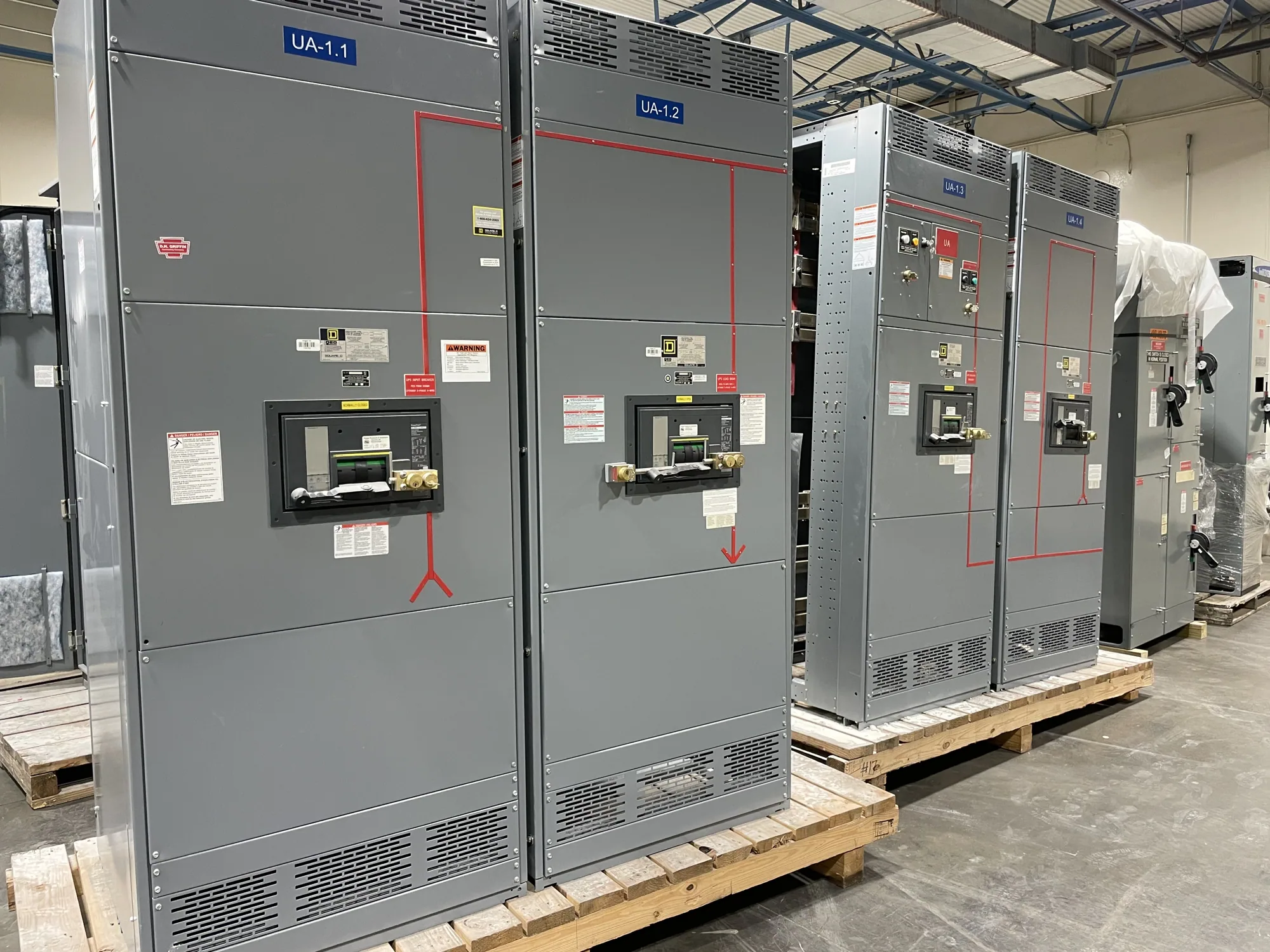
What “service entrance” means
In electrical distribution, the service entrance refers to the point and associated equipment through which the serving electrical supply enters a facility, as defined by the applicable rules and the specific system arrangement. The term is not simply another name for a building’s main panel or for every piece of equipment near the utility connection. Its precise boundary depends on the supply arrangement and the rules governing that installation.
People may use “service entrance” to describe a location, a group of conductors, or equipment designated for service use. Those meanings are related but not interchangeable in every context. A project engineer must identify which boundary and function apply to the particular installation. This distinction matters when specifying new switchgear or switchboards, because the equipment’s intended role can affect its construction and how it connects to the rest of the distribution system.
Why the designation matters
Service-entrance classification can affect how grounding and bonding are arranged and how the neutral is treated. The correct configuration depends on the system’s design and applicable requirements, not on a general assumption that every incoming-service assembly should use the same connections. The responsible electrical engineer should establish the intended arrangement and document it for equipment design and installation.
Grounding and bonding serve related but distinct purposes. Grounding connects parts of an electrical system to the grounding system, while bonding establishes electrical continuity between conductive parts as required by the design. The service location can be important to decisions about where these connections are made and how the neutral relates to grounded and bonded parts. Confirm the project-specific requirements rather than relying on terminology alone.
Service equipment and switchboards
A switchboard may be specified for an incoming service when its function, configuration, and applicable requirements suit the project. But “service entrance” describes a system role; “switchboard” identifies a type of equipment. Neither term by itself establishes the equipment’s voltage class, ratings, construction, or suitability for a particular application. Those details must be confirmed against the project specification and the equipment offered.
For a new switchboard, provide the manufacturer with the intended service role, system information, equipment arrangement, and project requirements. Ask whether the proposed design is suitable for that role and whether any applicable listing or other project requirement is verified for the specific assembly. UL 891 applies to eligible low-voltage switchboards; applicability and assembly listing must be confirmed for the design. It should not be treated as a blanket designation for all switchgear or applied to medium-voltage equipment.
Conceptual example: tracing the boundary
Consider a conceptual project in which a facility receives electrical supply and distributes it through a new switchboard. Assume only that the switchboard is being considered for the incoming-service function; no voltage, fault duty, conductor arrangement, or rating is established by this example. The engineer first defines the service boundary under the applicable rules, then identifies which equipment and conductors fall within that scope.
Next, the design team confirms the grounding, bonding, and neutral arrangement for that system and specifies the switchboard’s required function and configuration. If another disconnect or distribution section is part of the arrangement, the team documents its relationship to the service equipment. This process avoids a common misinterpretation: assuming that the first disconnect, a building entry point, or a switchboard name alone determines the service boundary.
Information to confirm before ordering
Useful project information includes the supply and system arrangement, the defined service boundary, the intended equipment function, and the project engineer’s requirements for grounding, bonding, and neutral treatment. Provide the required voltage class and electrical ratings only as established by the design. Also identify the installation environment, incoming and outgoing connection needs, enclosure or layout constraints, and any applicable documentation, testing, listing, or standards requirements for the specific assembly.
Ask the engineer and equipment supplier to resolve open questions before finalizing the order: Is the equipment designated for the service function? Which conductors and sections are within the defined boundary? What configuration is required, and which project-specific requirements must the manufacturer verify? Clear answers help prevent mismatches between the one-line diagram, equipment specification, and intended installation.
Coordinate equipment and project details
South Carolina Switchgear Builders manufactures new switchgear and switchboards to specification, with US-built equipment, all-American components, and nationwide shipping. Configuration, availability, and actual lead time depend on the order and must be confirmed. Share the current project documents and identify the responsible engineer so equipment questions can be resolved against the design rather than assumptions about the phrase “service entrance.”
Before purchase, coordinate the equipment scope, drawings, connection details, and delivery needs with the project team. Installation, inspection, testing, and maintenance should be handled by qualified personnel using applicable safety procedures. For terminology questions, distinguish the service entrance from related concepts such as the main disconnect; for design decisions, rely on the project engineer and the requirements applicable to the specific installation. A defined boundary and a complete equipment specification give the manufacturer a sound basis for preparing the right new assembly.