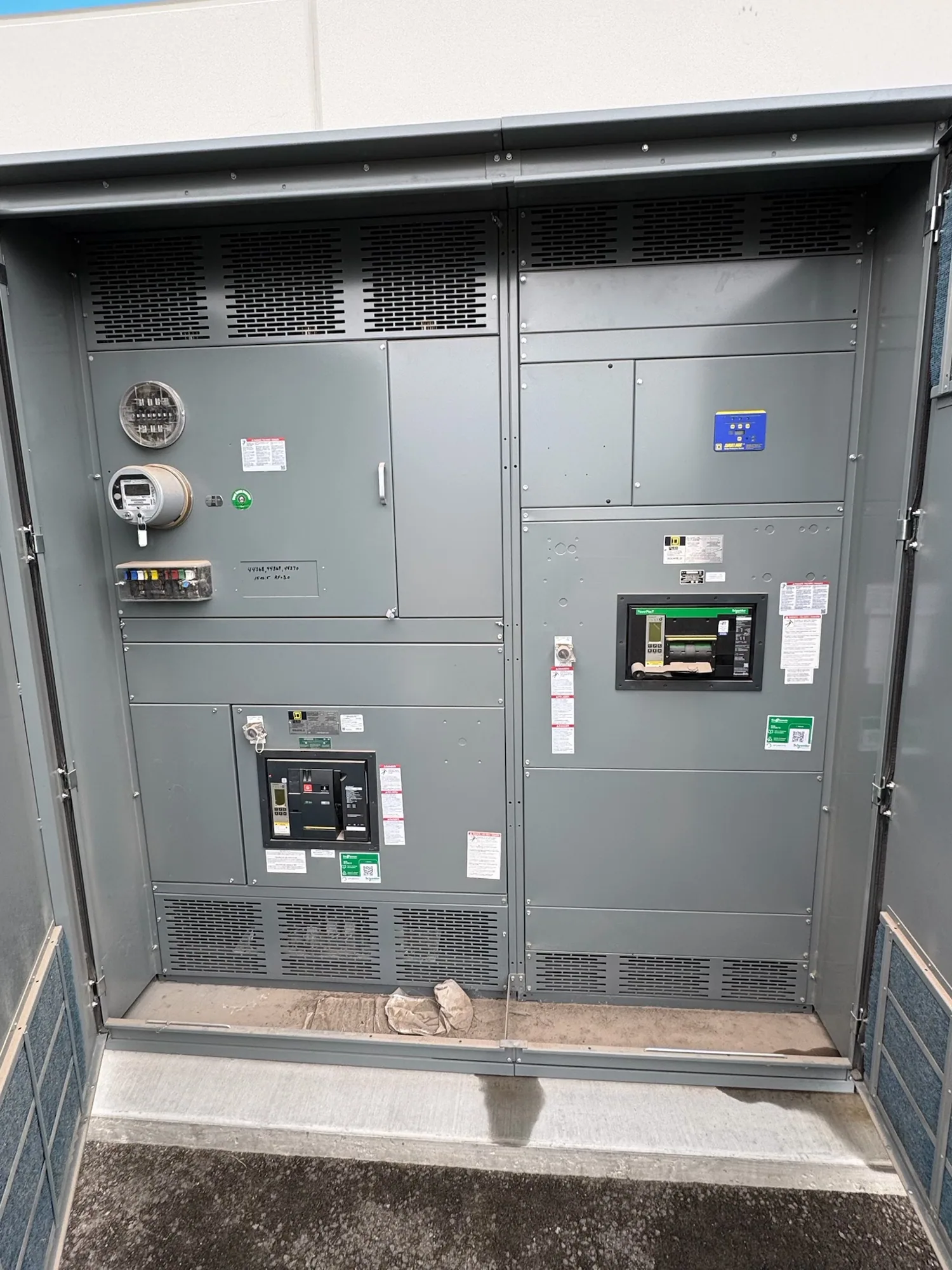
What a switchgear lineup means
A switchgear lineup is a coordinated arrangement of connected equipment sections that function together as an electrical distribution assembly. The sections may contain switching, protective, control, and bus components, arranged to meet a defined project specification. Rather than describing one breaker or cabinet in isolation, “lineup” refers to the assembled, related equipment and its physical and electrical organization.
The term describes an arrangement, not a universal equipment design. A lineup’s purpose, voltage class, construction, ratings, and included devices depend on the system and project documents. In conversation, people may use “lineup” to refer to the complete assembly, its individual sections, or the equipment row shown on a drawing. Clarifying the intended scope avoids confusion during design and procurement.
Sections, bus, and coordinated functions
Sections are the physical units that make up the lineup. Their arrangement may provide a main incoming connection, distribution to outgoing circuits, metering or control functions, or other specified purposes. A common bus arrangement connects components electrically, but the actual bus configuration and the way sections connect must be established by the design. Section order also affects how the equipment interfaces with conductors and the surrounding electrical room.
For example, a conceptual low-voltage switchgear lineup might include an incoming section and several sections serving outgoing feeders. This example does not establish a particular rating, protective-device selection, bus design, or physical footprint. The responsible engineer determines those details from the project’s load, system, fault-current information, operating needs, and applicable requirements. A supplier then needs the approved technical scope to configure new equipment accordingly.
Why the equipment context matters
“Switchgear lineup” is not itself a voltage class or a statement of compliance. A project may involve low-voltage equipment, such as a 480 V class application, or medium-voltage equipment in a 5 kV or 15 kV class. These are different equipment contexts, and terminology should not blur them. Confirm the actual system voltage and equipment classification in the one-line diagram and procurement specification.
Applicable standards and installation requirements depend on the equipment type, design, and jurisdiction. UL 891 applies to eligible low-voltage switchboards; it should not be treated as a blanket requirement for all switchgear or applied to medium-voltage equipment. Whether a particular assembly and configuration is listed, and which standards or code provisions govern the project, must be verified against the design and project authority requirements. The engineer and authority having jurisdiction determine applicability.
What the term does not settle
A lineup label alone does not specify interrupting or withstand capability, continuous current, enclosure construction, internal separation, access, or the number and type of devices. Those details should not be inferred from a product name, a drawing shorthand, or an assumed industry convention. They belong in the coordinated design documents and must be checked against the electrical system and installation conditions.
One frequent misunderstanding is that a lineup is simply a row of cabinets. Physical adjacency does not by itself confirm that equipment sections form a designed assembly, share a specified bus, or meet a required listing or rating. Another is treating “switchgear,” “switchboard,” and “panelboard” as interchangeable. They describe distinct equipment categories; use the terminology and requirements established by the engineer for the actual application.
Project questions and trade-offs
When reviewing a proposed lineup, ask what functions each section serves, how the sections connect, where incoming and outgoing conductors enter or leave, and what clearances and access the installation requires. Confirm whether future expansion is part of the scope and whether it affects the initial physical arrangement, bus provisions, or coordination. A compact arrangement may reduce space needs, while service access, cable routing, and project constraints can call for a different layout.
Also establish which information is final and which remains subject to engineering review. Useful inputs include the one-line diagram, system voltage, available fault-current information, load and feeder schedules, equipment location, environmental conditions, and project-specific code or utility requirements. The engineer should resolve design assumptions; the manufacturer needs approved specifications and interface details before confirming a configuration, availability, applicable listing, testing, and delivery dates.
Preparing a clear equipment scope
Before requesting new equipment, identify the intended lineup boundaries: what is included in the assembly, how many sections are planned, what each section does, and what connections must interface with the rest of the system. Provide current drawings and note any known building limitations, access routes, installation sequence, and coordination milestones. Confirm that drawings, submittals, and revisions will be reviewed by the responsible project team.
For a custom-to-specification assembly, the manufacturer and project team should resolve section arrangement, ratings, dimensions, control needs, documentation, and schedule dependencies through the project process. Availability and lead time depend on the order and require confirmation. Installation, testing, and maintenance are work for qualified personnel following applicable safety procedures. A precise definition helps everyone communicate, but the approved design—not the word “lineup”—determines what is built and how it fits the project.