What an electrical withstand rating means
An electrical withstand rating identifies the current an assembly or component can tolerate for a stated duration under specified conditions. In a short circuit, that capability matters because the equipment may experience intense electrical and mechanical stress before a protective device clears the fault. The rating is meaningful only with its stated current, time, configuration, and applicable test or design basis.
“Withstand rating” is often used as general vocabulary rather than as one universal label that applies identically to every product. Equipment documents may instead specify a short-time withstand current, a short-circuit current rating, or another rating defined for the particular equipment and standard. Read the actual nameplate and certified or manufacturer documentation; do not assume that similar-sounding terms are interchangeable.
How it relates to fault current and interruption
Available fault current is the current a power system could deliver at a point under defined conditions. It is not the same as an equipment withstand rating, nor does a withstand rating by itself say that a device can interrupt that current. Circuit breakers and fuses have interrupting ratings; assemblies and components have applicable short-circuit or withstand capabilities. The complete design must coordinate these ratings.
For a project, the responsible engineer determines the prospective fault current at the equipment location and evaluates the selected protective devices and assembly. System changes, such as a different transformer or source arrangement, can affect that calculation. A rating that appears adequate in isolation may not establish suitability if the protective-device combination, duration, or specified configuration differs from the evaluated design.
Application in low-voltage switchgear
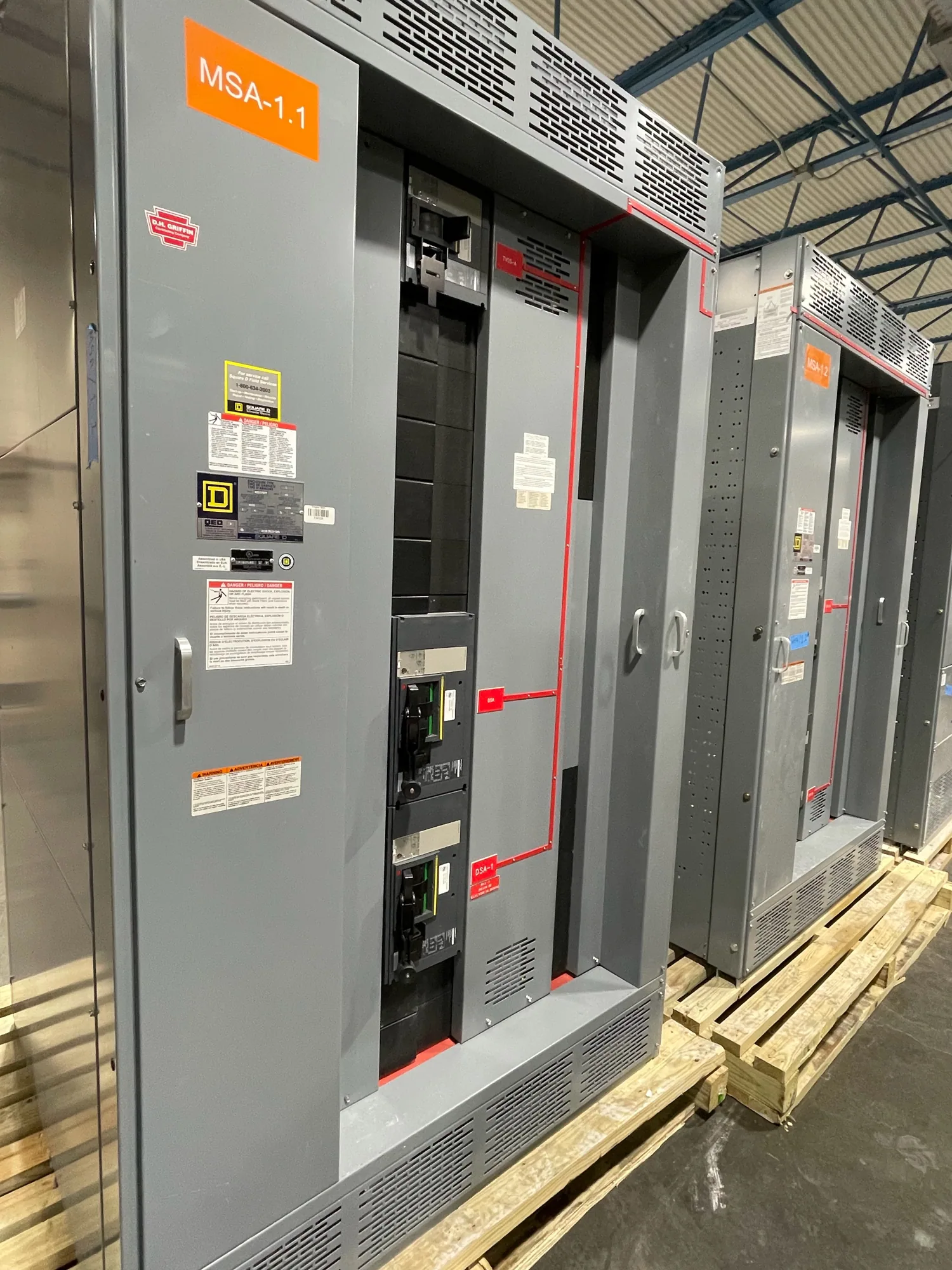
Consider a conceptual 480 V class low-voltage switchgear project. The project engineer establishes the system conditions and available fault current at the lineup, then compares that information with the proposed assembly and its documented short-circuit capability. The engineer also checks the breaker or fuse interrupting capability and the equipment configuration required for the stated rating. No rating can be inferred from voltage class alone.
Timing is part of the question. A short-time withstand value describes performance for a specified interval, while an overcurrent device is intended to clear a fault according to its characteristics and coordination requirements. The engineer must verify that the protective scheme and assembly capability work together for the application. The purchaser should provide the system study and protection requirements rather than selecting equipment from a current number without context.
Common misunderstandings and trade-offs
A higher numerical rating is not automatically the best choice. It can affect equipment selection, protective-device coordination, and project cost or layout, while an unnecessarily low capability may fail the project’s documented fault-current requirements. The right choice is the one supported by the system analysis and the actual assembly documentation. Any trade-off should be reviewed by the responsible electrical engineer and manufacturer against the specified design.
Another frequent misunderstanding is treating withstand capability as synonymous with short-circuit current rating (SCCR) or interrupting capacity. These concepts are related, but their meaning depends on the equipment and rating method. An SCCR identifies a short-circuit capability under defined conditions; interrupting capacity concerns a protective device’s ability to interrupt fault current. Confirm the exact terminology and conditions in the project documents instead of relying on shorthand.
Information to provide when specifying equipment
For a quotation or design review, provide the nominal system voltage and configuration, the calculated available fault current at the equipment location, and the source and assumptions behind that calculation. Include the protective-device types and relevant coordination requirements, the intended application, and any project specifications governing the assembly. If known, identify future source or system changes that the design must account for.
Ask the equipment supplier to identify the applicable rating terminology, stated current and duration, evaluated configuration, and documentation supporting the proposed assembly. Confirm whether any rating depends on specific breakers, fuses, barriers, or other components. For a new low-voltage switchboard, ask whether UL 891 applies to the particular design and whether the assembly listing can be verified; it does not apply to medium-voltage switchgear as a general rule.
Coordinate the rating through the project
South Carolina Switchgear Builders manufactures new switchgear and switchboards to specification, with US-built equipment and nationwide shipping. Configuration, applicable ratings, listing, testing, availability, and delivery timing require confirmation for the actual order; lead times depend on the project. Share the one-line diagram, fault-current study, equipment schedule, and written specifications early so engineering questions can be resolved before the design is finalized.
Before approval, have the responsible engineer and supplier reconcile the system study, protective-device selection, assembly documentation, and final equipment configuration. Confirm that the delivered design matches the reviewed submittal and project requirements. Installation, testing, and maintenance should be handled by qualified personnel following applicable safety procedures. This coordination turns a broad term like “withstand rating” into a checkable requirement for the equipment being purchased.