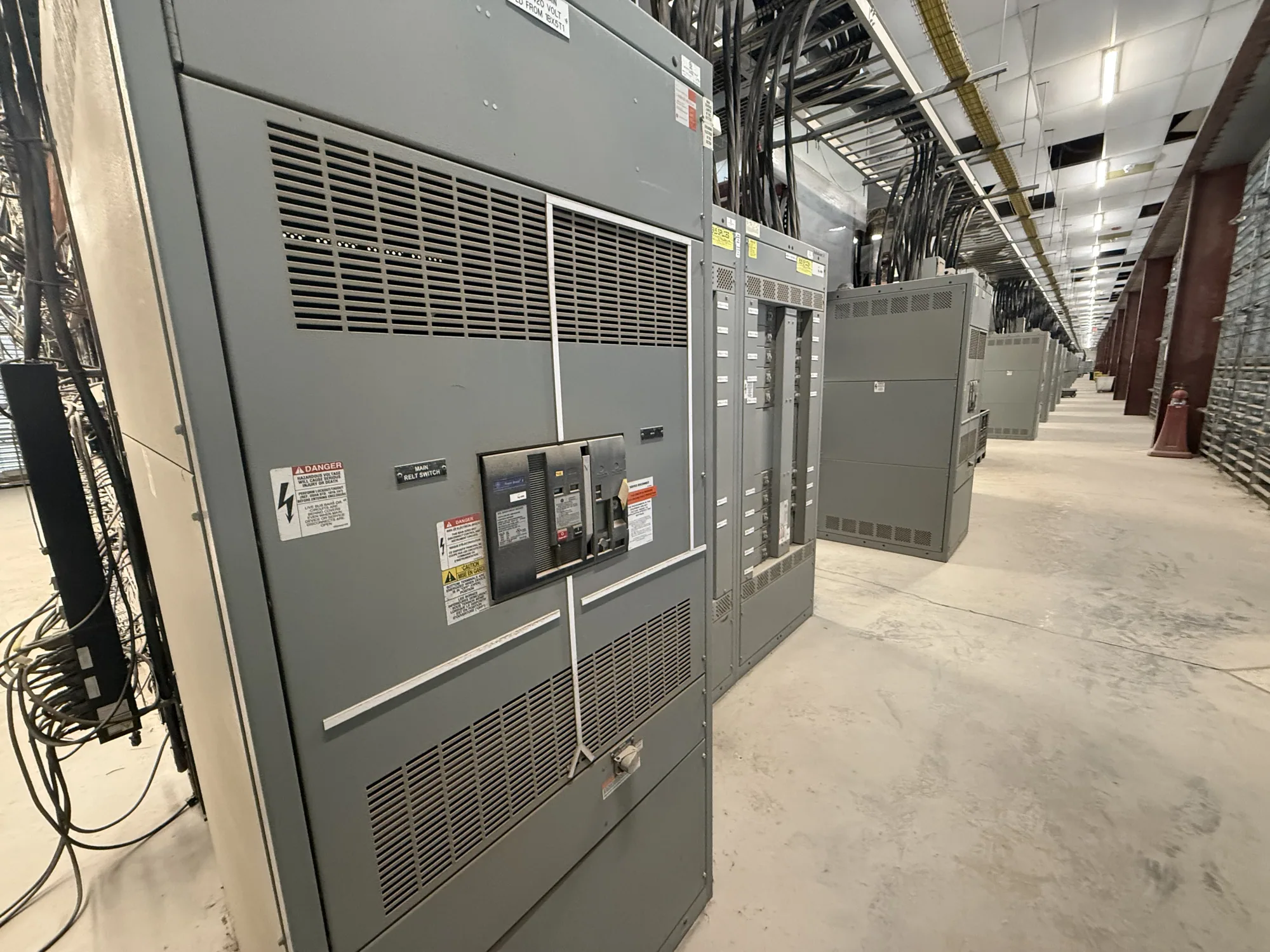
Define the utility project boundary
Electric utility switchgear may serve distribution, switching, or other utility-owned functions, and its requirements are not automatically the same as equipment at a customer service entrance. Start by identifying the installation’s purpose, ownership boundary, and point of connection. Clarify whether the procurement covers a complete assembly, a defined section, or equipment coordinated with other project-furnished components.
A hypothetical distribution upgrade illustrates why scope matters: the utility may control the switching arrangement and operating rules, while separate project participants handle upstream sources, downstream circuits, civil work, or installation. These responsibilities must be established for the actual project rather than inferred from a generic equipment description. A clear boundary prevents gaps in protection, controls, interconnections, and acceptance responsibilities.
Match the equipment to the electrical design
Identify the required voltage class and describe the system arrangement using the project’s approved one-line diagram. Utility applications can call for medium-voltage switchgear, but the equipment cannot be selected from the industry label alone. The responsible engineer must confirm system conditions, circuit functions, switching needs, fault duties, and the design criteria that apply at the installation point.
Specify the intended lineup and functions rather than relying on a broad request for “utility switchgear.” Describe incoming and outgoing circuits, bus arrangement, metering or control provisions, and any required interfaces with transformers, protection systems, or remote operating equipment. If a function is still under review, identify it as an open design decision. This gives the manufacturer a defined basis for confirming a configuration without treating assumptions as approved requirements.
Coordinate protection and control interfaces
Protection requirements need careful coordination between the utility’s operating practices, the project engineer’s system study, and the equipment design. Provide applicable relay requirements, trip and close logic, instrument-transformer information, control-power expectations, and interface drawings when available. The responsible protection engineer should confirm device selection, settings responsibility, communications needs, and how signals connect to adjacent systems.
Do not treat a relay list or a previous project’s settings as sufficient design direction. Confirm what the utility requires, which party supplies and configures each device, and what information is needed to verify the complete protection scheme. Where relay selection or control logic remains unsettled, document the decision owner and required review. Project-specific listing, testing, ratings, and standards also need verification against the actual specification and supplied assembly.
Understand utility review and approval
Before requesting a proposal, identify the utility’s applicable equipment standards, approved-equipment process, submittal expectations, and review sequence. Ask whether approval is required for the manufacturer, the product type, the specific design, or several of these. Do not assume that an approval from another utility, location, or project transfers to this procurement.
Establish who submits drawings and technical data, who reviews exceptions, and how revisions are authorized. A utility may have requirements affecting enclosure details, labeling, access, controls, or documentation; the project team should provide the governing documents so those matters can be evaluated. The supplier can confirm proposed equipment against information received, but the utility and responsible engineers determine acceptance and final design suitability.
Balance standardization with project-specific needs
Utility buyers may value consistent arrangements across equipment fleets, while a particular site can impose different electrical, physical, or interface constraints. Standardization can simplify review and maintenance planning, but only when the selected design fits the project and utility requirements. Custom-to-specification equipment may address defined needs, yet each departure from a standard should be deliberate, documented, and reviewed by the appropriate authority.
Consider delivery and project sequencing early, without treating an estimated schedule as a commitment. Availability and actual lead times depend on the order and must be confirmed. New equipment is US-built with all-American components, and nationwide shipping is available; the proposed configuration, timing, and delivery arrangements still require confirmation for the specific project. Align equipment submittals, approval milestones, site readiness, and installation planning before establishing procurement dates.
Prepare a complete request for quotation
A useful inquiry includes the one-line diagram, applicable utility specifications, voltage class, equipment functions, preliminary lineup requirements, protection and control documents, and the project schedule needed for planning. Include known site constraints and identify which details are final, provisional, or pending approval. State the governing standards and requested documentation rather than expecting the supplier to infer them from a project name.
Also name the decision-makers for technical questions, utility approval, protection coordination, and commercial review. List exceptions or unresolved items explicitly, and request confirmation of any design-dependent ratings, listing, testing, or delivery assumptions. This creates a traceable basis for proposal review and helps distinguish a firm requirement from a coordination question that still needs engineering resolution.
Coordinate procurement through acceptance
After a proposal is prepared, compare its scope line by line with the utility requirements and project documents. Resolve exclusions, deviations, interfaces, and responsibility boundaries before authorizing production. Establish how drawing comments will be handled and which revisions require renewed utility or engineering approval. Changes to protection, arrangement, or interfaces can affect more than the equipment description, so route them through the project’s review process.
For a focused next step, assemble the current one-line, utility standards, protection requirements, approval procedure, and a list of open decisions. The project team can then request a specification-based quotation for new equipment and confirm configuration, availability, and delivery expectations. Qualified personnel should perform installation, testing, and maintenance under applicable safety procedures. Careful coordination from scope definition through acceptance helps the supplied equipment fit the utility’s approved design and operating responsibilities.