Plan around production and electrical conditions
Automotive manufacturing depends on coordinated electrical distribution for production lines, robotic cells, conveyors, paint operations, utilities, and support systems. A hypothetical plant expansion may add motor loads while existing lines remain in service. Arc-flash planning should therefore begin with the facility’s actual operating conditions and project boundaries—not an assumption that one equipment choice can eliminate risk throughout the plant.
Owners, electrical engineers, safety personnel, and equipment suppliers have different responsibilities. The qualified project team evaluates hazards, establishes safe work practices, and determines what analysis and equipment specifications are appropriate. A manufacturer can build new equipment to an agreed specification, but does not replace the facility’s engineering study, operating procedures, or qualified personnel.
Use a qualified study to inform decisions
An arc-flash assessment depends on accurate system information and defined operating scenarios. The responsible engineer may need current one-line diagrams, available fault-current information, protective-device data and settings, conductor and transformer details, equipment locations, and normal and alternate operating configurations. Changes such as a new transformer, tie arrangement, or production feeder can affect the analysis; the team should identify who will provide verified inputs and review results.
Incident energy and the associated boundaries or labeling decisions are study outcomes, not generic properties that can be inferred from a switchgear product name. The qualified study team determines methods, assumptions, and applicable requirements for the project. Equipment selection should follow those documented findings and the intended system function. Do not treat a particular construction feature, label, or protective option as proof that work is safe or that a facility-wide hazard has been removed.
Coordinate outages, segregation, and maintainability
Production schedules shape how electrical work can be installed and maintained. During planning, identify which lines or processes can be isolated independently, what loads are essential, and whether shutdowns can be staged. Feeder segregation may help the project team organize distribution around operational zones, but the electrical engineer must verify that the proposed arrangement suits the system, protection scheme, and facility operating plan.
Maintainability also deserves attention before equipment is specified. Ask how qualified personnel will access compartments, isolate equipment, verify absence of voltage, and perform planned inspections under the facility’s safety procedures. Consider working clearances, cable entry, equipment location, room access, and the sequence for replacing or servicing components. These practical constraints can affect layout and outage planning; they do not authorize energized work or substitute for required protective measures.
Choose equipment to fit the designed interface
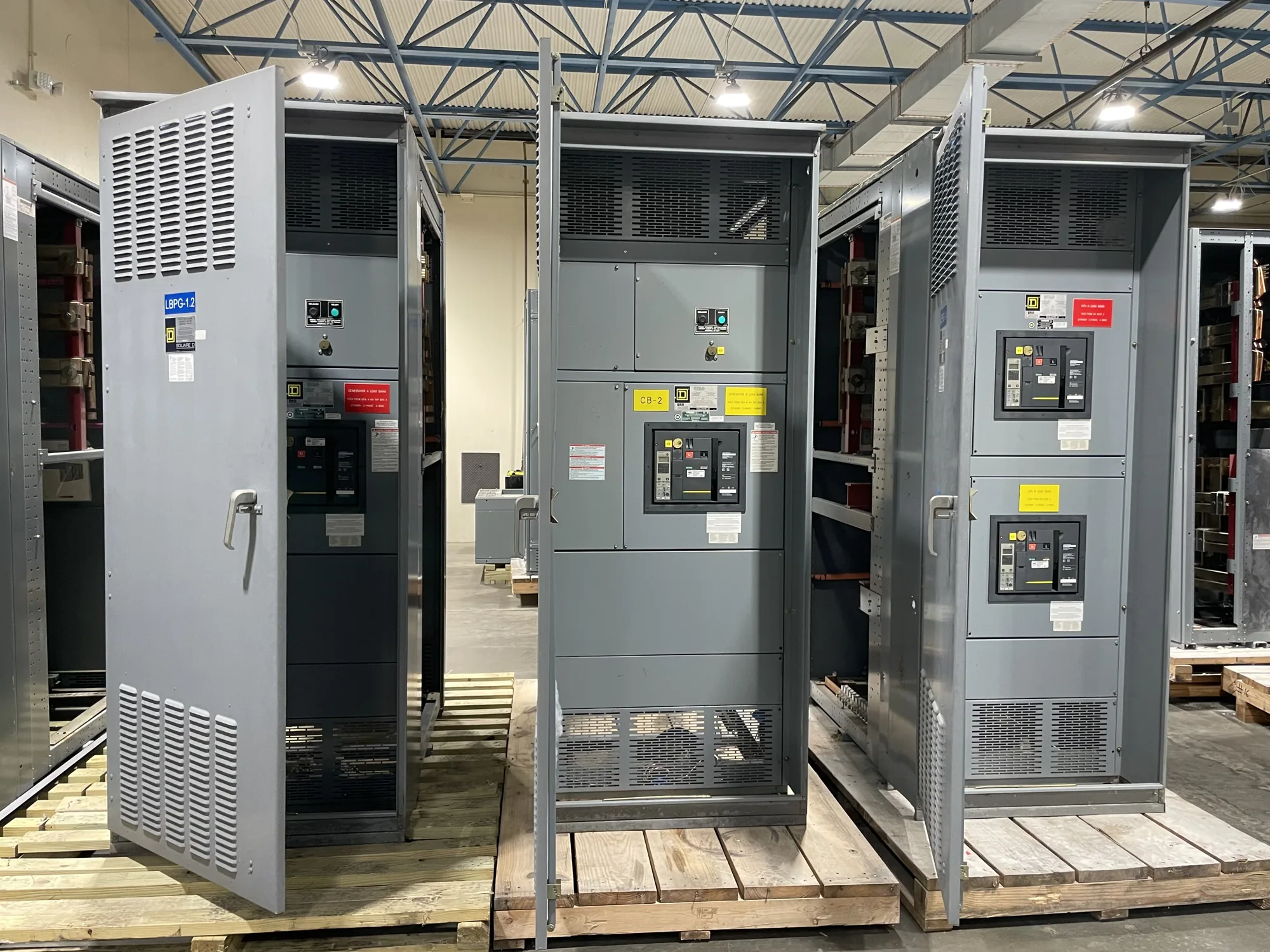
Low-voltage switchgear may be one interface in a plant distribution design, but it is not automatically required for every automotive project. A project could involve a switchboard or other equipment depending on voltage class, system architecture, current and fault-duty requirements, available space, and the engineer’s design. Confirm the exact equipment type and ratings from the project documents rather than using “switchgear” as a catch-all specification.
Where new low-voltage equipment is being considered, provide the intended source and load arrangement, feeder schedule, protection requirements, cable termination details, environmental conditions, and any required future provisions. Ask the engineer to identify which options are necessary for the study and operating strategy. Ratings, listing, testing, standards, and assembly details must be verified for the actual configuration; UL 891 applies only to eligible low-voltage switchboards, with applicability and assembly listing confirmed for the specific design.
Resolve trade-offs before freezing the specification
Production continuity, equipment footprint, maintainability, and initial project scope can pull in different directions. More separation between feeders may support operational planning but can affect lineup size and cost. A configuration intended to simplify maintenance may require additional space or coordination with upstream protection. The project team should document priorities, constraints, and unresolved choices so that equipment proposals can be evaluated against the same design basis.
Ask the responsible engineer to state study assumptions and identify which settings, device selections, or operating configurations remain subject to coordination. Confirm whether planned expansion, temporary feeds, or alternate sources are within the study scope. If the facility changes its system after design, determine who will assess the effect and update documentation. The supplier needs a stable, reviewed specification to build equipment that matches the intended interface.
Prepare a useful equipment inquiry
For a manufacturer inquiry, assemble the current one-line diagram, equipment schedules, technical specification, site and room constraints, required delivery location, and project milestones. Include the voltage class, system arrangement, requested ratings, feeder count, termination preferences, protection and accessory requirements, and any project-specific documentation or inspection needs. Clearly distinguish confirmed requirements from assumptions, and identify the engineer or owner contact responsible for technical clarifications.
South Carolina Switchgear Builders manufactures new equipment to specification, including US-built equipment with all-American components, and ships nationwide. Availability and lead times depend on the order and must be confirmed. Before releasing a purchase order, align the approved submittal and any open technical questions with the engineer, owner, installer, and facility operations team. Confirm delivery coordination and the planned outage sequence separately; neither should be assumed from a general equipment description.
Close the loop through stakeholder review
A sound project checklist connects the hazard study, operating practices, equipment specification, and production plan. Confirm study scope and system data; review feeder segregation and outage assumptions; identify maintainability and access needs; verify applicable standards and equipment-specific ratings; and assign responsibility for final technical approval. Qualified personnel must handle installation, testing, and maintenance under applicable safety procedures.
Before equipment is released for manufacture, resolve discrepancies between drawings, schedules, and the written specification. After design changes or system modifications, the responsible facility and engineering team should determine whether analysis, labels, procedures, or records need revision. This disciplined handoff helps new distribution equipment fit the automotive plant’s documented design while keeping arc-flash safety grounded in qualified analysis and work practices.