One campus, many electrical contexts
Higher education campuses often combine classrooms, laboratories, residence halls, libraries, central plants and buildings constructed in different decades. A new project may serve one facility, connect to an existing campus distribution system, or form part of a phased expansion. The applicable requirements therefore need to be established for the actual equipment and work scope, not inferred from a campus-wide label.
Codes and standards are related but not interchangeable. Codes and locally adopted provisions govern aspects of building electrical work; product standards address the design or evaluation of particular equipment. Owner specifications, utility requirements and the authority having jurisdiction (AHJ) may add project-specific criteria. The responsible engineer should identify how these sources apply and resolve conflicts before equipment is specified.
Confirm the governing requirements early
Start by documenting the project location, permit and review process, equipment function, installation environment, and relevant contract documents. Ask the engineer and AHJ which code editions and amendments apply, and whether project-specific interpretations or approval steps are expected. Utility interface requirements should be obtained for the actual service or connection; they should not be assumed to be identical across campus buildings or providers.
For each equipment type, identify the applicable product standard and edition in the specification, then confirm the proposed design’s scope of compliance and any required listing or evaluation. For eligible low-voltage switchboards, UL 891 may be relevant, but applicability and assembly listing must be verified for the specific design. Do not extend that standard to medium-voltage switchgear. Ratings, construction details, tests and documentation should be reviewed against the actual equipment submittal.
Coordinate feeders across buildings and phases
Multi-building planning requires a reliable picture of existing and proposed distribution paths. The design team should indicate feeder sources and destinations, voltage class, load assumptions, available fault-current information, protective-device coordination responsibilities and any known constraints. Suppliers need defined equipment requirements, not just a building name or a request to match a campus standard. Where information is preliminary, label assumptions and assign responsibility for confirmation.
Campus standards can support consistency in naming, metering, accessories, finish, documentation and preferred arrangements. However, applying a standard detail without checking the location and duty may create mismatches. Laboratory loads, plant equipment, building expansions and renovations can present different operating and space constraints. The engineer should determine which owner requirements apply, which are optional preferences, and what exceptions need written approval.
Choose equipment for its actual role
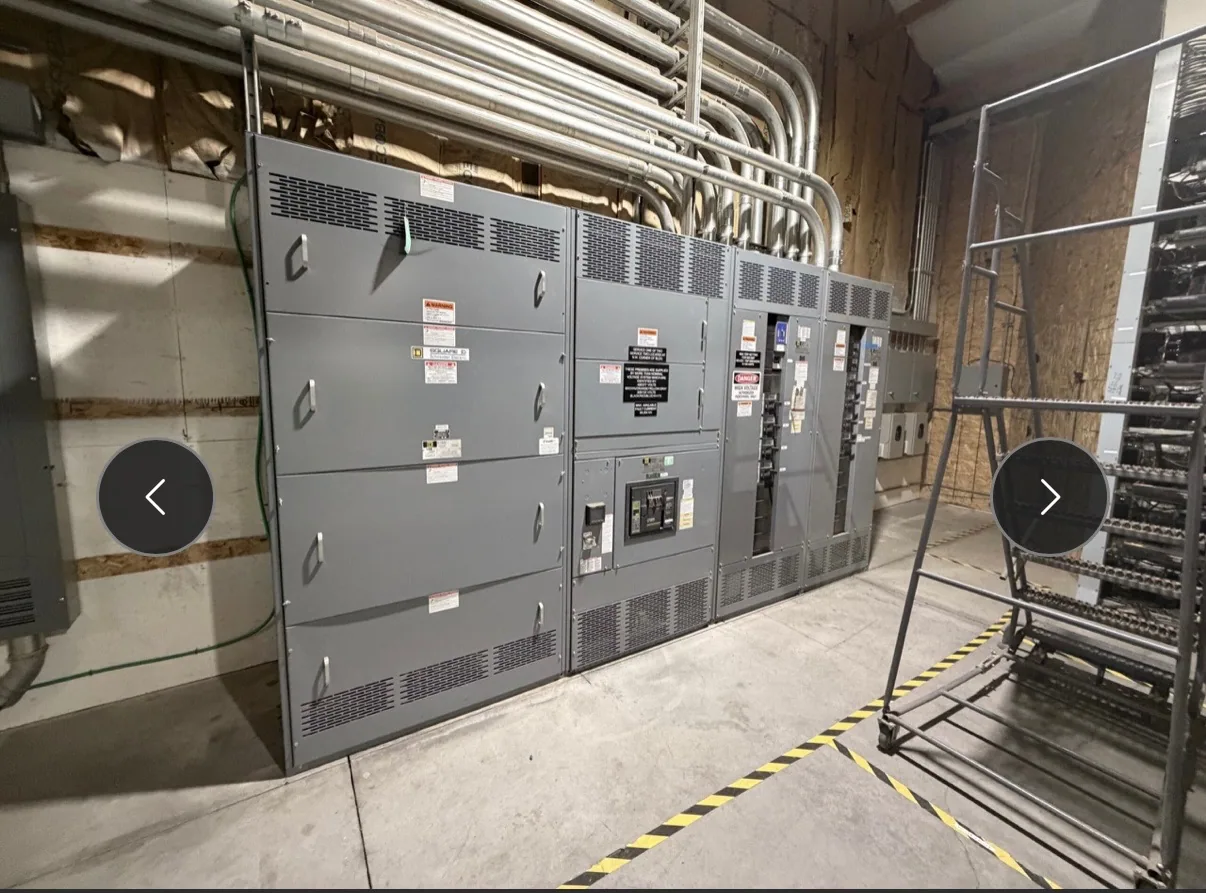
Electrical switchboards are one possible low-voltage distribution interface, not a default answer for every campus project. Their suitability depends on the one-line diagram, voltage and current requirements, fault duty, feeder count, available space, service conditions and coordination with upstream and downstream equipment. For a 480 V class application, verify the specified low-voltage ratings and design criteria. Medium-voltage applications, such as 5 kV or 15 kV class equipment, require their own equipment selection and standards review.
Compare alternatives by considering footprint, access and working clearances, cable entry, future feeder provisions, maintainability and the project’s installation sequence. A compact arrangement may be difficult to connect or service in a constrained electrical room; additional space or future provisions can affect cost and layout. The project engineer should determine acceptable trade-offs and document the selected configuration. Listing, ratings and available options must be confirmed for the particular assembly.
Plan around outages and campus operations
Scheduled outage windows can shape the procurement and installation plan. Identify which existing systems may be affected, who approves interruptions, what temporary arrangements the project team must evaluate, and when field verification can occur. Do not assume that a planned shutdown is available merely because a construction schedule shows a convenient date. Coordinate the sequence with campus stakeholders, the electrical contractor, engineer and applicable utility or AHJ.
Equipment delivery and installation dates also need coordination with room readiness, access routes, lifting plans, feeder work and inspection milestones. Availability and lead times depend on the specific order and must be confirmed; do not treat a preliminary schedule as a delivery commitment. Installation, testing and maintenance belong to qualified personnel following applicable safety procedures. Define required submittals and review durations early so that technical questions do not surface at the outage deadline.
Prepare a useful supplier package
Before requesting a proposal for new equipment, assemble the latest one-line diagram, project specifications, equipment schedule, applicable standard editions and owner criteria. Include voltage class, required ratings, arrangement, incoming and outgoing connections, environmental conditions, space limitations, accessory needs, documentation expectations and target milestones. Identify the engineer of record, purchasing contact and parties responsible for approval, along with any open technical decisions.
Ask the supplier to identify assumptions, exclusions, design-dependent options and information still needed to confirm the configuration. Review proposed deviations with the engineer before acceptance, especially changes affecting ratings, dimensions, feeder interfaces, listing or project standards. South Carolina Switchgear Builders manufactures new equipment in the United States, uses all-American components and ships nationwide; custom configurations and actual availability, delivery timing and technical details must be confirmed against the project specification.
Use a project-specific review checklist
Before release, confirm the governing code editions and amendments, product standard and edition, AHJ and utility requirements, owner-standard revision, equipment function, voltage class, ratings, feeder interfaces and acceptance documentation. Verify that one-line diagrams and schedules agree, identify unresolved assumptions, and obtain stakeholder approval for deviations. Check that the outage and construction sequence reflects procurement, room access, installation, inspection and commissioning dependencies.
This review gives the buyer and design team a clear basis for evaluating new campus equipment without treating one rule or product as universal. When requirements are uncertain, route the question to the responsible engineer, AHJ or utility rather than relying on a generic campus precedent. A complete, coordinated specification helps suppliers develop an appropriate proposal and gives the project team time to resolve technical and scheduling questions before procurement.