Start with the facility load picture
Automotive manufacturing facilities combine varied electrical demands: production-line motors, conveyors, pumps, ventilation, process equipment and supporting building systems. Their operating patterns may differ by shift, product mix or production phase. Continuous current rating decisions should therefore begin with the actual distribution plan and documented load information, not a broad assumption that every facility or line has the same demand.
For a new project or expansion, the owner and engineer can identify which loads operate together, which are intermittent, and which need to remain available during a planned outage elsewhere. Measured operating data from an existing facility may help, when collected and interpreted by qualified professionals. For a new line, engineered load estimates and clearly stated assumptions provide a starting point for equipment evaluation.
Understand what the rating describes
Continuous current rating concerns the current equipment is specified to carry under defined conditions. It is not interchangeable with a short-circuit rating, nor does it by itself establish that a particular assembly suits the entire application. The responsible engineer must coordinate the rating of the bus and relevant devices with the system design, anticipated load, protective scheme and applicable project requirements.
Ratings must be reviewed in context. Enclosure design, ambient conditions, equipment arrangement and other specification details may affect what is suitable for a particular installation. Do not assume a rating can be increased by adding together individual feeder ratings, or that a nameplate value resolves every operating question. Ask the engineer and manufacturer to confirm the proposed equipment against the complete specification and stated conditions.
Plan for production and maintainability
Staged outages can influence how distribution is arranged. If planned work is intended to leave selected production areas operating, the engineer may evaluate feeder segregation, load grouping and the consequences of isolating a section. These decisions are facility-specific: production priorities, electrical topology, protection coordination and operating procedures all matter. A current rating alone cannot guarantee that a line can remain in service during maintenance.
Maintainable distribution also depends on how equipment is accessed, isolated and serviced under the applicable safety procedures. Owners can identify outage windows, critical processes and acceptable production impacts early, while the engineer develops an arrangement for review. Installation, inspection, testing and maintenance should be performed by qualified personnel using applicable procedures; no project plan should depend on energized work as a routine shortcut.
Coordinate loads, feeders and expansion
Share a feeder schedule that identifies served equipment, expected operating current where available, starting or other operating characteristics relevant to the design, and whether loads run simultaneously. Distinguish firm project requirements from estimates. If future production stages are anticipated, describe their expected scope and timing as planning assumptions rather than treating unbuilt loads as confirmed demand. The engineer can then assess how present needs and possible expansion should be addressed.
Feeder segregation may support operational flexibility, but it can also affect equipment layout, protective-device selection, space requirements and project cost. The right balance depends on the facility’s continuity goals and electrical design. Discuss which areas need independent isolation, what loads may share distribution, and how any proposed arrangement interacts with the broader system. Confirm those choices with the responsible engineer before requesting a final equipment configuration.
Use low-voltage equipment as a design question
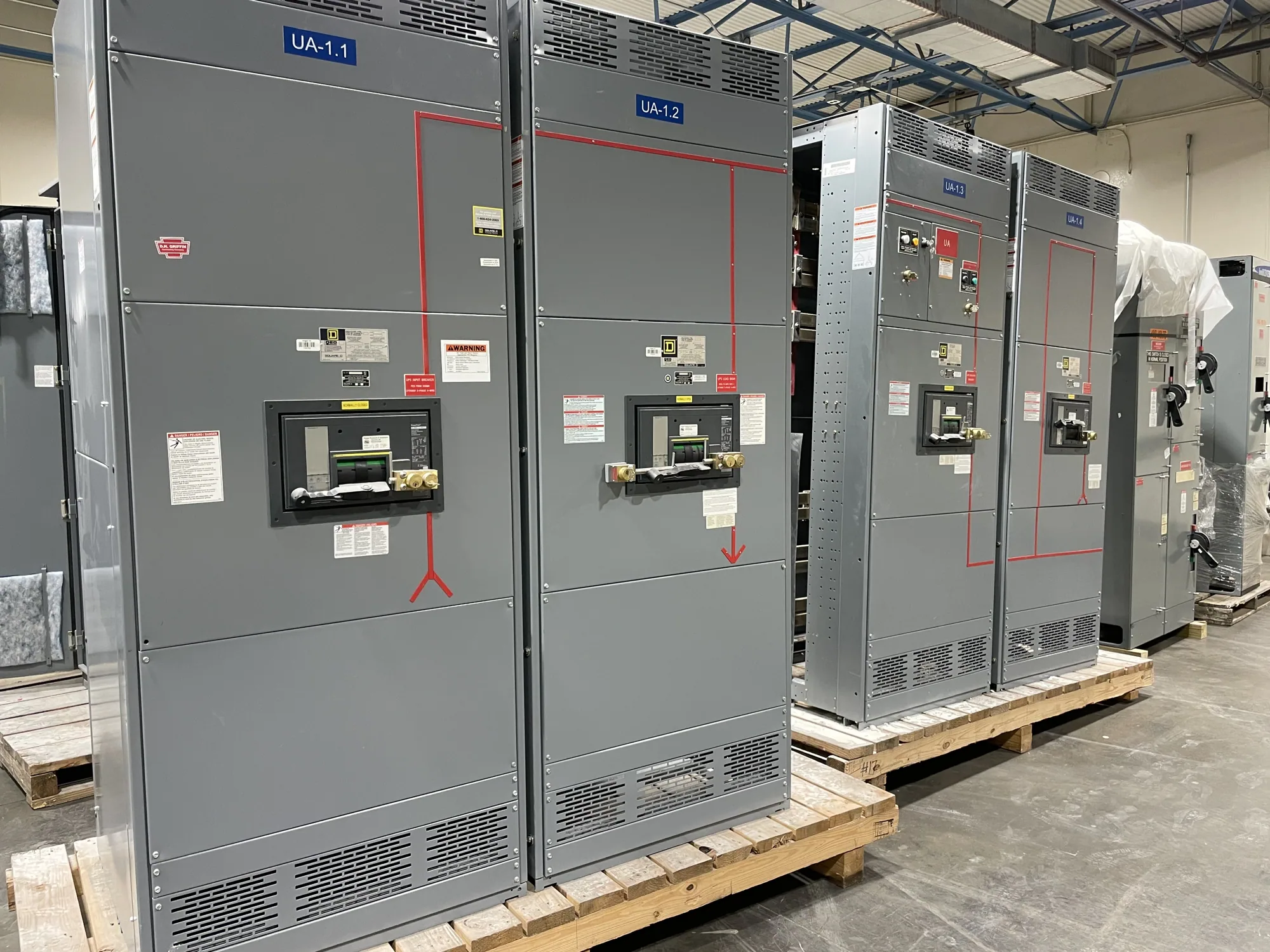
Low-voltage switchgear can be one possible interface in a facility distribution design, but it is not automatically required for every automotive project. The equipment type, voltage class and arrangement depend on the project’s electrical architecture and specifications. Where a low-voltage switchboard is considered, ask whether UL 891 is applicable to the intended design and verify any assembly listing for the specific configuration; do not assume eligibility or listing.
For equipment supplied by South Carolina Switchgear Builders, provide the approved one-line diagram, project specifications, load and feeder schedules, operating conditions, and required submittal information. Identify the intended voltage class, applicable standards, short-circuit requirements and any owner-specific criteria for engineering review. The manufacturer can evaluate a new, custom-to-specification configuration against the submitted requirements; availability and lead times depend on the order and must be confirmed.
Prepare a useful project checklist
Before equipment selection, assemble the latest one-line diagram, load data, feeder assignments, assumptions about simultaneous operation, environmental conditions and expansion plans. Note which production areas are critical, preferred outage windows, and the isolation boundaries the operating team wants the engineer to evaluate. Identify who owns each decision, including the owner, electrical engineer, facility operations team, equipment supplier and installation contractor.
Ask the project engineer to confirm the continuous current basis, bus and device ratings, applicable standards, protective coordination and any conditions that affect the proposed assembly. Keep short-circuit requirements separate in the review, and resolve discrepancies between drawings, schedules and specifications before approval. With documented loads and operating goals in hand, buyers and engineers can compare equipment proposals on a consistent, application-specific basis and coordinate delivery planning without treating estimates as guarantees.