Start with the campus electrical picture
Commercial campuses often combine multiple buildings, tenant spaces, mechanical systems, and feeders added in different construction phases. Instrumentation and communications planning should begin with the intended electrical arrangement, not with a preferred protocol or a list of devices. Identify the service points, distribution equipment, loads, and planned expansions that owners and engineers expect the new equipment to support.
Map which information is needed at each level: local equipment indication, operator monitoring, energy reporting, or another defined purpose. A campus may need different visibility at a service entrance and at downstream distribution points. Avoid assuming that every panel needs the same metering or remote status. Tie each requested point to a person or system that will use it, and document when the information is needed.
Define a useful point list
A point list translates operational needs into equipment requirements. Depending on the specified design, it may identify electrical measurements, breaker position, alarms, or other status indications. For each point, state its source, purpose, required range or units where relevant, display or destination, and whether it is needed locally, remotely, or both. The responsible engineer should verify that each point is supported by the selected equipment and instrumentation.
Metering scope deserves particular attention when tenant changes, cost allocation, or energy analysis are part of the project. Clarify whether readings are required at the service, a building distribution level, tenant boundaries, or selected loads. Define who owns meter configuration and data handling, and what accuracy or reporting requirements apply. These are project-specific criteria; they should be stated by the owner and engineer rather than presumed from a general campus use case.
Plan communications at the boundary
Specify the intended communications interface instead of relying on a broad request for network capability. The owner’s controls or facilities team should identify the protocol, physical connection, addressing or configuration responsibilities, and the system that receives data. Confirm which signals are available through the proposed equipment and which require separate devices or interfaces. Compatibility must be checked against the actual equipment design and the receiving system.
Draw a clear boundary between electrical equipment and campus information technology. Identify who supplies network hardware, manages credentials and access, approves connections, and maintains the receiving application. Discuss cybersecurity requirements with the responsible IT and controls stakeholders before procurement. Do not assume that a communications port establishes a secure connection or that the switchgear supplier will configure the campus network. Document handoffs, testing expectations, and any excluded scope.
Coordinate growth, isolation, and phasing
Future service growth can affect compartment space, feeder arrangements, metering locations, and planned tie-ins. Provide the engineer’s current and anticipated load information, one-line diagram, available space constraints, and expansion assumptions. Ask the design team to distinguish confirmed loads from allowances for later phases. A configuration suitable for an initial building may not provide the desired isolation or operating flexibility after additional feeders and tenants are introduced.
Construction phasing also affects how equipment is specified and delivered. Identify which buildings or feeders belong to each phase, what must be energized for each handover, and which interfaces need to be ready at initial installation. The project team should define isolation and switching requirements within the overall electrical design and applicable safety procedures. Qualified personnel handle installation, testing, and maintenance; instrumentation planning is not a substitute for safe work practices.
Use service-entrance equipment as an interface example
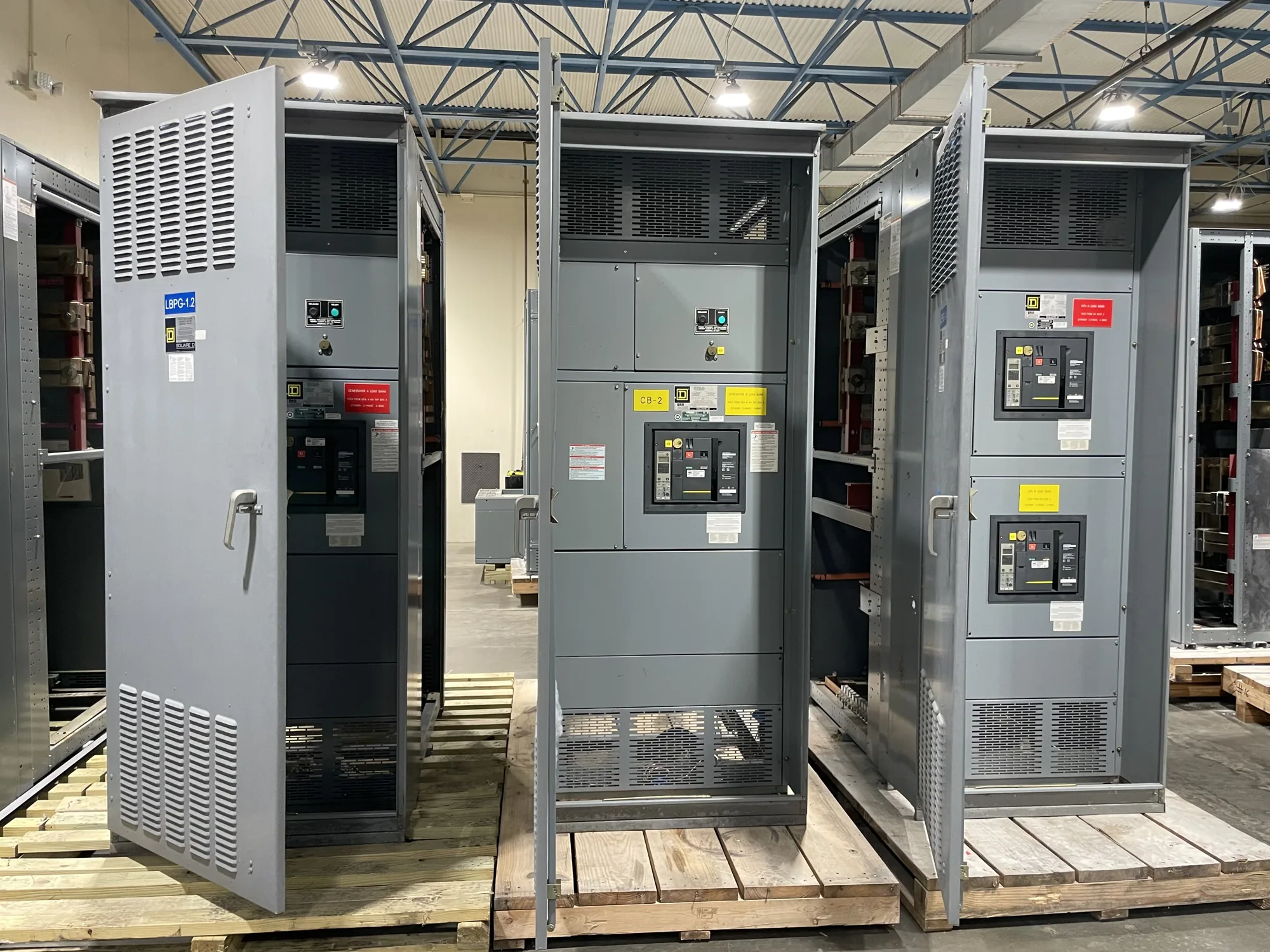
Service-entrance switchgear can be one point in the campus information plan when the project design calls for it. The owner and engineer might define which incoming-service measurements or status points are useful there, how those points relate to downstream building metering, and where data should go. This is an example of planning an interface, not a claim that every campus requires this equipment or the same feature set.
For a new-equipment request, provide the manufacturer with the approved one-line diagram, project specification, point list, equipment location and environmental constraints, phasing needs, and required communications interface. Identify who will supply and configure meters, network connections, and monitoring software. If the campus has an established naming convention or control-system standard, include it. These details help suppliers identify design questions and clarify responsibility before an order is finalized.
Resolve trade-offs before procurement
More points can improve visibility, but each requested signal brings decisions about instrumentation, interfaces, integration, and verification. Prioritize information that supports a defined operational or reporting need. Likewise, a common protocol across buildings may simplify integration, but the receiving system and project stakeholders must confirm compatibility. The engineer should evaluate measurement locations, isolation needs, space, and future provisions as part of the complete distribution design.
Ask the project team to review applicable standards and required ratings against the actual specification and equipment. Listing, testing, and standards applicability depend on the specific assembly and design; they should be confirmed rather than inferred from a general description. For eligible low-voltage switchboards, UL 891 applicability and assembly listing require verification for that design. Do not extend that designation to medium-voltage switchgear or assume it applies to every product.
Prepare a coordinated purchasing package
Before requesting a quotation, assemble the electrical drawings, load and growth assumptions, equipment schedule, metering requirements, point list, communications details, project milestones, and stakeholder contacts. Mark unresolved items clearly and identify the owner, engineer, controls integrator, IT team, and electrical contractor roles. A focused package allows the manufacturer to assess the requested new equipment against the project requirements and return questions where design choices remain open.
South Carolina Switchgear Builders manufactures new equipment to specification, with US-built equipment and all-American components, and ships nationwide. Availability and actual lead times depend on the order and must be confirmed. Coordinate review of the proposed configuration, interfaces, schedule, and delivery requirements with the project team before release. A documented point list and agreed integration boundaries give campus stakeholders a more dependable basis for procurement and phased implementation.