Start with the facility, not a single lineup
Automotive manufacturing power systems may serve production lines, motor loads, material handling, utilities, and support areas, with different operating and expansion plans. Short-circuit rating decisions therefore belong to the electrical system study and equipment application, not to a generic plant category. The responsible engineer should identify each relevant point in the distribution network and determine what fault-current conditions the equipment could encounter there.
For a hypothetical facility with production areas developed in stages, planned additions can change the system configuration. A new transformer, alternate source, tie arrangement, or larger supply may affect available fault current. The design team should account for the operating modes the owner intends to use, including normal and planned alternate configurations, rather than relying only on an early single-line diagram.
Distinguish the ratings being reviewed
Available fault current is a calculated system condition at a particular location. It is not itself the equipment rating. Interrupting capacity concerns whether a protective device can interrupt a specified fault under its applicable conditions. An assembly withstand or short-circuit current rating addresses the assembly's ability to withstand or manage fault effects as defined by the applicable design and rating basis. These terms are related, but they are not interchangeable.
The project engineer should compare the calculated available fault current with the ratings applicable to each device and assembly, using the equipment documentation and governing project requirements. A rating suitable at one point may not be suitable elsewhere. Conditions and coordination methods can depend on the specific protective devices, arrangement, and manufacturer’s evaluated configuration, so assumptions need explicit technical review rather than inference from a single number.
Coordinate production distribution and outages
Production continuity may influence how distribution is divided among lines, process areas, and essential support loads. Feeder segregation can help define which portions of a facility are affected by a planned outage or fault, but it does not independently establish adequate short-circuit ratings. The engineer should evaluate feeder protection, source arrangements, equipment ratings, and the intended isolation boundaries together.
Staged construction or upgrades add another coordination challenge: existing sections may remain in service while new distribution is installed or connected during a planned outage. Confirm the proposed sequence, temporary operating configurations, and final arrangement with the owner and qualified project stakeholders. The fault-current study and equipment selection should reflect the configurations that will actually be used, including any project-specific future source or capacity assumptions that the engineer elects to include.
Consider equipment as one part of the system
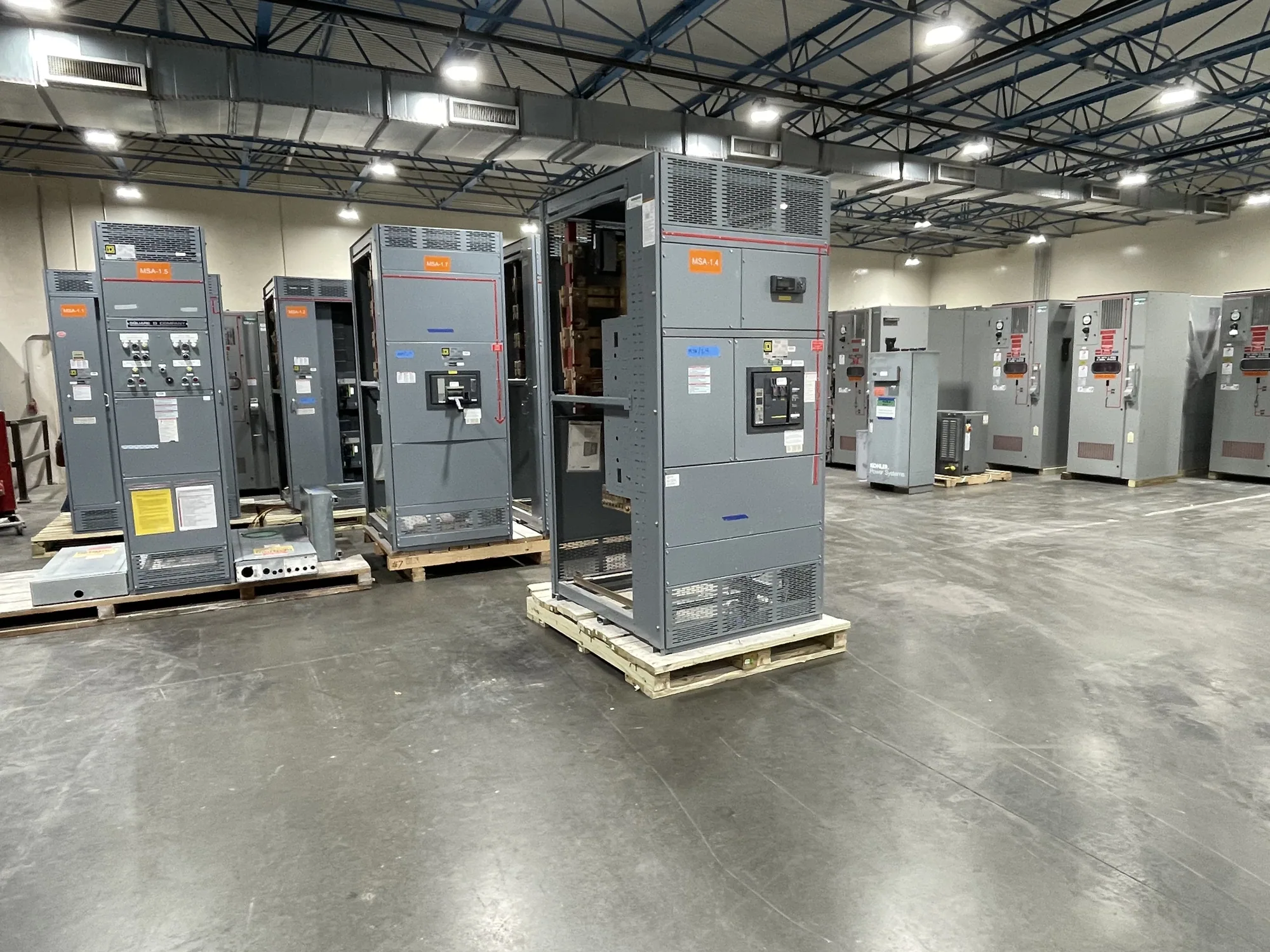
Low-voltage switchgear may be an interface in a plant distribution design, but it is not automatically the required solution for every automotive facility or every distribution point. The engineer should define the function and electrical characteristics required at that location, then determine what equipment type and arrangement fit the system. The applicable voltage class, available fault current, protective-device details, and project specifications all matter.
For new equipment, the buyer should provide the manufacturer with a current one-line diagram, relevant study results, system voltage, source and transformer information, and the requested equipment function. Include the fault-current value and calculation basis at the connection point, plus details of alternate sources or ties when applicable. If the study is incomplete, identify open assumptions and ask the responsible engineer to confirm them before a final equipment specification is set.
Resolve trade-offs with project stakeholders
Higher ratings, alternate protective-device arrangements, and feeder segregation can affect equipment configuration, footprint, cost, and coordination, but the correct balance is project-specific. Avoid selecting equipment from a nominal rating alone or assuming that a future expansion can be accommodated without study. Ask the engineer to explain the basis for the rating, what operating conditions it covers, and whether planned changes require a revised calculation or equipment review.
Coordinate decisions among the owner, electrical engineer, equipment supplier, and installation team. Confirm who owns the fault-current study, who approves protective-device settings, and how design revisions will be communicated. Any proposed coordination approach must be verified for the specific devices and equipment combination. Installation, testing, and maintenance should be performed by qualified personnel following applicable project safety procedures.
Prepare a specification and purchasing checklist
- Provide the current one-line diagram, voltage information, source details, and available fault-current study or clearly stated calculation assumptions.
- Identify normal and alternate operating configurations, tie conditions, planned expansion, staged outages, and production areas requiring feeder separation.
- State the required equipment function, location, relevant project specifications, applicable standards, and any rating or documentation requirements for engineer review.
- Ask the supplier to confirm the proposed configuration, applicable ratings, equipment documentation, availability, and delivery schedule against the actual specification.
Review the equipment submittal against the engineer-approved design before releasing an order. Record unresolved assumptions and obtain agreement on drawing review, interfaces, outage sequencing, and responsibility for final coordination. If a design changes, reassess whether the fault-current study and equipment selection remain applicable. This process gives the manufacturer a clearer basis for proposing new equipment and helps the project team align procurement with the system design.
Move from study data to a confirmed order
For a project-specific quotation, send the manufacturer the approved or current design information and identify any items still awaiting engineering confirmation. Ask which ratings, listing or testing details, and standards can be confirmed for the proposed assembly; applicability depends on the actual design and supplied equipment. Availability and lead times also depend on the order and must be confirmed. Clear inputs let the team evaluate the equipment against automotive production needs without treating a general industry example as a final design decision.