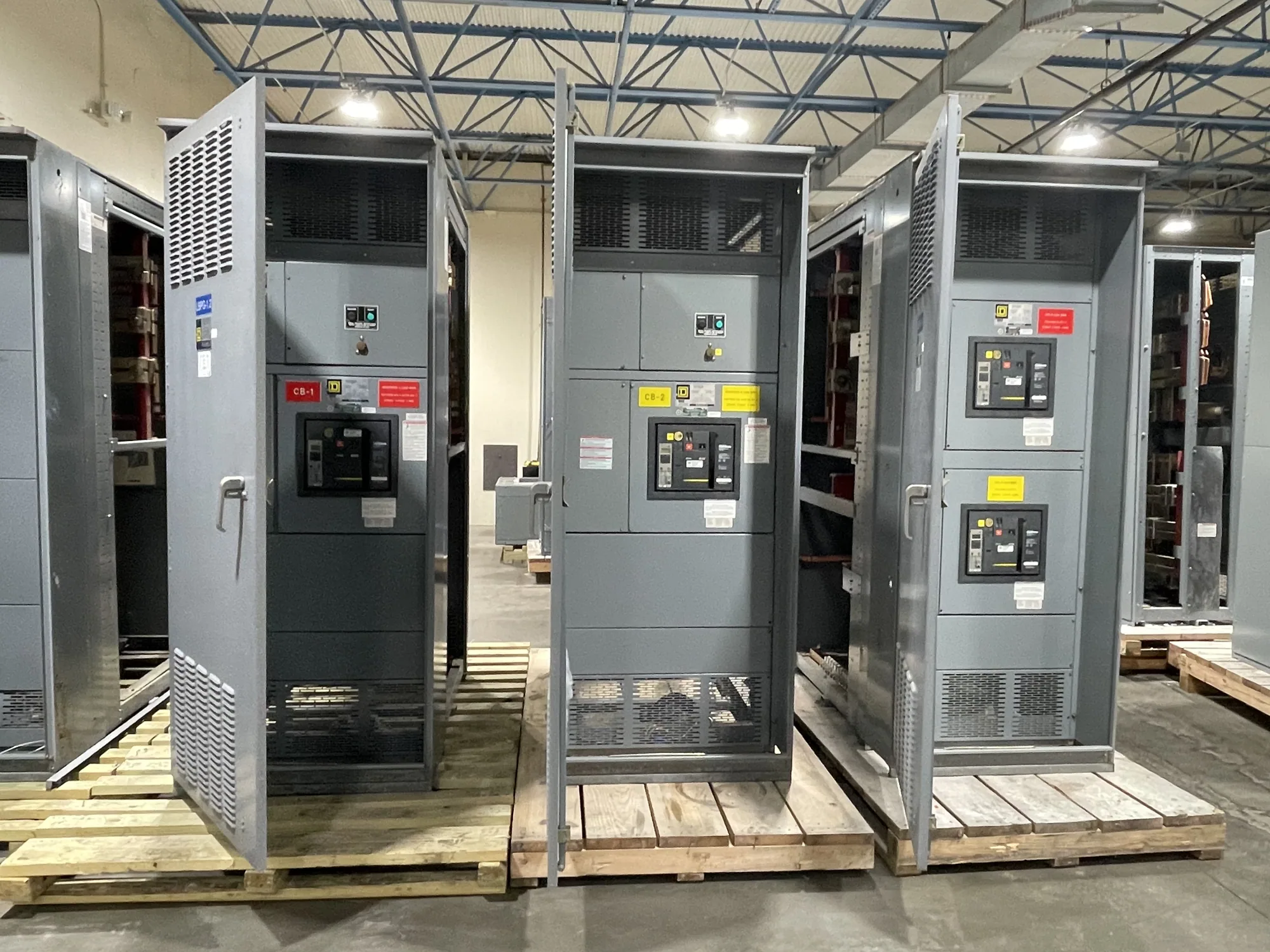
What continuous current rating means for a campus
On a commercial campus, continuous current rating is one part of coordinating electrical equipment with the current it must carry during normal operation. A campus may serve several buildings, changing tenant spaces, central mechanical equipment, and feeders added in separate construction phases. The rating needs to reflect the intended operating conditions and the actual equipment configuration, not simply a building’s square footage or a single estimated peak.
Continuous current is distinct from short-circuit withstand capability. Current ratings for buses and devices address ongoing load-carrying duties under specified conditions; short-circuit ratings address a different, fault-related requirement. A complete equipment specification considers both, along with voltage, system arrangement, protection, and applicable standards. The project engineer should establish these requirements for the particular system rather than treating one rating as a substitute for another.
Build the load picture before selecting ratings
Start with existing and planned loads by building, distribution section, and feeder. Useful inputs can include interval demand data where available, equipment schedules, operating hours, anticipated tenant changes, and load studies prepared for the project. Separate normal coincident demand from connected load, and document how future development or electrification has been represented. Estimates and assumptions should be visible so reviewers can judge whether they remain appropriate.
Campus peaks can be shaped by combinations of chillers, pumps, ventilation, elevators, data and communications spaces, kitchens, and tenant equipment. The critical question is not whether every load can operate at full nameplate demand simultaneously, but what credible operating scenarios the responsible engineer is using. Seasonal conditions, occupancy patterns, standby arrangements, and planned load management may affect those scenarios. Suppliers need the approved design basis, not an undocumented diversity assumption.
Coordinate bus, devices, and operating conditions
Equipment selection must account for the continuous current rating of the assembly bus and the ratings of its individual protective and switching devices. These values are related but are not interchangeable: the lowest applicable component or assembly limitation may govern a particular configuration. Confirm the specified rating at the required voltage and for the exact arrangement, including sections, incoming sources, tie devices, and feeder provisions.
Ambient temperature, enclosure arrangement, ventilation, installation location, and the manufacturer’s stated conditions can affect suitability or require a different configuration. Do not assume that a nominal rating remains valid under every room condition or installation layout. The engineer and supplier should identify applicable derating provisions and review equipment heat dissipation and spacing against project documents. Any rating or adjustment must be confirmed for the offered design and its stated operating conditions.
Plan for growth, metering, and isolation
Campus service growth can favor an arrangement that accommodates defined future feeders or additional distribution sections, but extra capacity has practical tradeoffs. A larger rating or reserved space may affect equipment dimensions, cost, room layout, and the present-day loading basis. Specify which future loads are reasonably planned, when they may connect, and whether provisions mean reserved physical space, installed devices, or a different bus rating.
Metering and isolation requirements also shape the design. Identify where the owner needs energy data, how buildings or tenants will be distinguished, and which sections must be isolated for planned work. Metering instrument arrangements, communications interfaces, and access requirements should be coordinated with the electrical drawings and operating plan. Isolation and maintenance provisions should be reviewed by qualified project personnel; they do not justify energized work or replace applicable safety procedures.
Relate equipment scope to campus distribution
Low-voltage switchgear may be an appropriate interface in some campus systems, but it is not automatically required for every building or distribution point. The engineer should determine the voltage class, system topology, service arrangement, and function of each assembly. A 480 V class system is low voltage; other project voltage classes and equipment choices must be specified rather than inferred from the campus setting.
When a low-voltage switchboard is being considered, ask whether the proposed assembly is suitable for the defined application and whether UL 891 applies to that specific design. UL 891 concerns eligible low-voltage switchboards; applicability and assembly listing must be verified for the actual equipment. Do not extend that standard to medium-voltage switchgear or assume that every switchgear or switchboard assembly carries the same listing.
Questions to resolve with the project team
Provide the manufacturer with the one-line diagram, voltage and phase information, source and tie arrangement, bus and device ratings, feeder schedule, enclosure and installation conditions, metering scope, and required options. Include load data and the calculation basis, anticipated campus additions, construction sequence, room constraints, and any operating restrictions. Identify decisions still pending, such as utility coordination or tenant scope, so proposals clearly distinguish confirmed requirements from assumptions.
Before release, have the owner, engineer, contractor, and supplier review the same equipment schedule and revision. Resolve who confirms protective-device details, metering interfaces, future provisions, and delivery coordination for each phase. For new equipment, South Carolina Switchgear Builders offers US-built equipment with all-American components, custom to specification, and ships nationwide. Availability and actual lead times depend on the order and must be confirmed against the approved scope.
Use a documented basis for purchasing
A useful purchasing package states the required continuous current rating and the conditions under which it applies, rather than requesting an unspecified “campus-size” assembly. It should identify design assumptions, applicable standards, required documentation, and review responsibilities. Confirm ratings, listing, testing, availability, and delivery dates against the specific proposed equipment; none should be assumed from a general product description.
Finally, align equipment procurement with the construction sequence and the campus’s continuity needs. Confirm delivery access, room readiness, interfaces with upstream and downstream equipment, and the timing of qualified installation and testing. When the load basis, operating conditions, and stakeholder responsibilities are documented together, the selected rating can be evaluated as part of a coherent distribution plan—supporting current service while making future changes deliberate rather than speculative.