Start with the campus system, not one lineup
A commercial campus can combine a central service, multiple buildings, tenant spaces, mechanical plants, and feeders installed in separate construction phases. Short-circuit ratings therefore need to be considered at the relevant points throughout the electrical distribution system, rather than selected from a single switchgear catalog entry. The responsible engineer establishes the system design and evaluates how sources and distribution arrangements affect available fault current.
Changes in occupancy and load can prompt service upgrades, new transformers, added distribution equipment, or revised feeder arrangements. A rating suitable for an earlier phase should not be assumed suitable after a system change. For new equipment, the project team should identify the specific installation point, connected sources, and design assumptions that govern the equipment specification.
Distinguish fault current from equipment ratings
Available fault current is a calculated or otherwise established property of the electrical system at a particular location under stated assumptions. It is not the same value everywhere on a campus. The engineer evaluates relevant sources, transformer characteristics, conductor paths, and system configuration; the equipment supplier needs the resulting specification and the design conditions that affect the proposed assembly.
Equipment documents may identify interrupting capacity for protective devices and a short-circuit current rating or withstand capability for an assembly. These terms describe different aspects of fault performance and are not interchangeable. The project engineer must determine which ratings apply to each device and assembly, then confirm that proposed equipment and protective-device combinations satisfy the design requirements. Do not infer a rating from voltage class, enclosure size, or a product name alone.
Coordinate service growth, metering, and isolation
Campus planning often balances capacity for future growth against cost, space, and the scope of the current phase. An engineer may compare a defined initial configuration with a planned expansion, but a future allowance does not itself establish a short-circuit rating. Ask what system configuration and source conditions the specified rating is intended to cover, and whether later additions would require updated calculations or equipment review.
Metering arrangements, service isolation, and feeder divisions affect the equipment layout and the boundaries between project scopes. They can also influence how the engineer evaluates faults at different points, particularly where a campus has multiple services or separately phased buildings. Identify required metering locations, disconnecting arrangements, and interfaces early. The responsible engineer should determine which devices and assemblies belong in each evaluation; a layout preference does not replace fault-current analysis.
Account for phased construction and system changes
Phasing can leave existing buildings operating while new services or feeders are added. The project team should document the intended configuration for each relevant phase and distinguish permanent arrangements from temporary construction conditions. New equipment specifications should identify the phase it serves and any assumptions about sources, tie positions, or connected distribution equipment. Those assumptions need review if the sequence or final configuration changes.
Before procurement, compare the proposed equipment schedule with the latest one-line diagram and fault-current study information. Check that equipment identifiers, voltage class, specified ratings, feeder destinations, and metering or isolation requirements agree. If project revisions alter a source, transformer, or distribution path, refer the change to the responsible engineer for evaluation rather than treating the earlier rating as automatically valid.
Clarify equipment interfaces and trade-offs
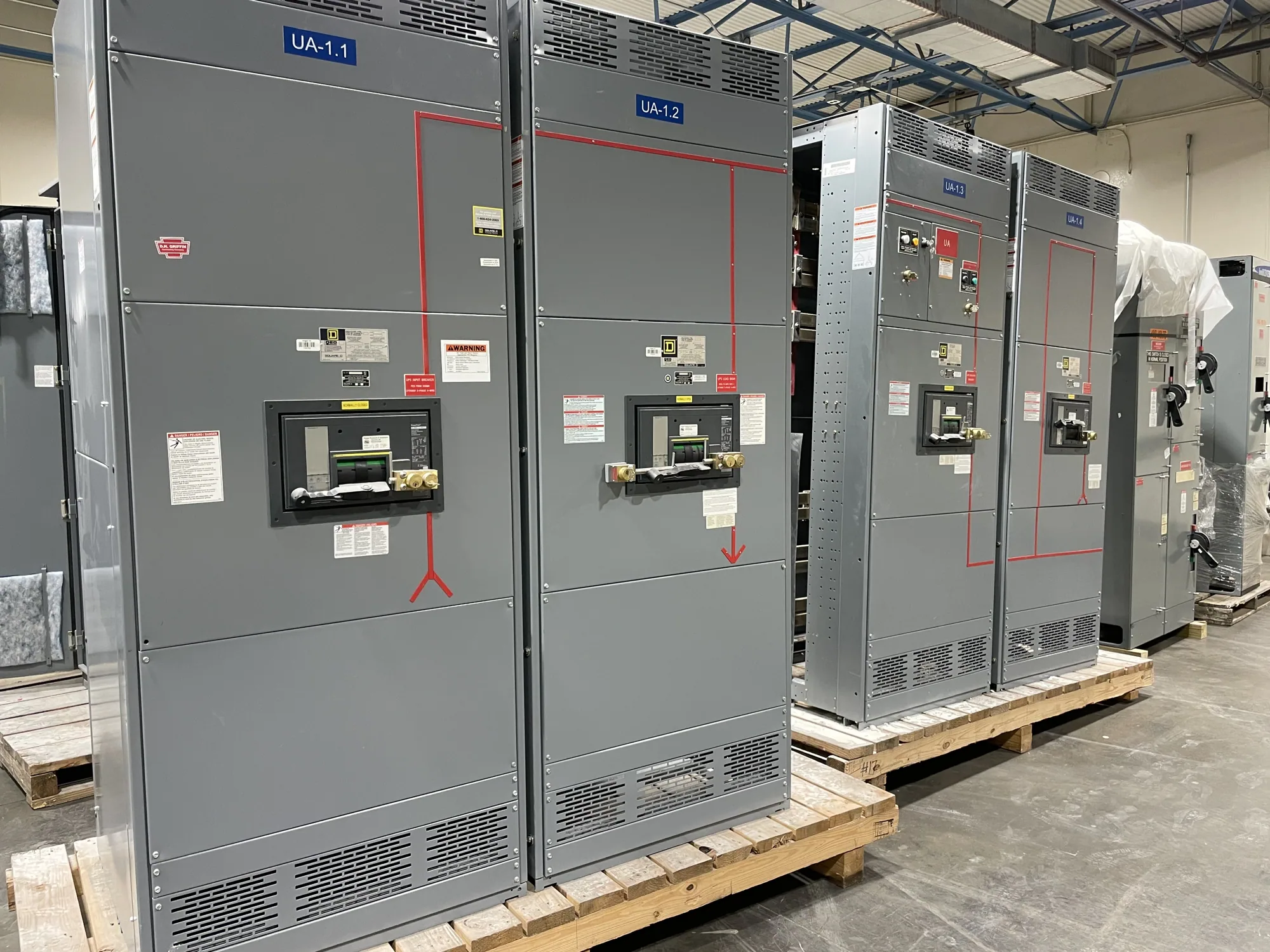
Low-voltage switchgear is one possible interface in a campus distribution design, not a universal requirement for every building or service. Depending on the project, the equipment scope may instead involve a switchboard or other specified distribution assembly. Selection should follow the system design, electrical characteristics, available space, operating needs, and applicable project requirements. Confirm the intended product type and voltage class before requesting a configuration.
More capacity, additional sections, metering provisions, and isolation features can affect footprint, connections, cost, and coordination with adjacent equipment. The team should weigh those trade-offs against the defined current scope and documented future plans. Ask the manufacturer to identify what information is needed to configure new equipment to the project specification. Ratings, testing, listing, and standards applicability must be confirmed for the specific design and supplied assembly.
Build a useful engineering and purchasing checklist
Provide the current one-line diagram, equipment schedule, project phase, installation point, nominal system information, and available fault-current data or the study basis established by the engineer. Include source and transformer details that the design team considers relevant, as well as required device and assembly ratings. Flag open assumptions rather than asking a supplier to fill in engineering decisions that belong to the project engineer.
- Identify services, buildings, feeder destinations, and any planned ties or expansion interfaces.
- State metering, isolation, enclosure, connection, and space requirements that are defined for the scope.
- List applicable project standards and ask the engineer to confirm their relevance to each equipment type.
- Identify stakeholders responsible for design approval, utility coordination where applicable, procurement, and construction phasing.
Review the specification before release
Have the electrical engineer review the fault-current basis and equipment ratings against the current system design. Ask the equipment manufacturer to confirm that the proposed new assembly can be configured to the supplied specification, and clarify any exceptions or unresolved data before approval. For a switchboard, confirm whether UL 891 applies to the particular eligible design and whether the assembly listing is verified; that standard should not be applied to medium-voltage switchgear.
South Carolina Switchgear Builders manufactures new equipment in the United States using all-American components, with custom configurations and nationwide shipping. Availability and lead times depend on the order and must be confirmed. A clear, coordinated specification helps the engineer, owner, contractor, and manufacturer resolve interfaces before procurement and supports a sound review as campus plans develop.