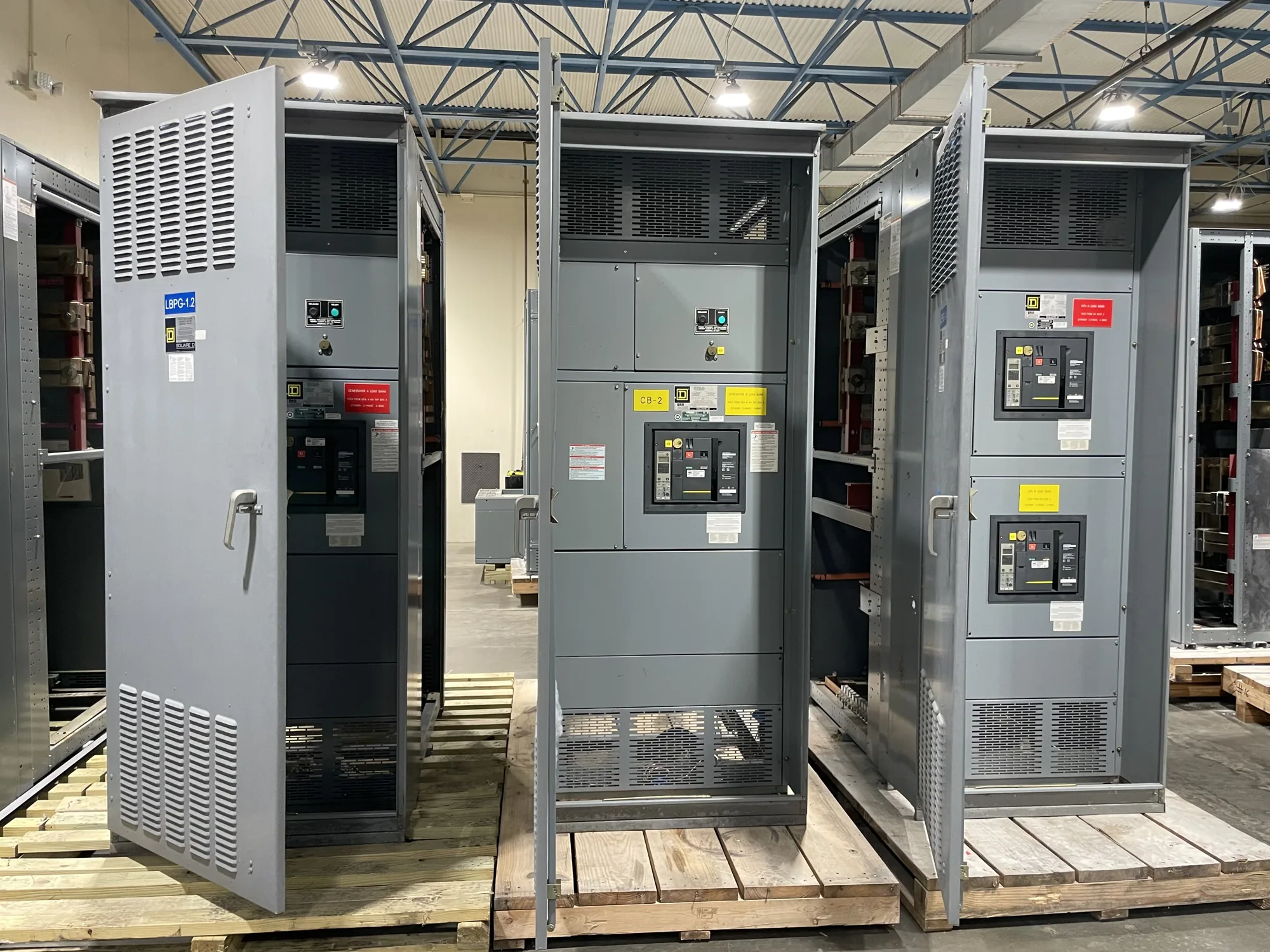
Why continuous current ratings matter in data centers
Continuous current rating describes the current an electrical component or assembly is designed to carry under its specified conditions. For a data center, that figure must make sense within a system serving IT equipment, cooling, building services, and other loads that may operate concurrently. A rating is not, by itself, a prediction of actual demand or proof that an installation has enough capacity.
Consider a hypothetical facility with high-density computing, staged construction, redundant distribution paths, and backup sources. The design team must understand which loads can run together, which transfer between sources, and how operating modes change current through each path. Owners, electrical engineers, operators, and equipment suppliers should use consistent assumptions rather than sizing from a single headline load estimate.
Translate facility demand into equipment requirements
Start with the electrical load model and distinguish connected load from expected operating demand. Identify IT loads, cooling equipment, auxiliary systems, and planned future phases, then document the assumptions behind diversity, redundancy, and growth. Ask the responsible engineer to confirm how normal, peak, standby, and maintenance configurations affect each distribution segment; one facility-wide number may conceal very different conditions at individual buses.
Continuous current rating applies to particular devices and bus sections, not simply to a room or building. The selected equipment configuration needs to account for the expected current path and the specification of its components. Confirm device ratings, bus ratings, and assembly details together, while avoiding assumptions that a component's rating automatically establishes the capability of the complete assembly.
Coordinate sources, redundancy, and phased capacity
Data centers may coordinate utility service, generators, uninterruptible power systems, and transfer arrangements. The actual architecture is project-specific. Provide a one-line diagram that identifies sources, ties, transfer points, and intended operating modes, including conditions when a source or path is unavailable. Ask the engineer to determine which equipment sections carry current in each mode and whether any alternate configuration changes the required rating.
Phased capacity also requires deliberate coordination. Equipment installed for an initial build may serve a different load profile from later phases, while future expansion assumptions can affect space, bus arrangements, and selection decisions today. Compare the cost and practicality of installing capacity in stages with the operational needs of the completed design. Record which future loads are firm requirements and which remain planning assumptions, then confirm that the proposed configuration addresses them.
Check operating conditions and thermal assumptions
Current capability depends on the specific equipment design and the conditions stated for it. Give the supplier the intended installation environment and relevant operating assumptions, such as enclosure arrangement, ventilation, ambient conditions, and expected loading duration. The project engineer and manufacturer should confirm whether those conditions affect the specified rating or require a different configuration. Do not assume a rating transfers unchanged between designs or installation environments.
Monitoring can help operators understand loading and plan capacity, but measurement does not replace sound design. Decide what information operators need, where current will be observed, and how alarms or operating procedures will support safe decisions. Monitoring points should align with the one-line diagram and the facility's management approach. Review maintainability as well: access, isolation provisions, and planned work arrangements should be addressed by qualified project personnel under applicable safety procedures.
Choose equipment around the system, not a label
Low-voltage switchgear may be one interface in a data center distribution design, but it is not automatically the right solution for every segment. The system voltage, available fault duty, source arrangement, load requirements, space, and project specifications guide equipment selection. A low-voltage switchboard and low-voltage switchgear are distinct equipment categories; ask the responsible engineer to define the required equipment and applicable design criteria rather than treating the terms as interchangeable.
When requesting a manufacturer proposal for new equipment, share the project one-line, load schedule, equipment location and environment, required ratings, source and transfer details, phasing plan, and applicable project standards. Flag assumptions and unresolved items clearly. South Carolina Switchgear Builders manufactures new equipment custom to specification, with US-built equipment and all-American components; configuration, availability, listing, and delivery timing must be confirmed for the actual order.
Review the specification before procurement
Before release, have the owner, engineer, operator, and purchasing team review the same current documents. Confirm the rating basis for each device and bus section, the operating modes used in the design, environmental assumptions, expansion provisions, and interfaces with upstream and downstream equipment. Ask whether the specified assembly and any requested listing apply to the proposed design. Do not infer compliance or listing from a product category alone.
A useful procurement package identifies required ratings and leaves no ambiguity about scope, quantities, drawings, options, and review responsibilities. Include the planned approval process and identify who resolves technical questions. A manufacturer can then evaluate the documented requirements and clarify design-dependent matters before production planning. Actual availability and lead times depend on the order and should be confirmed; nationwide shipping is available, with delivery details coordinated for the project.
Practical questions for the project team
- Which load assumptions define normal and peak operation, and how are later data center phases represented?
- What source, transfer, redundancy, and maintenance configurations determine current through each section?
- Which device and bus ratings apply, and what installation conditions must the supplier use to confirm them?
- What monitoring and maintainability requirements belong in the equipment specification?
- Which standards, listing requests, drawings, and stakeholder approvals must be confirmed for this specific design?
Answering these questions creates a traceable connection between facility demand, operating strategy, and equipment requirements. It also gives the manufacturer a practical basis for evaluating a new, custom-specified assembly without substituting general assumptions for project engineering. Keep the load model and one-line current through procurement review, and revisit them when phasing or operating plans change.