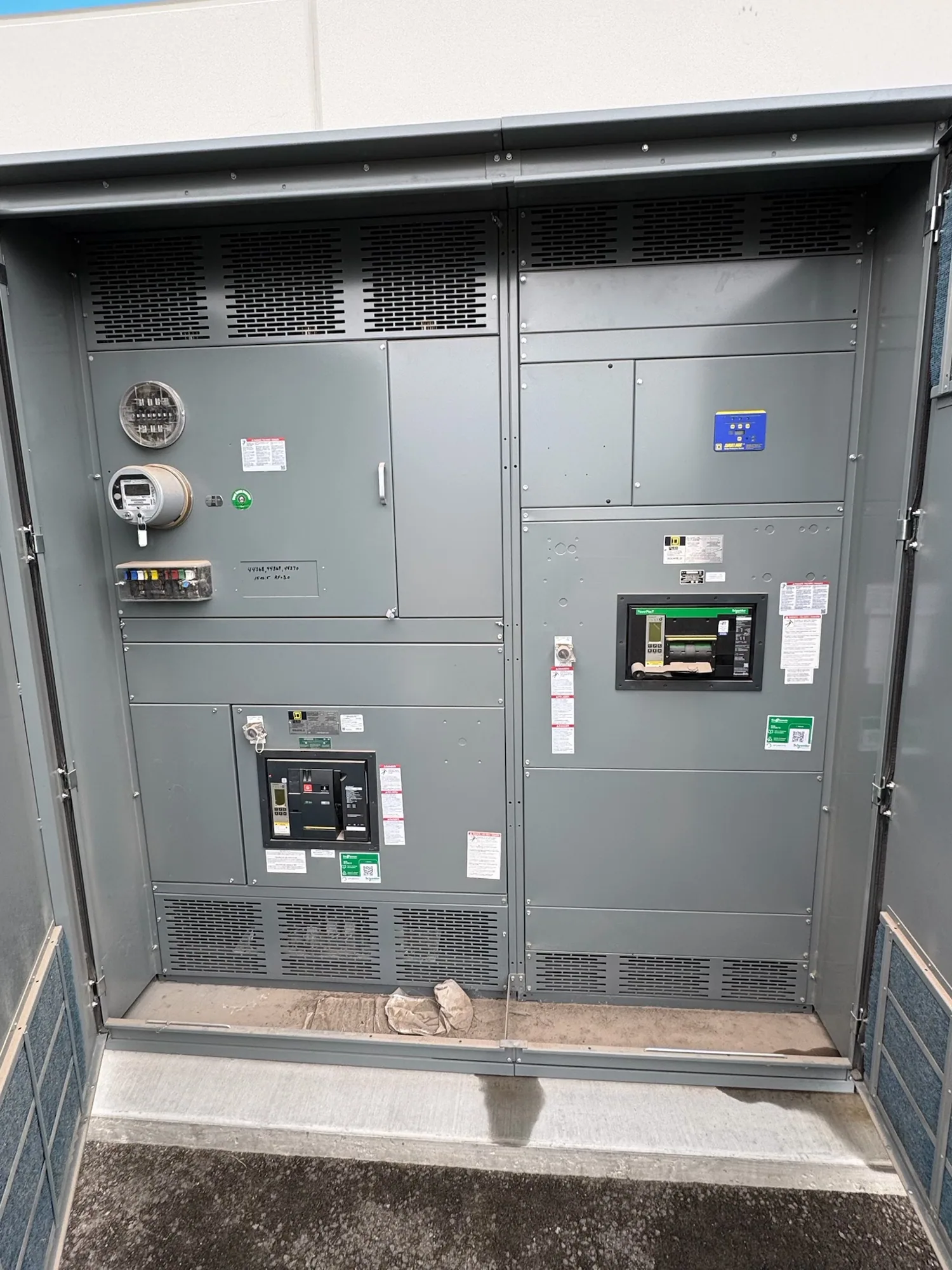
Start with the facility’s distribution plan — Voltage Ratings for Data Centers
Data center voltage ratings are not a single facility-wide number. A design may include multiple distribution stages, with different equipment serving incoming power, distribution to rooms or rows, cooling systems, and other building loads. High-density IT demand, redundancy strategy, backup sources, and planned growth all affect where voltage is transformed and controlled. The responsible electrical engineer establishes the system architecture; buyers should carry that defined architecture into each equipment specification.
For a hypothetical project, an owner might phase capacity as demand grows while maintaining planned paths for essential loads. The voltage arrangement must work across the operating modes the design anticipates, including normal supply and backup operation. Do not assume that a particular voltage class or switchgear lineup suits every data center. Confirm each connection point, source, and load against current one-line diagrams and project requirements before requesting a proposal.
Distinguish nominal voltage from equipment rating
Nominal system voltage describes the designated voltage of a part of the electrical system. Equipment maximum voltage and insulation characteristics are separate specification details, selected for the system and applicable equipment standard. A nominal voltage alone is therefore not enough to choose a product. The project engineer should identify the system voltage and configuration, then specify the equipment rating and other electrical characteristics that apply at the intended point of installation.
Low-voltage equipment, including 480 V class equipment, serves defined portions of some data center systems; medium-voltage equipment is a different class, with 5 kV and 15 kV class products as examples. These labels do not establish what a particular facility requires. Specify the actual system voltage and equipment class rather than inferring one from a broad industry convention. Confirm the complete design, including relevant insulation, fault-duty, and switching requirements, with the responsible engineer and equipment supplier.
Coordinate sources, transfers, and operating modes
Data center distribution may involve utility sources, generators, transformers, and transfer or paralleling arrangements, depending on the engineered design. Each source and operating mode can affect the equipment interfaces and ratings needed at a given location. Provide the supplier with the current one-line diagram and clearly mark which sources can feed each lineup, how they are connected, and what operating states the equipment must accommodate. Have the project team resolve assumptions before equipment design begins.
Voltage coordination also matters when capacity is added in stages. Ask how future sections, feeders, or source changes are represented in the present design, and whether equipment boundaries or connection details must support a defined expansion plan. Do not treat future capacity as an informal note: distinguish equipment required now from provisions included for a later phase. The engineer should confirm that proposed phasing remains consistent with protection, source coordination, and the facility’s operating strategy.
Match equipment to its role, not its label
Low-voltage switchgear may be an appropriate interface in part of a data center distribution system, but it is not automatically required at every point or suitable for every function. Selection depends on system voltage, the equipment’s role, available fault conditions, load requirements, arrangement, and project specifications. A switchboard and switchgear are not interchangeable terms for every procurement decision. Identify the intended equipment type and location, then request a configuration that the supplier can evaluate against the approved design.
Monitoring and maintainability should be specified as operational needs, not left to assumptions about a voltage class. State what measurements, status indications, communications interfaces, access, and isolation provisions the project requires, if any. Review how equipment placement and planned maintenance affect operating procedures and continuity objectives. Installation, testing, and maintenance must be performed by qualified personnel following applicable safety procedures; procurement documents should define interfaces without suggesting energized work.
Give suppliers a coordinated specification package
A useful request for quotation identifies the project location, equipment purpose, system nominal voltage, required equipment class, and the drawings or schedules governing the design. Include the current one-line diagram, load information, source and transfer details, phasing assumptions, physical constraints, and specified ratings. Identify applicable standards and any required listing or assembly documentation for the particular design. For eligible low-voltage switchboards, UL 891 may apply, but applicability and assembly listing require confirmation; it does not apply to medium-voltage switchgear.
Also identify who will approve technical submittals and resolve deviations: owner, engineer, contractor, or another designated party. Describe requested monitoring, controls, communications, accessories, and connection interfaces only as supported by the project documents. Separate mandatory requirements from preferences and unresolved questions. This makes it easier to compare proposals on the same basis and reduces the risk that a supplier prices an assumption different from the engineer’s intended voltage or operating arrangement.
Confirm purchasing and project coordination
Before release, reconcile the quotation with the approved specification, drawings, and equipment schedule. Confirm voltage class, ratings, lineup scope, source interfaces, options, documentation, and any project-specific testing or listing requirements. Ask the manufacturer to identify exceptions and clarify which details remain dependent on final engineering. Availability and actual lead times depend on the order and must be confirmed; do not plan around an unverified delivery date or assume a configuration is immediately available.
South Carolina Switchgear Builders manufactures new equipment in the United States, uses all-American components, customizes to specification, and ships nationwide. These capabilities do not replace project review: the actual design, ratings, standards, availability, and delivery schedule must be confirmed for the order. A coordinated package from the owner and engineer gives the manufacturer a clearer basis to quote and build. Keep procurement, design, construction, and operations stakeholders aligned so the selected equipment fits the facility’s documented distribution plan.