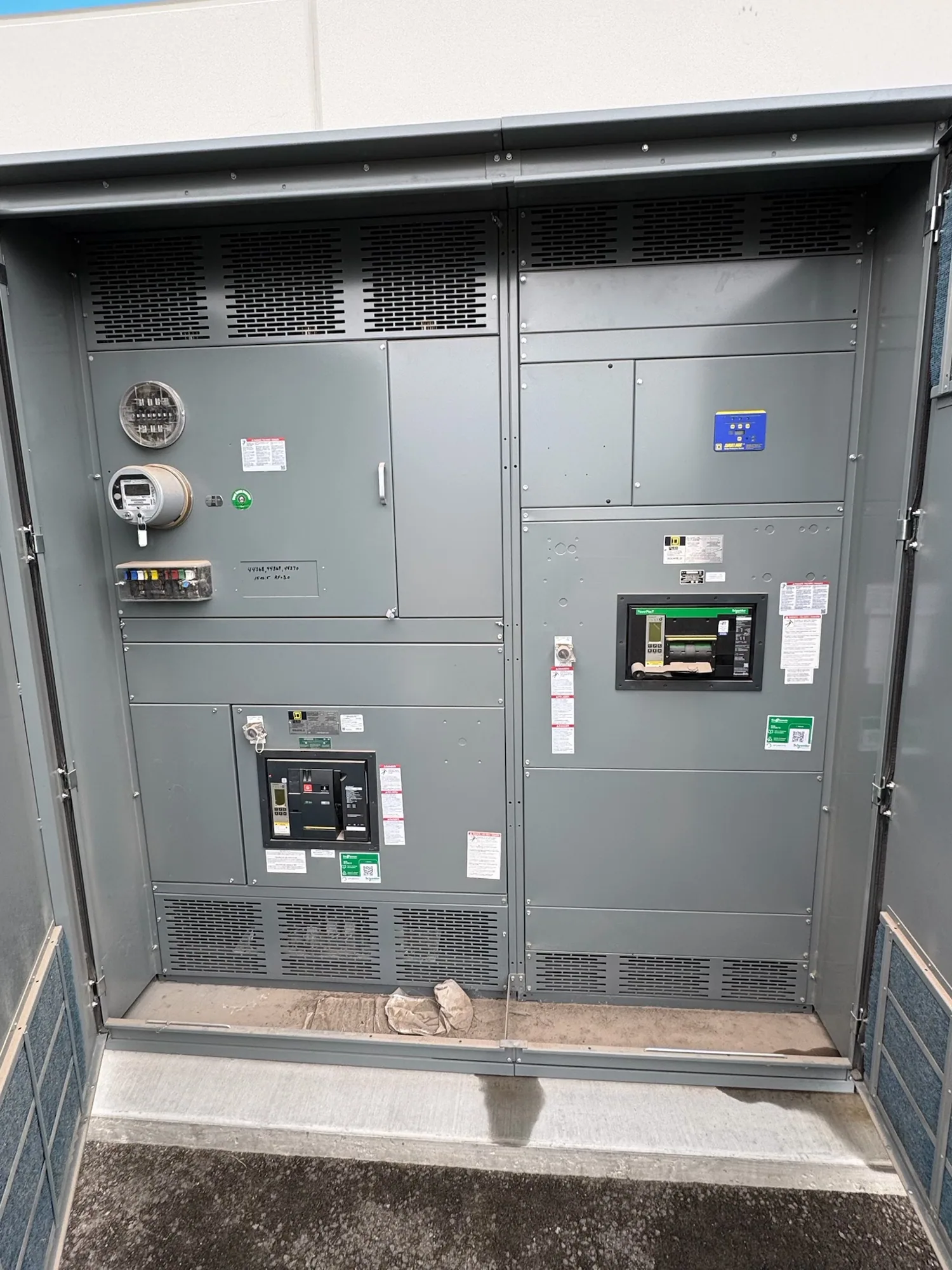
Define the system and its operating priorities
Selective coordination is a system-level design objective: under specified fault conditions, the protective device closest to the affected circuit should operate before upstream devices, where the selected devices and their settings permit. For a food and beverage facility, that objective must be evaluated across the actual distribution path, not assumed from a single breaker or switchgear lineup. The responsible engineer defines the study boundaries, required fault conditions, and applicable project criteria.
Consider a hypothetical plant with process motors, refrigeration, packaging lines, pumps, and areas exposed to washdown. These loads do not all have the same consequence when power is interrupted. A fault on a local packaging circuit may call for a different continuity strategy from a fault affecting refrigeration or a shared process bus. Owners and engineers should identify critical loads, acceptable interruptions, standby or alternate sources, and operational recovery priorities before equipment is specified.
Evaluate protection across the distribution path
Coordination depends on the time-current behavior of protective devices at each level. The engineer compares device curves and settings against the available fault current and the project’s defined operating cases. The review should account for the full upstream and downstream chain, including feeders, motor circuits, transformers, and any source or tie arrangements in scope. Coordination cannot be established solely by matching equipment labels or selecting devices from one catalog family.
Motor starting and operating conditions add practical complexity. Motor inrush, overload protection, short-circuit protection, and starting methods need to be considered alongside feeder protection. Settings that avoid unwanted trips during expected starts must still be assessed for the required protection and coordination objectives. The project engineer should resolve conflicts among starting performance, fault clearing, equipment withstand, and continuity; a supplier should not infer those decisions from a general description of the process.
Account for sanitation and environmental interfaces
Washdown, cleaning chemicals, condensation, temperature variation, and dust can influence where electrical equipment is placed and what enclosure characteristics the design requires. The owner and engineer should describe exposure conditions and cleaning practices rather than relying on broad labels such as “food grade” or “washdown area.” Enclosure ratings and construction details must be selected for the actual location and verified against the equipment specification.
Sanitation planning also affects access, cable routing, control interfaces, and the boundary between electrical rooms and process spaces. Identify where operators need routine access, where cleaning must occur, and which equipment should remain outside a wet or corrosive environment. These are project-specific layout questions, not universal requirements for every food and beverage facility. Provide the equipment supplier with the approved environmental and interface requirements so the proposed design can be checked against them.
Balance continuity with protection
Selective coordination is not an unlimited guarantee that only one device will open in every possible event. The outcome depends on the specific devices, settings, fault levels, and conditions evaluated. Coordination may also compete with other design goals, including fast fault clearing, arc-energy management, equipment protection, and practical device selection. The responsible engineer should document the basis of design and identify any portions of the system where the stated coordination objective is limited.
Medium-voltage switchgear may be part of a facility’s distribution interface when the project calls for it, but it is not automatically required for food and beverage operations. If included, its protection and upstream/downstream relationships must be evaluated within the project’s complete system model. Suppliers need the specified voltage class, one-line diagram, device information, and interface requirements to develop equipment for review; the system study and protective settings remain engineering decisions.
Provide the information needed for equipment selection
Before requesting a proposal for new switchgear or switchboards, assemble the current one-line diagram, load and motor data, source details, known fault-current information, and the project’s coordination criteria. Include equipment locations, environmental exposure, cable entry preferences, control and communications interfaces, and any required dimensions or site constraints. Identify what is confirmed and what remains provisional so assumptions can be surfaced rather than embedded silently in a proposal.
Also state the applicable standards and project specifications for the particular assembly, and ask the responsible engineer to confirm their applicability. If a low-voltage switchboard is under consideration, any UL 891 applicability and assembly listing must be verified for that specific design; it does not apply to medium-voltage switchgear. Ratings, testing, listing, and delivery details require confirmation against the final specification and supplied equipment.
Coordinate review, procurement, and delivery
Establish a clear information flow among the owner, electrical engineer, equipment supplier, contractor, and controls or process stakeholders. Agree on who supplies the study results, who approves protective settings, and how revisions to loads or sources will be communicated. Review submittals against the approved one-line and specification, including interfaces and environmental requirements. Qualified personnel handle installation, testing, and maintenance under applicable safety procedures.
South Carolina Switchgear Builders manufactures new switchgear and switchboards to specification, with US-built equipment and all-American components, and ships nationwide. Availability and actual lead times depend on the order and must be confirmed. A useful next step is to send the project’s defined requirements and open questions for review, then resolve engineering assumptions before finalizing equipment details and procurement timing.