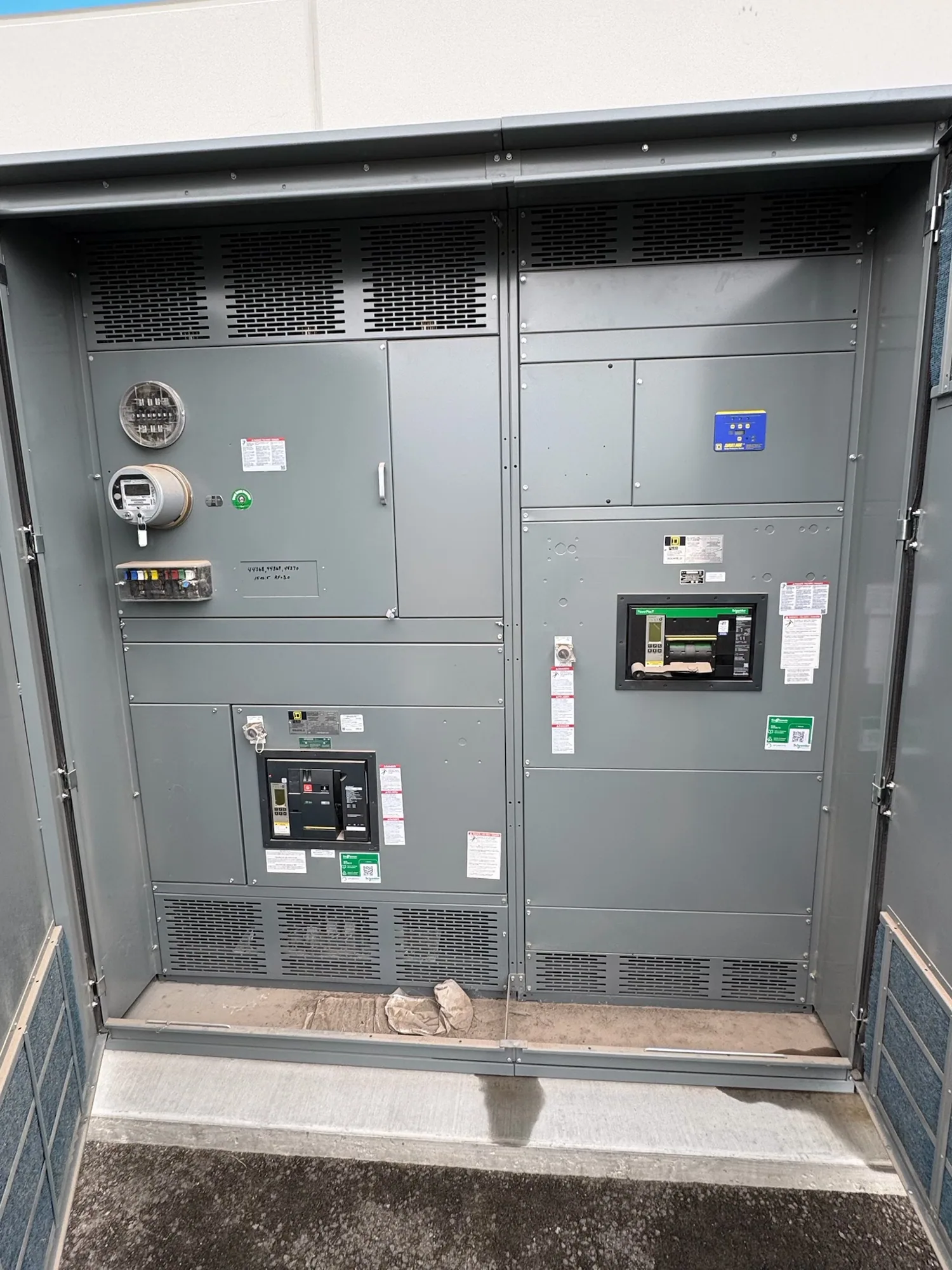
Campus context: one system, many operating needs
Higher education electrical systems often serve a varied mix of academic buildings, laboratories, residence halls, libraries, and central utility plants. A feeder or equipment change in one part of campus may affect loads and operating plans elsewhere. Arc-flash safety planning therefore belongs within the broader electrical design and work-practice program, not solely within the purchase of a switchgear lineup.
For a phased project, the owner, engineer, facilities team, and equipment supplier need a shared picture of what is being changed and what remains in service. Existing drawings may not reflect later renovations or temporary feeds. Before design is finalized, identify the project boundary, known sources, connected loads, operating configurations, and any planned future phases. The responsible engineer should verify the actual system conditions.
Start with a qualified arc-flash study
An arc-flash assessment depends on system data and defined operating cases, including available fault current, protective-device characteristics, conductor information, and equipment configuration. A qualified engineering professional evaluates the applicable system and documents assumptions, results, and limitations. Incident energy and any resulting work practices cannot be reliably selected from a building type or nominal voltage alone.
Campus systems may operate in different configurations during normal service, maintenance, emergency operation, or construction. Ask the study team which configurations are within scope and how proposed changes could affect the analysis. New equipment can alter protective-device coordination or other study inputs; the project team should determine what calculations, reviews, and labels require updating before equipment is placed into service.
Coordinate feeder design and equipment interfaces
Multi-building feeder planning affects protection, continuity, and the boundaries between owner-furnished and supplier-furnished equipment. Provide the equipment supplier with the engineer-approved one-line diagram, connection points, required compartment or termination arrangements, and the relevant interface information. Confirm which devices and upstream or downstream elements are included in the equipment scope. Do not assume a supplier can establish campus-wide incident energy from an equipment order alone.
Metal-enclosed switchgear may be one option for a project, but it is not automatically required for every campus application. The engineer should evaluate the intended use, system characteristics, configuration, maintenance approach, space, and project requirements before specifying an equipment type. Ask the supplier to confirm how a proposed assembly matches the approved specification, including ratings, construction, options, and any applicable listing or testing requirements. These details depend on the specific design.
Balance protection, continuity, and work practices
Protective-device settings and coordination involve trade-offs. The project engineer may need to consider fault-clearing behavior, selectivity, equipment protection, and continuity of service across connected buildings. A change intended to improve one objective can affect another; the responsible engineer should evaluate the complete system and document the adopted approach. Equipment features should be reviewed as part of that engineering work, not treated as a substitute for a study.
Arc-flash risk management also includes procedures, training, access controls, and maintenance practices established by the employer and qualified safety professionals. Equipment selection alone does not eliminate electrical hazards. Installation, inspection, testing, and maintenance must be planned for qualified personnel following applicable safety procedures. Project specifications should identify required documentation and stakeholder reviews without assuming a design feature makes energized work safe.
Plan outage windows around campus operations
Scheduled outages can be difficult to coordinate where teaching, research, housing, or central plant services continue through a project. Facilities staff should identify acceptable windows, affected loads, notification needs, temporary arrangements, and the decision-makers responsible for approving the work. The engineer and contractor can then align the equipment scope and installation sequence with the approved campus plan. Any temporary configuration should be reviewed by qualified project personnel.
Confirm procurement and delivery assumptions early enough to support the project schedule, while recognizing that availability and actual lead times depend on the order and must be confirmed. South Carolina Switchgear Builders manufactures new equipment to specification, builds in the United States using all-American components, and ships nationwide. Request confirmation of the proposed configuration, schedule, and delivery details for the specific project rather than relying on general assumptions.
Information to provide when requesting equipment
A useful inquiry includes the current, engineer-reviewed one-line diagram; equipment type and scope; system and interface requirements; site constraints; and the project’s required submittals. Include owner standards, applicable specifications, the expected operating cases, and any study recommendations that affect the equipment. Note whether work is phased, what equipment remains in service, and when approved outage windows are available.
Ask the engineer and supplier to identify unresolved assumptions, exclusions, and information needed before design approval. Confirm who is responsible for protective-device selection, settings, coordination, study updates, field installation, and acceptance activities. The purchaser should also identify required documentation, review milestones, and any project-specific standards or listing expectations for verification against the final design.
Review the package before release
Before authorizing manufacture, compare the approved drawings and equipment submittals with the project specification and the engineer’s system design. Resolve discrepancies in interfaces, ratings, options, and phasing; confirm the latest study assumptions and outage plan with the responsible campus stakeholders. A well-coordinated package gives the supplier clear requirements and helps the project team plan installation and follow-on engineering without treating equipment procurement as a complete safety program.
For a campus upgrade, the practical next step is to bring facilities, the electrical engineer, safety representatives, and procurement into the same review. Establish the study scope, verify the system data, define the equipment boundary, and confirm schedule constraints before issuing the purchase specification. That process supports informed equipment selection while keeping arc-flash decisions tied to qualified engineering and the campus’s actual operating conditions.