Why campus current ratings need a system view
Higher education campuses bring together buildings with different load patterns and project timelines. Academic spaces may have predictable schedules, while laboratories, central plants, residence halls, and research facilities can have distinct operating demands. Continuous current rating is therefore not a campus-wide number to select in isolation. The responsible engineer evaluates each equipment location and feeder against its expected operating conditions.
For new switchgear or switchboards, the rating must fit the documented electrical design and the equipment’s intended role. A main distribution assembly, a feeder section, and downstream distribution can face different loads and constraints. A phased campus project adds another consideration: equipment planned for a future connection should be assessed using the load and operating assumptions that the project team can substantiate, not an informal estimate of future growth.
Connect load assumptions to equipment ratings
Start with the normal current expected through each bus, switch, breaker, or other specified component during sustained operation. The assembly rating and the ratings of its devices are related but not interchangeable. A suitable bus rating does not, by itself, establish that every device or connection in the current path is appropriate for the intended duty. The project engineer should review the complete configuration and its stated limits.
Load information may come from engineered demand calculations, existing monitoring, equipment schedules, or a combination of sources. The team should identify which values are measured and which are projected, and record assumptions such as operating schedules, diversity, and planned additions. For laboratories or central plant equipment with changing operating modes, explain the relevant modes and expected duration so supplier review is based on usable conditions rather than a single unexplained figure.
Account for installation and operating conditions
Current capability can depend on the actual equipment design and the conditions specified for its installation and operation. Ambient temperature, enclosure arrangement, ventilation, conductor layout, component selection, and other design details may affect what is appropriate. Do not assume that a nominal rating automatically applies unchanged in every room or configuration. The engineer and supplier should confirm the applicable equipment limits against the project documents.
Campus distribution also involves route length, feeder coordination, and the location of loads among buildings. A rating selected for one section should be considered alongside upstream and downstream equipment, protective-device coordination, and the intended operating arrangement. These decisions may affect space, cost, and future flexibility. Any proposed margin for growth should be explicit and justified; oversized equipment is not a substitute for reliable load forecasting or a coordinated distribution plan.
Balance capacity with campus phasing
Phased construction can make the initial load different from the eventual load. The owner and engineer should distinguish the first operating stage from later additions, identify which feeders or sections are expected to serve each stage, and state when the future work is anticipated if known. This supports a clear comparison between equipment sized for present requirements and a configuration intended to accommodate documented expansion.
Scheduled outage windows are another practical constraint. If a new assembly will replace or connect to existing distribution, the project team should coordinate design information, interfaces, access, and sequencing early. Avoid relying on an assumed outage duration or delivery date: both depend on project-specific factors and must be confirmed by the responsible parties. Installation, testing, and maintenance should be planned for qualified personnel following applicable safety procedures.
Use owner standards and supplier review effectively
Owner standards can establish preferred construction, documentation, labeling, and review practices, but the project team should provide the actual governing requirements. Identify the applicable standards and editions, required drawings, and any campus-specific specifications. Listing, testing, ratings, and standards applicability depend on the particular assembly and supplied equipment, so confirm each requirement for the proposed design rather than treating it as universal.
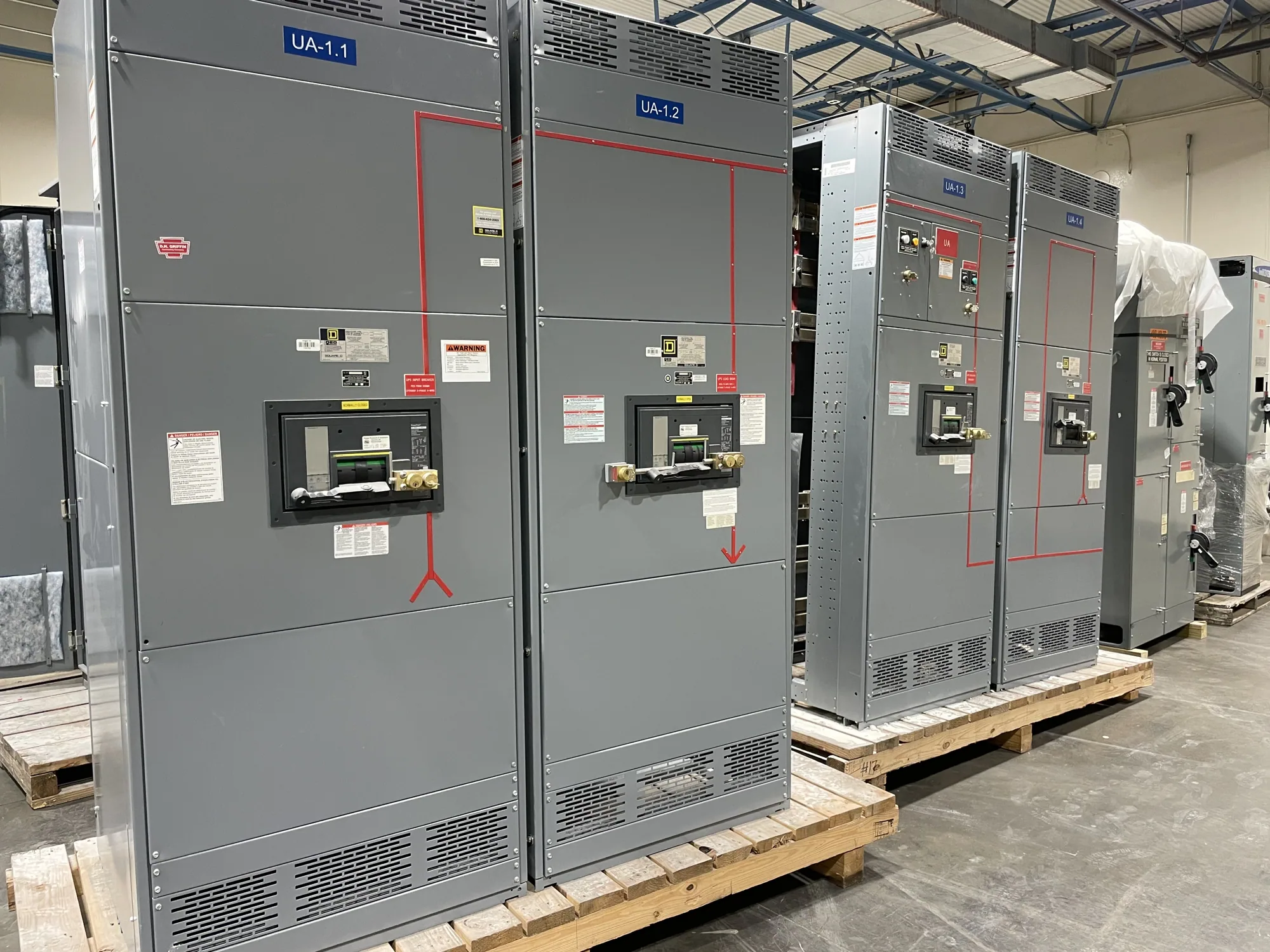
Electrical switchboards may be an appropriate interface in some low-voltage distribution designs, but they are not automatically the answer for every campus application. The engineer should determine the equipment type, voltage class, ratings, and arrangement from the system design. For a new-equipment quotation, provide one-line diagrams, load schedules, specified continuous current ratings, environmental conditions, feeder information, operating sequence, and known expansion plans. Flag open assumptions for review.
Prepare a useful project checklist
Before requesting equipment pricing, assemble the project’s current and projected load basis; equipment location and installation conditions; required bus and device ratings; voltage class; source and feeder details; and the intended normal and alternate operating arrangements. Include owner standards, drawing requirements, applicable standards, and any specified listing or testing expectations. Ask the project engineer to resolve conflicts between schedules, drawings, and written requirements before final selection.
Also identify stakeholders who must review the design, such as facilities, engineering, construction, and operations personnel, and note planned phases and outage constraints. South Carolina Switchgear Builders manufactures new equipment to specification and ships nationwide. Availability and lead times depend on the order and should be confirmed. With clear, reviewed inputs, the supplier can assess the requested configuration and identify questions requiring engineering resolution before the campus team proceeds.