Why campus-wide context matters
Higher education campuses often develop over time: academic buildings, laboratories, residence halls and central plants may have different construction dates, electrical arrangements and project schedules. Short-circuit ratings therefore need to be considered at the relevant points in the system, not selected from one building’s equipment label or treated as a single campus-wide value.
For each project, the responsible electrical engineer evaluates the system configuration and available fault current where new equipment will connect. The analysis can inform equipment selection and coordination with existing infrastructure. New construction, a feeder change, a transformer replacement or a phased renovation may alter the assumptions at a particular point, so earlier documents should be checked against current project conditions.
Available fault current and equipment capability
Available fault current is a system condition to be established through project engineering; it is not a rating that can be inferred from a campus name, building type or voltage alone. The engineer considers information such as the source, transformer data, conductor and feeder arrangement, and other relevant system characteristics. Assumptions and operating configurations should be documented so reviewers understand the basis of the analysis.
Equipment has defined short-circuit capabilities that must be evaluated against the available fault current and the specified system arrangement. Depending on equipment type, relevant information can include interrupting capacity for protective devices and the assembly’s applicable short-circuit current or withstand rating. These terms describe related but distinct aspects of equipment performance; they should not be substituted for one another or treated as a single number without engineering review.
Plan ratings along multi-building feeders
A campus feeder may serve more than one facility, and the electrical conditions can differ from one connection point to another. Project teams should identify the source and path of each feeder in scope, the equipment being added or replaced, and any planned changes that could affect the analysis. The engineer can then assess the relevant locations rather than applying an assumed rating uniformly throughout the route.
Phased construction makes clear boundaries especially useful. A project may modify only one building while relying on upstream equipment that remains in service, or it may change a central distribution point that affects several downstream areas. Confirm what is existing, what is new, and what future phases are included in the design basis. If the campus expects later expansion, the engineer should decide whether and how that future condition belongs in the current specification.
Owner standards, coordination and outage windows
Owner electrical standards can define preferred equipment arrangements, documentation, review responsibilities and project interfaces. They do not replace the need to establish the actual fault-current conditions and applicable equipment ratings for a specific design. The project team should compare the campus standard with current drawings, the engineer’s calculations and the procurement specification, resolving conflicts before an order is finalized.
Scheduled outage windows also shape procurement and construction planning. Identify when existing equipment can be isolated, which facilities depend on affected feeders, and what work must be complete before a planned interruption. These are coordination questions for the owner, engineer, contractor and other responsible parties; they do not determine a rating by themselves. Installation, testing and maintenance should be performed by qualified personnel following applicable safety procedures.
Choosing the right equipment interface
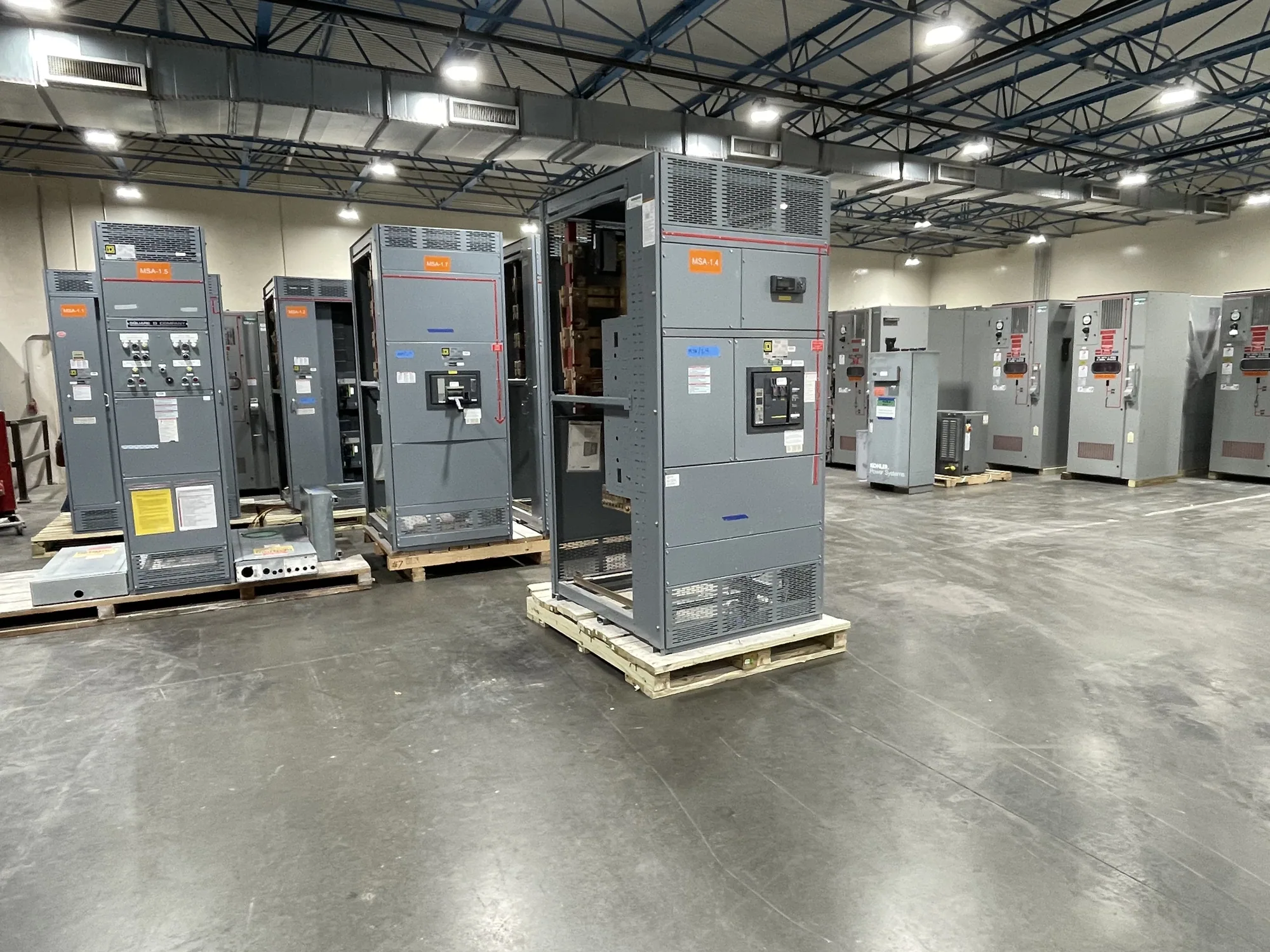
An electrical switchboard may be an appropriate interface in some low-voltage distribution applications, but it is not automatically the right solution for every campus project. The responsible engineer should define the equipment type, system arrangement, voltage class and required ratings. A supplier can then review the specification and identify whether a proposed new assembly can be configured to the documented requirements.
For a switchboard, ask whether UL 891 applies to the intended design and verify any assembly listing and project requirements for that specific configuration. Do not assume that a standard or rating applies to all switchgear or every assembly. Ratings, listing, testing and standards depend on the supplied equipment and specification and should be confirmed before purchase.
Information to assemble before requesting equipment
Prepare current one-line diagrams, the engineer’s short-circuit analysis or documented design values, the connection point, system voltage and the scope of work. Include available transformer and feeder information, the required equipment type, protective-device details where applicable, and the owner’s standards. State whether the request covers a single building, an upstream distribution point or multiple project phases.
Also identify assumptions that remain open: source configuration, future loads, operating modes, project boundaries and the review path for submittals. Note the planned procurement sequence and outage constraints without treating a desired schedule as a confirmed delivery date. This gives the manufacturer useful context to assess a custom-to-specification proposal and ask focused questions before manufacturing begins.
Coordinate review before release
Before releasing a purchase order, have the owner and responsible engineer review the proposed ratings, equipment scope, drawings and stated assumptions together. Confirm that each rating corresponds to the intended connection point and that the proposal addresses the required system arrangement. Resolve discrepancies between the analysis, owner standard and purchasing documents rather than relying on an unstated interpretation.
South Carolina Switchgear Builders manufactures new equipment in the United States using all-American components and ships nationwide. Short lead times are available, but actual availability and delivery dates depend on the order and must be confirmed. A complete engineering package and timely stakeholder review help the project team evaluate the equipment against campus needs and coordinate procurement with the construction and outage plan.