Start with the facility’s electrical design
Continuous current rating describes the current that equipment or a component is designed to carry under specified conditions. For hospitals and other healthcare facilities, selecting that rating begins with the electrical design—not a generic facility label or a single assumed load. Clinical, diagnostic, support, and building-system loads differ, and their operating patterns depend on the facility and project.
A hypothetical healthcare system may include normal and essential electrical systems, emergency power sources, transfer equipment, and distribution serving designated loads. The actual arrangement is project-specific. The owner’s requirements and responsible engineer’s documents should identify which loads are served, how sources are arranged, and which operating scenarios must be considered before equipment ratings are established.
Separate load current from equipment ratings
Engineers should evaluate calculated or measured load current for each relevant feeder and bus section, including expected operating combinations. A facility-wide total alone cannot show how current is distributed among sections or identify the effect of a source transfer or alternate operating configuration. Buyers can help by supplying load schedules, one-line diagrams, and documented assumptions that explain how the figures were developed.
Bus ratings, breaker or other device ratings, and the continuous current capability of an assembly are related but not interchangeable. The specified equipment must be suitable for the intended current and operating conditions as a complete design. Ask the project engineer and manufacturer to confirm the proposed arrangement against the actual specification, including the ratings of the bus, devices, and any relevant connections.
Account for operating conditions and derating
Current capability depends on the conditions under which equipment is designed and applied. Ambient temperature, enclosure arrangement, ventilation, installation location, and the configuration of components can affect the assessment. Where the installation conditions differ from the assumptions used for a proposed design, the responsible engineer should determine whether adjustments or a different configuration are needed. Do not assume a nameplate or catalog value covers every installation condition.
Provide the anticipated room or enclosure conditions, mounting and access constraints, and any known environmental factors with the equipment inquiry. Ask which assumptions apply to the specified continuous current rating and whether the proposed assembly requires application-specific review. Those questions help identify design gaps before procurement; they do not replace the manufacturer’s technical confirmation or the project engineer’s approval.
Plan essential-system continuity and coordination
Healthcare continuity planning involves more than choosing a current rating. The design team should define how normal and alternate sources serve essential loads, which switching or transfer sequences apply, and what operating states equipment must support. Where selective coordination is required by the project, the responsible engineer should evaluate protective-device selections and settings across the relevant distribution paths. A current rating alone does not establish coordination or continuity performance.
Safe continuity also depends on installation, commissioning, operating procedures, and maintenance planning. Ask qualified project personnel to define how equipment will be installed and assessed, and how work will be managed under applicable safety procedures. No one should treat the need to maintain service as a reason to perform energized work. The project team should resolve operational expectations and approved work practices before the equipment is placed into service.
Choose an equipment interface that fits the design
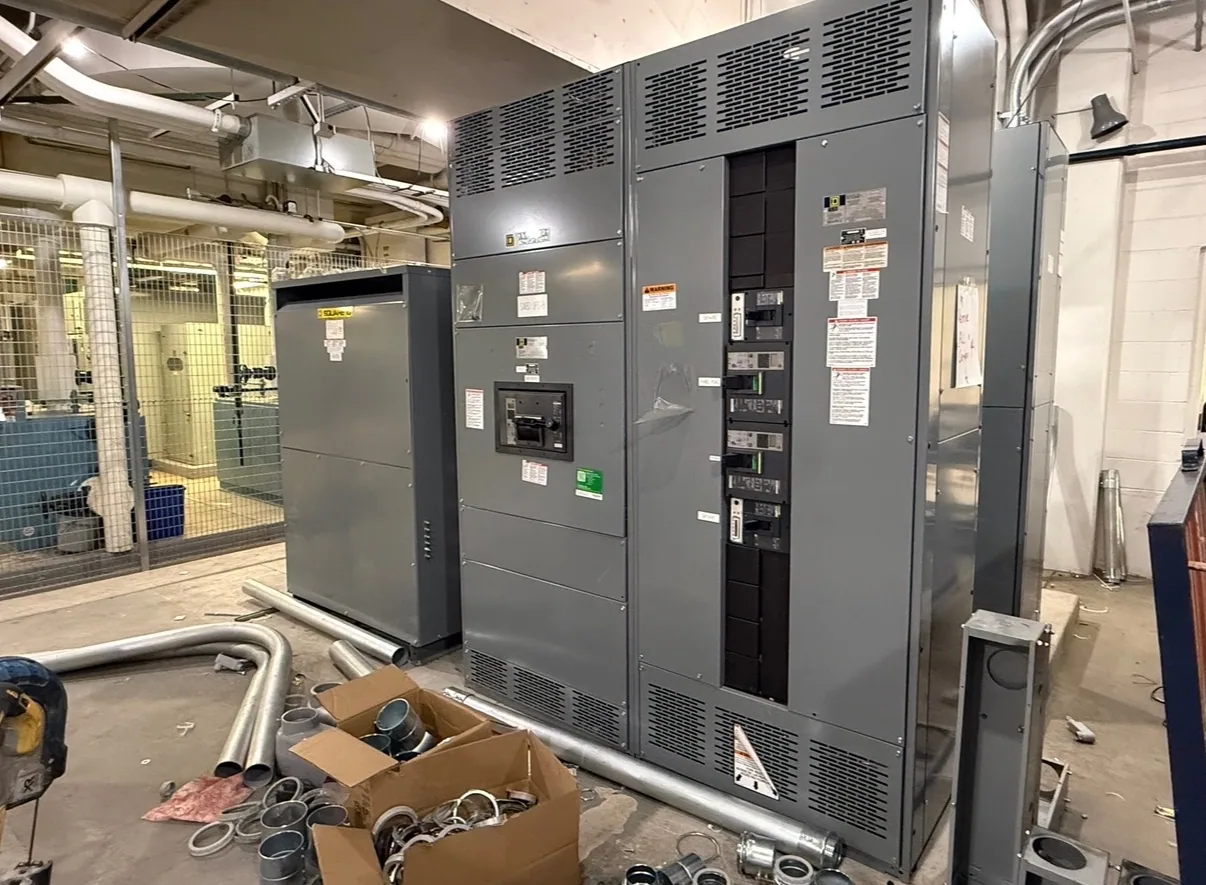
Low-voltage switchgear may be one interface in a healthcare distribution system, but it is not automatically required for every project. The correct equipment type and configuration depend on the system design, voltage class, current requirements, available space, and project specifications. A switchboard or another distribution arrangement may be appropriate in some applications. The engineer should identify the intended equipment and its role in the system.
For new equipment built to specification, send the manufacturer the required voltage class, continuous current values, source and load arrangement, bus configuration, device schedule, enclosure conditions, and applicable project documents. Identify any scope boundaries, such as whether transfer equipment or controls are included. South Carolina Switchgear Builders manufactures new switchgear and switchboards in the United States and ships nationwide; configuration, availability, and lead time depend on the order and require confirmation.
Prepare a reviewable purchasing specification
Before requesting a proposal, assemble current one-line diagrams, load calculations or measurements, equipment schedules, site conditions, and the owner’s operational requirements. Flag assumptions, future-load provisions, and expected changes in source configuration. Identify who will approve technical submittals and who coordinates the engineer, owner, contractor, and equipment supplier. Clear responsibility for each review reduces the chance that important rating assumptions remain unresolved.
Ask the supplier to identify the ratings and design assumptions offered, note exceptions to the specification, and clarify what information is still needed. The responsible engineer should confirm the selection and any applicable standards or listing requirements for the specific equipment. For eligible low-voltage switchboards, UL 891 applicability and assembly listing must be verified for the actual design; it does not apply to medium-voltage switchgear by default.
Confirm the design before release
Use a final technical review to compare the proposed equipment with the approved drawings, load basis, operating scenarios, and installation conditions. Confirm that continuous current ratings apply to the intended assembly and that any derating, coordination, or source-transfer questions have been answered by the responsible parties. Reconcile revisions before manufacturing so purchasing documents and engineering documents describe the same equipment.
A well-defined rating is therefore the result of facility-specific load analysis and documented operating conditions, not a stand-alone number chosen from a general healthcare guideline. When the owner, engineer, contractor, and manufacturer exchange the relevant data early, they can resolve configuration questions and coordinate procurement around an approved design. The project engineer remains responsible for determining the required ratings and confirming suitability for the facility.