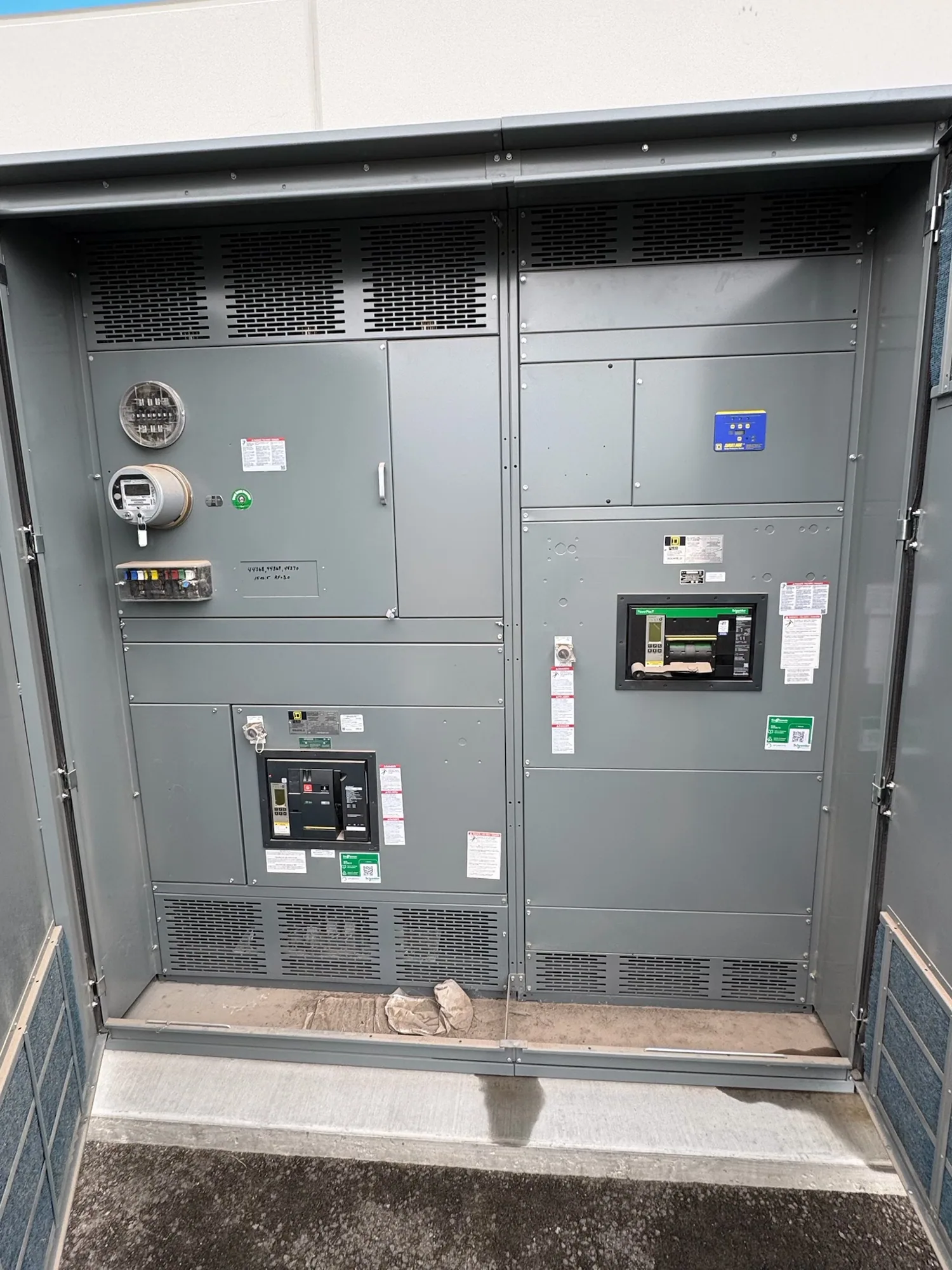
Scope: rating the facility, not just a device
Pharmaceutical and biotech facilities can combine process utilities, controlled environments, laboratories, production areas, and building services on interconnected electrical systems. Continuous current rating is one part of planning those systems: it describes current an assembly or component is intended to carry continuously under stated conditions. The project team must establish where each rating applies and how it relates to actual operating loads.
This is an engineering discussion, not a universal sizing rule. A facility may use low-voltage switchgear at a distribution point, but the appropriate equipment and rating depend on the one-line diagram, voltage class, source arrangement, loads, and project requirements. Other equipment may serve different portions of the system. The responsible engineer should coordinate ratings across the complete power path rather than selecting a number from facility type alone.
Build the load picture from documented operations
Start with connected and expected operating loads, not a broad assumption that every installed load runs continuously or that every load is intermittent. Identify normal production modes, standby equipment, simultaneous operation, startup behavior, and planned future additions. Where dependable measurements exist, record how and when they were taken. Where measurements are unavailable, the engineer should document the calculation method and assumptions used to estimate demand.
Pharmaceutical and biotech operations can change as processes, equipment, or room uses evolve. Capture normal, reduced, and alternate operating conditions that matter to the electrical design, and distinguish existing loads from proposed ones. Include relevant pumps, HVAC, laboratory or process equipment, and supporting systems where they connect to the distribution design. The equipment supplier can use a clear load schedule and one-line diagram to evaluate a specified assembly; it cannot replace the engineer's facility-wide load analysis.
Coordinate bus, devices, and actual conditions
Compare the continuous current ratings of the assembly bus and the devices in the intended current path. A device rating alone does not establish the capacity of the complete assembly, and a bus rating does not resolve every protective-device or connection question. Ask the responsible engineer to identify the required ratings at each distribution point and confirm that equipment interfaces, conductors, terminals, and upstream and downstream devices are addressed in the design.
Ratings apply in the context of specified conditions. Enclosure arrangement, ambient temperature, ventilation, installation environment, and other design details may affect what is suitable; the project team should have the manufacturer confirm relevant conditions against the actual proposed equipment. Do not apply an assumed derating factor without a design basis. State the intended operating environment and any known constraints so the supplier can review the specification and identify information that remains unresolved.
Manage change control and documented interfaces
For regulated operations, electrical changes often need coordination with process owners, facilities engineering, quality, validation, and project management. Their review does not change the meaning of a current rating, but it can affect when and how a distribution modification is planned. Record the approved load basis, equipment interface points, drawing revisions, and assumptions so later changes can be compared with the design that was actually supplied.
Define boundaries clearly between the switchgear or switchboard, upstream source, downstream distribution, and facility loads. Identify who provides protection settings, control interfaces, metering requirements, and connection information, where those items are part of the project. A low-voltage switchgear assembly is one possible interface, not an automatic requirement for every pharmaceutical or biotech facility. Confirm equipment type and applicability of standards for the specific design; UL 891 applies only to eligible low-voltage switchboards when listing and assembly details are verified.
Balance capacity, flexibility, and maintenance windows
A larger rating is not automatically the best answer. The design should balance documented present loads, credible planned growth, available system capacity, and the cost and physical implications of the selected equipment. Ask the engineer to explain the basis for spare capacity and whether future loads are defined or merely speculative. Excessive assumptions can complicate equipment selection, while insufficient allowance can make a later expansion harder to coordinate.
Maintenance and installation planning deserve early attention where production schedules or controlled operations limit access. Identify outage windows, temporary operating arrangements, equipment access constraints, and dependencies on other work. Qualified personnel must perform installation, testing, and maintenance under applicable safety procedures. The project team should confirm what work can occur within the planned window and what documentation, approvals, and coordination are needed before equipment delivery and system changes.
Information to provide and next steps
For a useful supplier review, assemble the one-line diagram, voltage class, load schedule, required bus and device ratings, source information, operating modes, and known environmental conditions. Include enclosure and connection preferences, control or metering needs, available space, applicable project standards, and desired shipment timing. Mark each item as confirmed, provisional, or pending engineering review. That distinction helps avoid treating an early planning value as an approved requirement.
South Carolina Switchgear Builders manufactures new equipment to specification, including low-voltage switchgear and switchboards where the project calls for them, and ships nationwide. Provide the project documents and identify open questions for review. Configuration, listing applicability, ratings, standards, availability, and delivery dates must be confirmed for the actual design and order; lead times depend on the project. With a documented load basis and clear interfaces, the owner, engineer, and manufacturer can resolve rating questions before procurement and coordinate the equipment around facility operations.