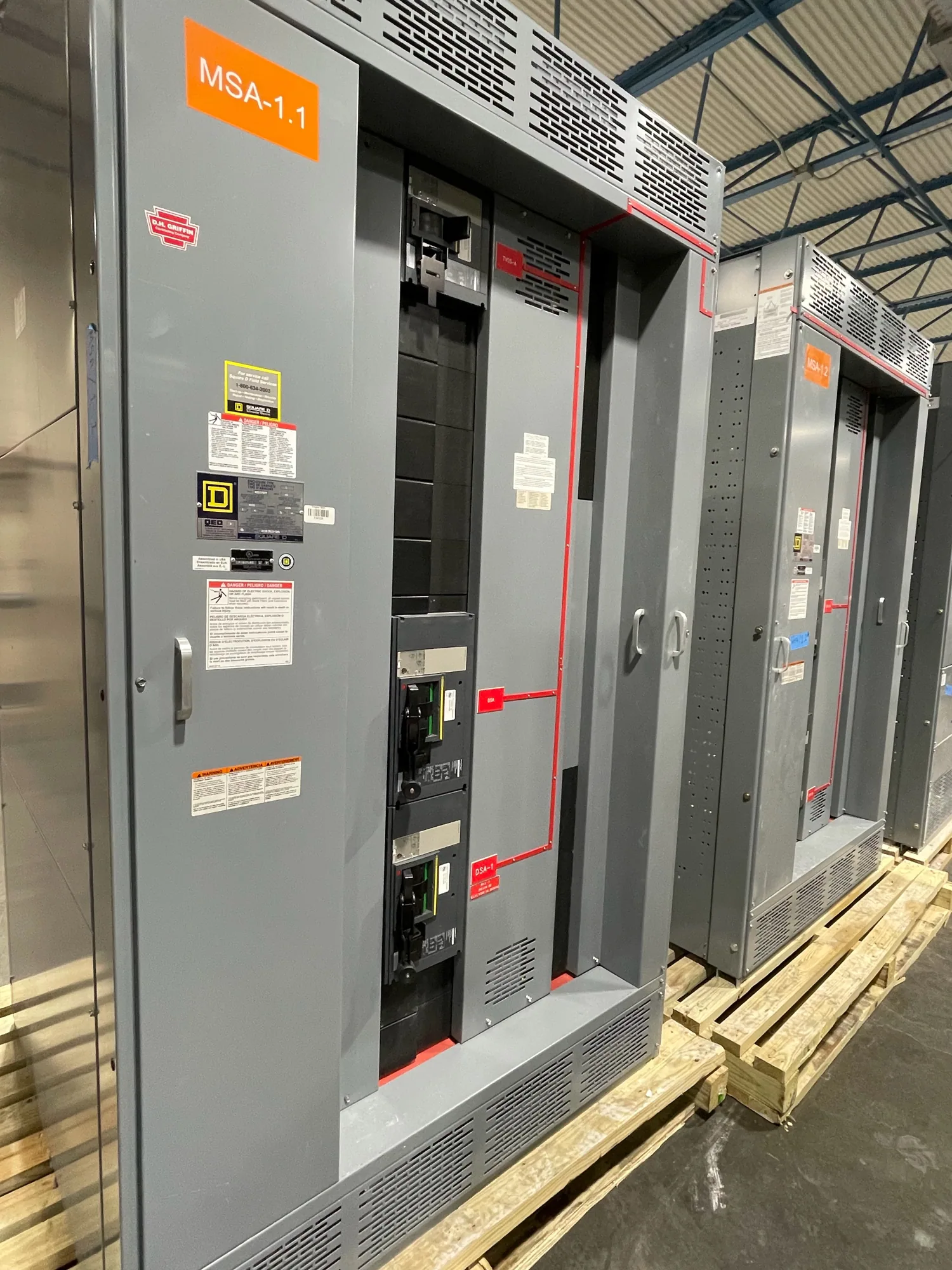
Start with the facility’s electrical system — Voltage Ratings for Pharmaceutical and Biotech Facilities
Pharmaceutical and biotech facilities can include process utilities, controlled environments, laboratories, support buildings, and production areas with different electrical needs. A voltage rating should therefore be tied to the specific distribution system and equipment location—not selected from an industry label alone. Owners and engineers should identify the intended connection point, system configuration, and operating context before asking suppliers to propose equipment.
For a new-equipment project, clarify whether the scope concerns a switchboard, low-voltage switchgear, medium-voltage switchgear, or another assembly. These terms are not interchangeable, and voltage class is only one part of equipment selection. The one-line diagram and project specification should establish how the assembly fits into the electrical system, while the responsible engineer confirms that the proposed equipment matches the application.
Distinguish nominal voltage from equipment rating
Nominal system voltage describes the electrical system’s designated operating level. Equipment maximum voltage and insulation characteristics address the equipment’s suitability for that system under the applicable design and standard. They are related, but they should not be treated as identical values or assumed to be interchangeable across manufacturers. Ask the project engineer to define the system voltage and required equipment ratings explicitly.
Voltage class also matters when comparing equipment types. A 480 V class assembly is low voltage; 5 kV and 15 kV class equipment are medium voltage. These examples identify classes, not a universal boundary for every product or an automatic recommendation for a facility. The specified system and applicable requirements determine what is appropriate. Do not infer that a particular assembly is suitable simply because its label appears close to a system’s nominal value.
Coordinate interfaces and documented changes
In a regulated operating environment, electrical changes may need to pass through defined review and change-control processes. The equipment specification should describe interfaces that affect the work: upstream and downstream connections, protective-device coordination inputs, control or monitoring requirements, enclosure and access constraints, and any required boundaries between project packages. The engineering team should identify which details are confirmed and which remain assumptions before equipment design proceeds.
Documenting the voltage basis supports later review, maintenance planning, and evaluation of proposed modifications. Keep the one-line diagram, equipment schedule, specification, and supplier submittal aligned as the design develops. If the project changes system voltage, transformer arrangements, or the intended point of connection, route that change through the appropriate technical and facility review rather than relying on an informal revision to a purchase description.
Balance equipment scope with operational constraints
Low-voltage switchgear can be relevant where the project’s distribution design calls for it, but it is only an illustrative option—not a default requirement for pharmaceutical or biotech facilities. An engineer may consider a low-voltage assembly at a defined part of the system while other portions require different equipment. The proper scope depends on the one-line diagram, electrical study inputs, installation conditions, and the project’s operating objectives.
Planned maintenance windows can influence how a project is sequenced and how equipment interfaces are documented, but they do not change the required voltage rating. Discuss access, shutdown assumptions, connection arrangements, and commissioning responsibilities early with the project team. Any installation, testing, or maintenance should be performed by qualified personnel under applicable safety procedures. Confirm whether project-specific testing, documentation, or other deliverables are required instead of assuming they are included.
Information to provide to equipment suppliers
For a useful quotation and technical review, provide the current one-line diagram, nominal system voltage, the requested equipment type and location, and the applicable project specification. Include known system configuration, connection details, environmental or enclosure constraints, and required controls or accessories. Identify the governing standards and any owner requirements, while asking the responsible engineer to confirm their applicability to the particular assembly.
Also disclose design assumptions, unresolved inputs, interfaces with other suppliers, and the project’s review milestones. If a 480 V class low-voltage assembly is under consideration, specify that class and the intended service rather than asking for generic “switchgear.” If medium-voltage equipment is in scope, identify the intended class, such as 5 kV or 15 kV, only as established by the project design. Supplier drawings and submittals should be checked against the approved basis before release.
Review ratings, standards, and documentation
Ask the engineer and supplier to confirm the proposed equipment’s voltage ratings, insulation requirements, construction, and applicable standard against the actual specification. For an eligible low-voltage switchboard, UL 891 may be relevant; applicability and assembly listing must be verified for the specific design. That reference does not establish a listing for every switchboard and does not apply UL 891 to medium-voltage switchgear. Review documentation for the actual assembly rather than relying on a general product description.
Before procurement, reconcile the equipment schedule with drawings, scope boundaries, and stakeholder approvals. Confirm who reviews supplier submittals and how revisions will be recorded, especially where facility change control applies. South Carolina Switchgear Builders manufactures new equipment to specification, including US-built assemblies with all-American components, and ships nationwide. Availability and actual lead times depend on the order and must be confirmed; project-specific ratings, listing, testing, and delivery details require review against the final design.