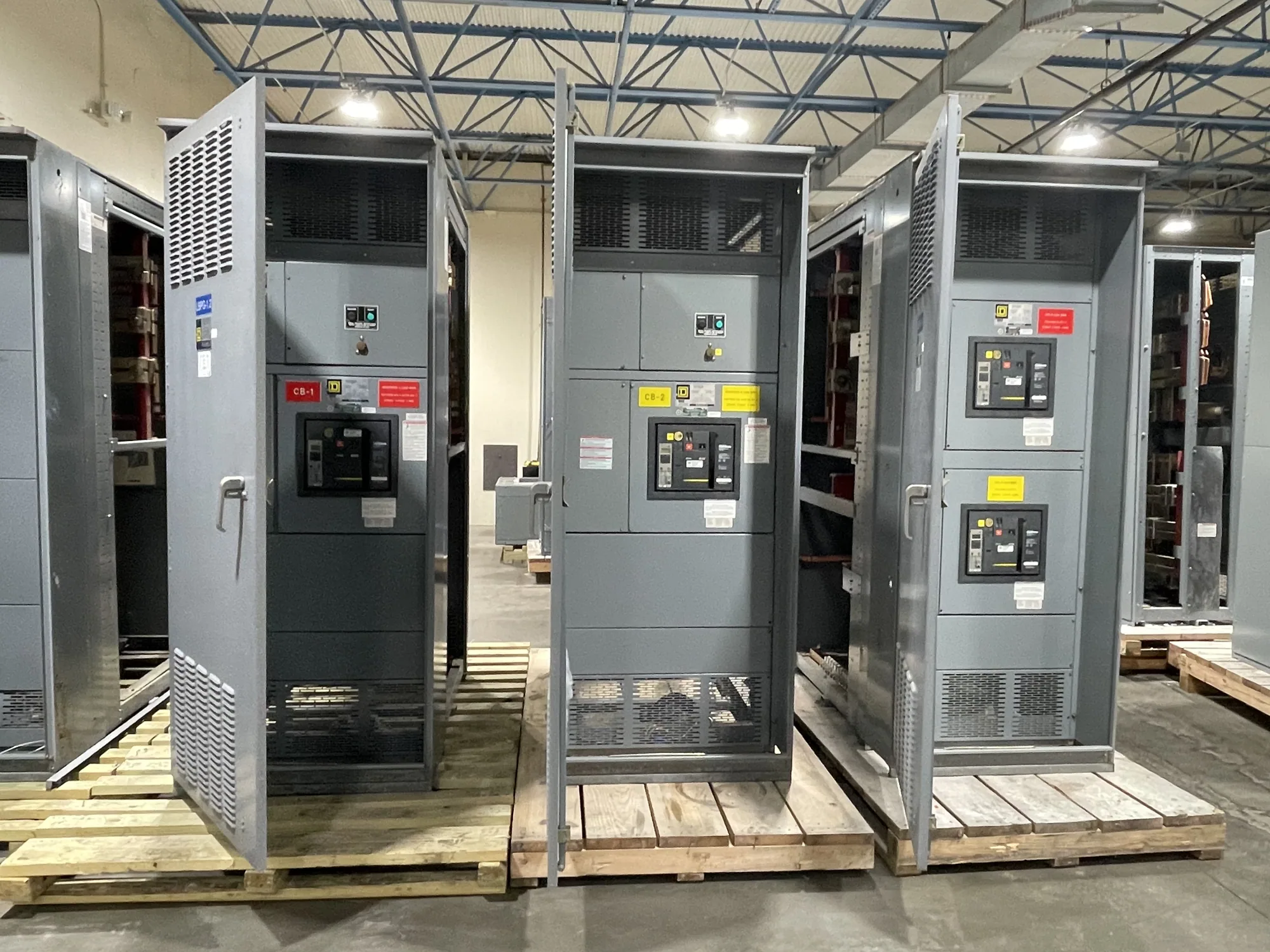
Apply ratings across the facility
Warehouse electrical systems can serve lighting, conveyors, refrigeration, material-handling equipment, charging areas and automated processes. Those loads may be installed in phases, but the short-circuit rating decision is not a simple facility-wide number. The responsible engineer evaluates the available fault current at each equipment location and specifies equipment suitable for the conditions at that point in the system.
This distinction matters when a project includes multiple distribution levels or a planned expansion. A service entrance, a downstream switchboard and a remote feeder may face different fault-current conditions. The equipment specification should identify the intended location and system arrangement, rather than treating a rating selected for one assembly as automatically appropriate for every panel or switchgear lineup.
Understand the rating terms
Available fault current is the prospective current at a point in the system under the assumptions used in the engineering analysis. Interrupting capacity describes an overcurrent device’s ability to interrupt fault current under its applicable conditions. An assembly’s short-circuit current rating or withstand capability addresses how the equipment is evaluated for a short-circuit event. These are related, but they are not interchangeable terms.
The design professional must determine which ratings and configurations apply to each specified assembly and protective device. The required values depend on the electrical system, equipment design and applicable standards. Buyers should not infer an acceptable rating from a building’s square footage, load list or another facility’s design. Instead, request that the project documents clearly state the required ratings and their basis for the equipment being purchased.
Account for phased loads and future work
Conveyor extensions, additional sortation equipment, refrigeration changes and vehicle charging can alter the distribution plan over time. Their effect on future available fault current cannot be established from a general description of the planned load alone. The engineer should document which loads and system changes are included in the study, which are assumptions, and whether a later utility, transformer or feeder change could affect the equipment requirements.
Staged construction also creates coordination questions. A future feeder space or expansion section may help with layout, but spare physical space does not by itself establish that the existing system can supply a new load or that the original short-circuit analysis remains valid. Before purchasing, clarify the intended expansion boundary, what work will be deferred, and which ratings or protection decisions must be rechecked before later equipment is added.
Trace data from the source to each lineup
The owner and project engineer typically establish the facility’s operating needs and system design basis. Useful inputs for the equipment supplier include the one-line diagram, system voltage, source and transformer information, feeder arrangement, specified protective devices, fault-current study results and the required assembly ratings. Include the equipment location, indoor or outdoor conditions where relevant, cable or bus connections, and any defined future provisions.
For a facility supplied at medium voltage, medium-voltage switchgear may form part of the interface between the incoming supply and downstream distribution. It is an example, not a universal warehouse requirement. The engineer determines whether that equipment is needed and how it connects to the rest of the system. If the project has both medium-voltage and low-voltage assemblies, the specification should distinguish their voltage classes and identify the requirements for each.
Balance design choices with verified requirements
Equipment selection involves more than choosing the largest available rating. The responsible engineer must reconcile the calculated fault conditions, protective-device selection, system configuration, coordination objectives, physical constraints and project budget. A different equipment arrangement may affect footprint, feeder routing or future work, but no configuration should be treated as suitable until its ratings and design are checked against the actual system.
Ask the engineer to resolve the basis for available fault current and to identify any assumptions that remain open, such as a source configuration or future transformer change. Then provide the supplier with the confirmed specification rather than asking the supplier to infer project requirements. Applicable standards, testing, listing and ratings must be verified for the specific proposed assembly; they should not be assumed from a product category or a prior project.
Prepare a purchasing and review checklist
Before requesting a quotation for new equipment, assemble the latest one-line diagram, equipment schedule, fault-current and coordination study information, connection details, enclosure requirements, and the required ratings by location. Identify charging and automation loads included in the design, planned phases, and any future capacity assumptions. Note unresolved engineering questions explicitly so they are not mistaken for final purchase requirements.
Have the owner, electrical engineer, contractor and equipment supplier review scope, interfaces, drawing responsibilities and approval points. Confirm the proposed assembly matches the project documents, including voltage class, ratings, protective-device details and applicable standards. South Carolina Switchgear Builders manufactures new switchgear and switchboards to specification, with US-built equipment, all-American components and nationwide shipping. Availability and actual lead times depend on the order and must be confirmed. Clear, reviewed inputs support a more reliable equipment selection and smoother coordination from design through delivery.