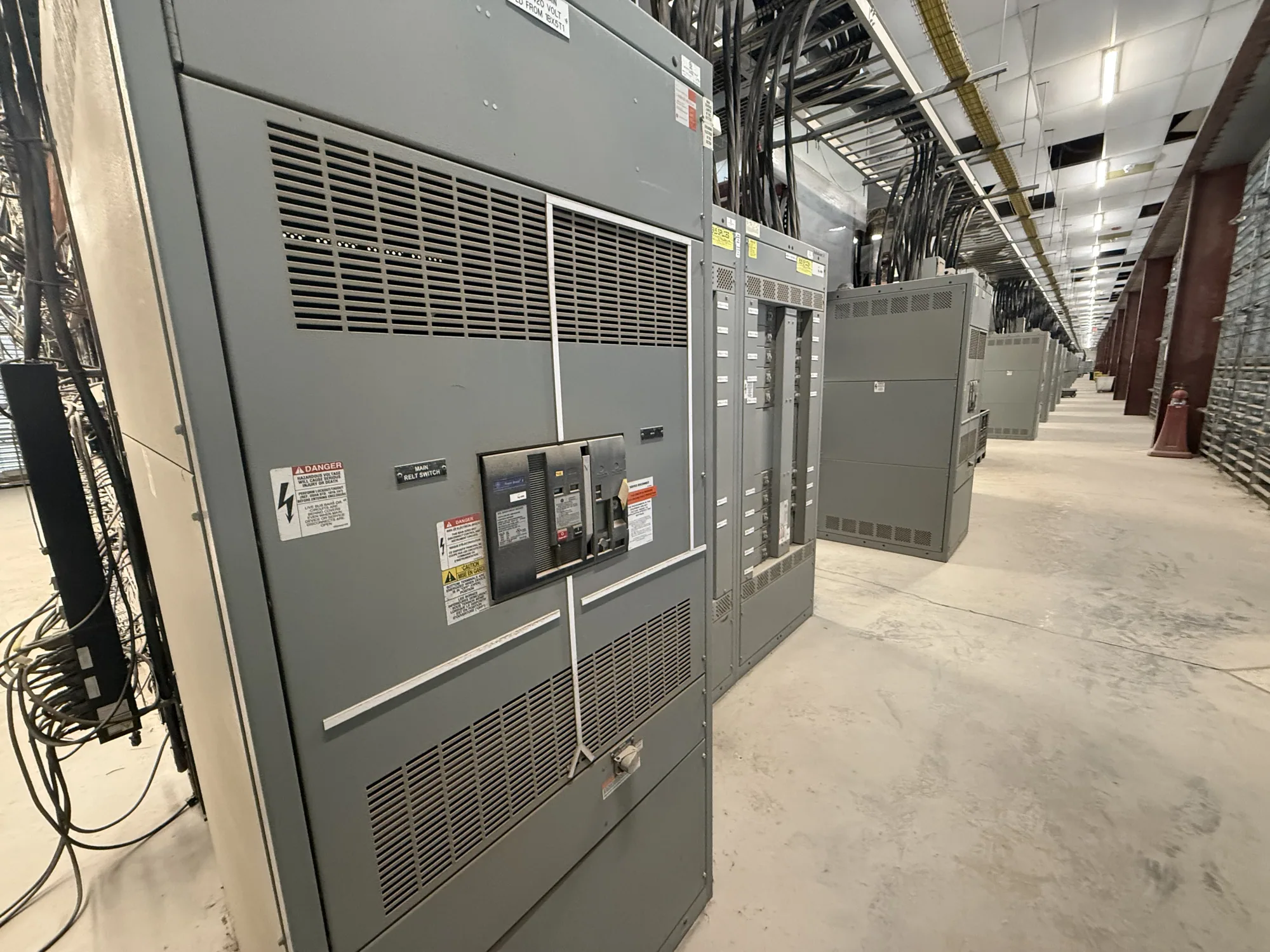
Start with the equipment location
Water and wastewater facilities bring together process equipment, motor loads, controls, and power distribution in settings that can differ substantially across one site. A switchgear room may be dry and controlled, while a pump station or remote installation may face outdoor weather, washdown, condensation, or airborne contaminants. The correct enclosure rating depends on the equipment’s actual location and exposure, not simply on the facility’s industry.
Begin by mapping where each assembly will be installed and what it must do. Identify indoor and outdoor locations, nearby process areas, access restrictions, and the equipment connected to each distribution point. Then have the owner’s engineering team establish the environmental conditions and enclosure requirements for each location. This avoids applying a single facility-wide assumption to equipment that may experience very different conditions.
What an enclosure rating communicates
An enclosure rating is a defined part of the equipment specification. It helps describe the protection an enclosure is designed to provide under stated conditions, but it does not establish that the equipment is suitable for every hazard at a site. The project engineer should identify the applicable rating system, required designation, and the exact equipment or compartments to which it applies. Confirm that the proposed assembly documentation matches those requirements.
Do not select a rating based only on labels such as “outdoor,” “wet,” or “industrial.” Those terms can conceal important differences in exposure, including direct weather, cleaning practices, humidity, dust, or corrosive substances. Ask the responsible engineer to define which conditions are credible at the installation point and what protection is required. The supplier can then review those stated requirements against the proposed equipment design and configuration.
Account for moisture and corrosion exposure
Moisture can reach electrical equipment through different paths: rain or spray, washdown, damp air, condensation, or water entering through an adjacent space. Describe the expected source and severity rather than treating all moisture as equivalent. Include whether the equipment is sheltered, whether cleaning procedures direct water toward it, and whether temperature or ventilation conditions may contribute to condensation. These details help the design team evaluate enclosure selection and installation assumptions.
Corrosion exposure also varies by site and process area. Where chemicals, salt, treatment agents, or other corrosive substances may be present, identify them and explain how equipment could be exposed. Do not assume that a particular enclosure material or finish is adequate without project review. Confirm any requested construction, coating, or protective measures with the engineer and equipment supplier, including how the choice affects access, maintenance, and the assembly’s specified environmental protection.
Coordinate motors, distribution, and controls
Motor loads influence the electrical design even though they do not, by themselves, determine an enclosure rating. Provide the motor list, starting method, operating sequence, and relevant load information to the project engineer. Starting and switching requirements can affect the equipment arrangement and control interfaces, while location and environmental exposure inform enclosure decisions. Treat these as related design inputs, not substitutes for one another.
Control integration deserves similar attention. Identify control power needs, monitoring and communication interfaces, cable entry expectations, and any separation or access requirements specified by the project. Remote pump stations may have different operating and environmental conditions from a central electrical room. Where metal-enclosed switchgear is under consideration, treat it as one possible equipment interface—not a default solution for every water or wastewater application. Confirm the equipment type and enclosure requirements against the system design.
Balance protection with safe access
A more protective enclosure may affect equipment dimensions, ventilation, cable routing, access, and maintenance procedures. Review those consequences early, especially where rooms are constrained or equipment must be operated and inspected routinely. The design should meet the documented environmental requirement while preserving practical working clearances and access for qualified personnel. Installation, inspection, testing, and maintenance must follow applicable safety procedures; enclosure selection is not a substitute for safe work planning.
Ask which doors, covers, cable entries, and compartments are included in the specified rating, and whether field modifications could change the intended protection. Coordinate conduit or cable entry details with the assembly supplier and installation team before release. If site conditions or equipment placement change during design, revisit the enclosure assumptions rather than carrying forward a rating chosen for a different location.
Information to provide for a useful review
For a supplier review, provide the equipment type and function, installation location, indoor or outdoor status, applicable enclosure designation, and the project documents that define environmental conditions. Include system voltage class, distribution and motor requirements, control interfaces, cable entry expectations, space constraints, and any specified standards or listing requirements. Mark uncertain items clearly so the engineer can resolve them instead of allowing assumptions to become purchase requirements.
Also identify who will approve the design basis: owner, consulting engineer, electrical contractor, operations staff, or other project stakeholders. Ask the responsible parties to confirm site exposure, applicable standards, any required assembly listing, and how acceptance will be documented. UL 891 may apply to eligible low-voltage switchboards, but applicability and assembly listing must be verified for the specific design; it does not apply as a blanket claim for all switchgear.
Use a documented project checklist
Before requesting new equipment, assemble a location-by-location schedule that records exposure, required enclosure rating, equipment function, connected loads, control interfaces, and unresolved questions. Include drawings and specifications where available, and note who has authority to approve deviations. This lets the manufacturer evaluate the requested configuration against the project information rather than infer requirements from the facility name or a general description.
South Carolina Switchgear Builders manufactures new equipment to specification, with US-built equipment and all-American components, and ships nationwide. Availability and actual lead times depend on the order and must be confirmed. Share the project’s approved requirements and schedule needs for review; have the responsible engineer verify the final equipment configuration, environmental suitability, ratings, and applicable documentation before purchase and installation.