Start with the facility’s distribution system
Water and wastewater facilities can combine treatment processes, pumping stations, lift stations, laboratory or administration areas, and remote equipment. Their electrical systems may also span indoor electrical rooms and outdoor or exposed locations. There is no single voltage rating that suits every facility. The equipment class and ratings must match the project’s documented system and the duties the equipment will perform.
Begin with the electrical one-line diagram and the responsible engineer’s system basis. Identify the nominal voltage at each connection point, the phase and frequency, grounding arrangement, and any upstream or downstream transformation. Then distinguish the system’s nominal voltage from the equipment’s maximum voltage rating. These are related but not interchangeable values; the engineer must determine which ratings and design details apply to the specific installation.
Match equipment to each point in the system
A facility may have more than one voltage class across its distribution network. A 480 V class assembly is low voltage; 5 kV and 15 kV class equipment are medium voltage. Those examples identify product classes, not a universal facility design. The correct selection depends on the actual system voltage, the connection, the project specification, and the equipment’s verified ratings. Do not choose a class from a process description alone.
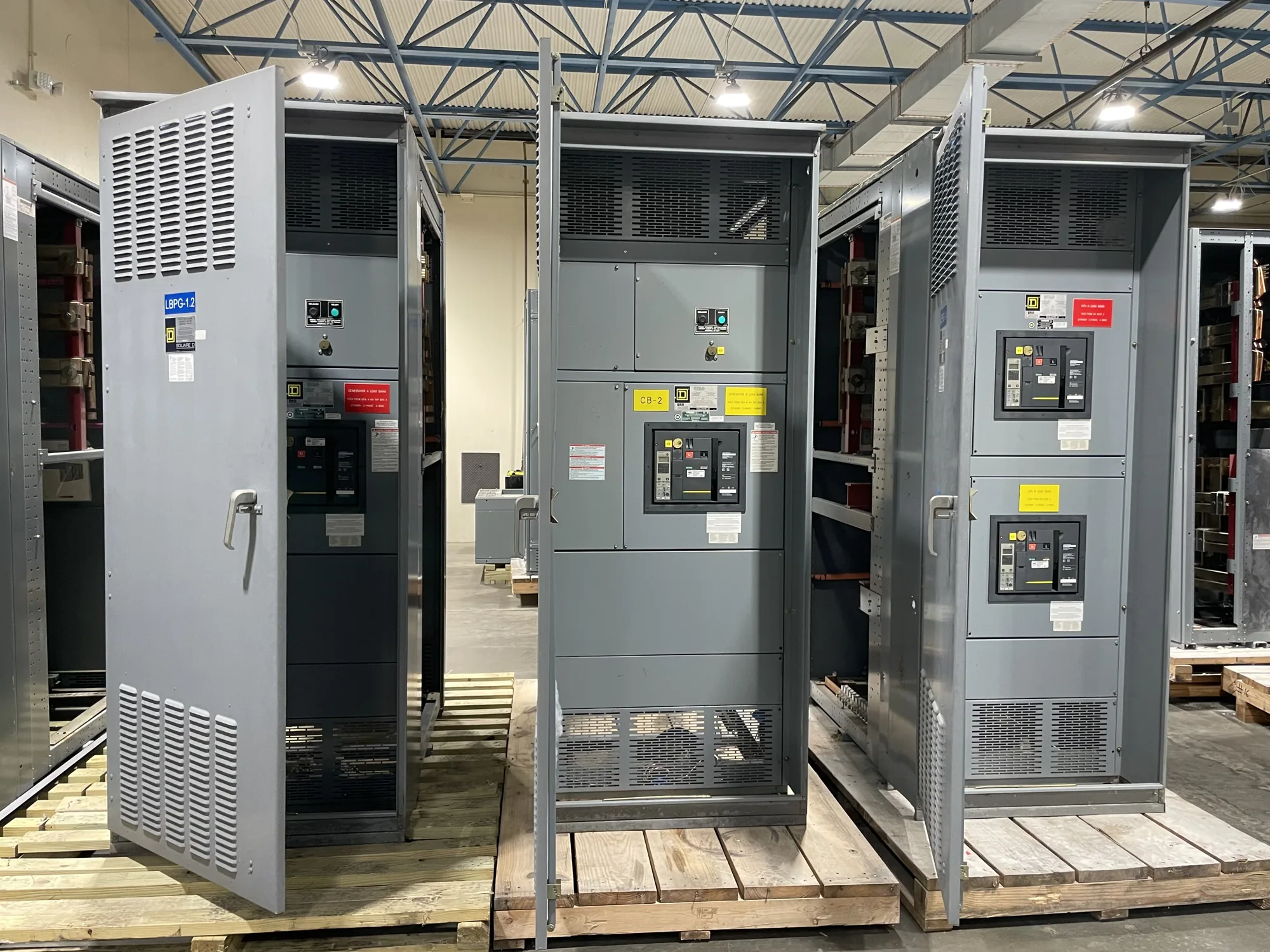
Equipment insulation and other design characteristics must be evaluated for the applicable system and installation. Ask the project engineer to specify the required voltage ratings and to confirm the equipment’s suitability, applicable standards, and any required listing for the particular design. A low-voltage switchboard and medium-voltage switchgear are not interchangeable terms or products. For eligible low-voltage switchboards, UL 891 may apply; applicability and the assembly listing must be confirmed for the specific design.
Account for motor starting and operating demands
Pumps, blowers, mixers, screens, and other process loads can shape distribution choices. Motor starting method and operating sequence may affect current demand and voltage conditions at the point of connection. Gather motor nameplate data, starting requirements, drive or starter information, duty cycles, and the engineer’s load calculations. Suppliers need the approved project requirements rather than assumptions about how a typical treatment plant operates.
When comparing a proposed equipment configuration, confirm how the specified loads, protective devices, and control interfaces fit the distribution design. Ask the responsible engineer to resolve coordination and system-performance questions, including whether load-starting conditions affect equipment selection. A supplier can use the approved one-line diagram and equipment schedule to define the offered assembly, but should not replace engineering analysis or infer a rating from motor horsepower alone.
Consider controls and installation conditions
Water and wastewater processes rely on controls, alarms, instrumentation, and communication with local or remote operating systems. Define which control power sources, interface points, metering, signaling, and space or wiring provisions the equipment must support. Identify what is supplied by the switchgear or switchboard manufacturer and what belongs to controls, drives, field wiring, or other vendors. Clear scope boundaries help prevent missing interfaces during design and procurement.
Describe the installation environment where it affects the specification. State whether equipment is indoors or outdoors, and identify exposure to moisture, washdown, corrosive agents, temperature extremes, or other site conditions where present. Do not assume an enclosure or material is suitable based only on the facility type. The engineer should specify environmental requirements, enclosure details, and any protective measures for the actual location; the supplier should confirm that the proposed equipment meets the stated scope.
Resolve trade-offs through project data
Higher-level distribution decisions can involve trade-offs in equipment class, transformation, layout, maintainability, and integration with existing or planned systems. The best choice is not determined by voltage alone. Compare the project’s electrical basis, load needs, space constraints, control requirements, and future provisions. If considering low-voltage switchgear or a switchboard as an interface, treat it as one possible part of the design—not a requirement for every water or wastewater facility.
Information should move from the owner’s operating requirements to the engineer’s design documents, then to the equipment supplier’s proposal for review. Provide the current one-line diagram, schedules, project specifications, connection details, required ratings, and defined exceptions. The team should review assumptions together before release for manufacture, including equipment boundaries, interfaces, environmental conditions, and any required tests or documentation. Ratings, standards, listing, configuration, and delivery dates all require project-specific confirmation.
Use an industry-specific purchasing checklist
Before requesting a quotation, assemble the facility location and installation conditions; nominal system voltage and system configuration; one-line diagram; load and motor schedules; control and communications scope; required equipment type and ratings; and applicable project standards. Include available fault-current and protection information for engineering review, plus short-circuit requirements specified by the responsible engineer. Identify the owner, engineer, contractor, and other stakeholders who must approve submittals.
Ask suppliers to state the offered equipment scope, identify deviations or assumptions, and clarify which project requirements remain subject to engineering confirmation. Verify that the proposed voltage class and ratings match the approved documents, and review interfaces before procurement. South Carolina Switchgear Builders manufactures new switchgear and switchboards to specification, builds in the United States using all-American components, and ships nationwide. Availability and lead times depend on the order and must be confirmed. A complete, coordinated specification gives the project team a sound basis to evaluate the equipment and carry the design into procurement.