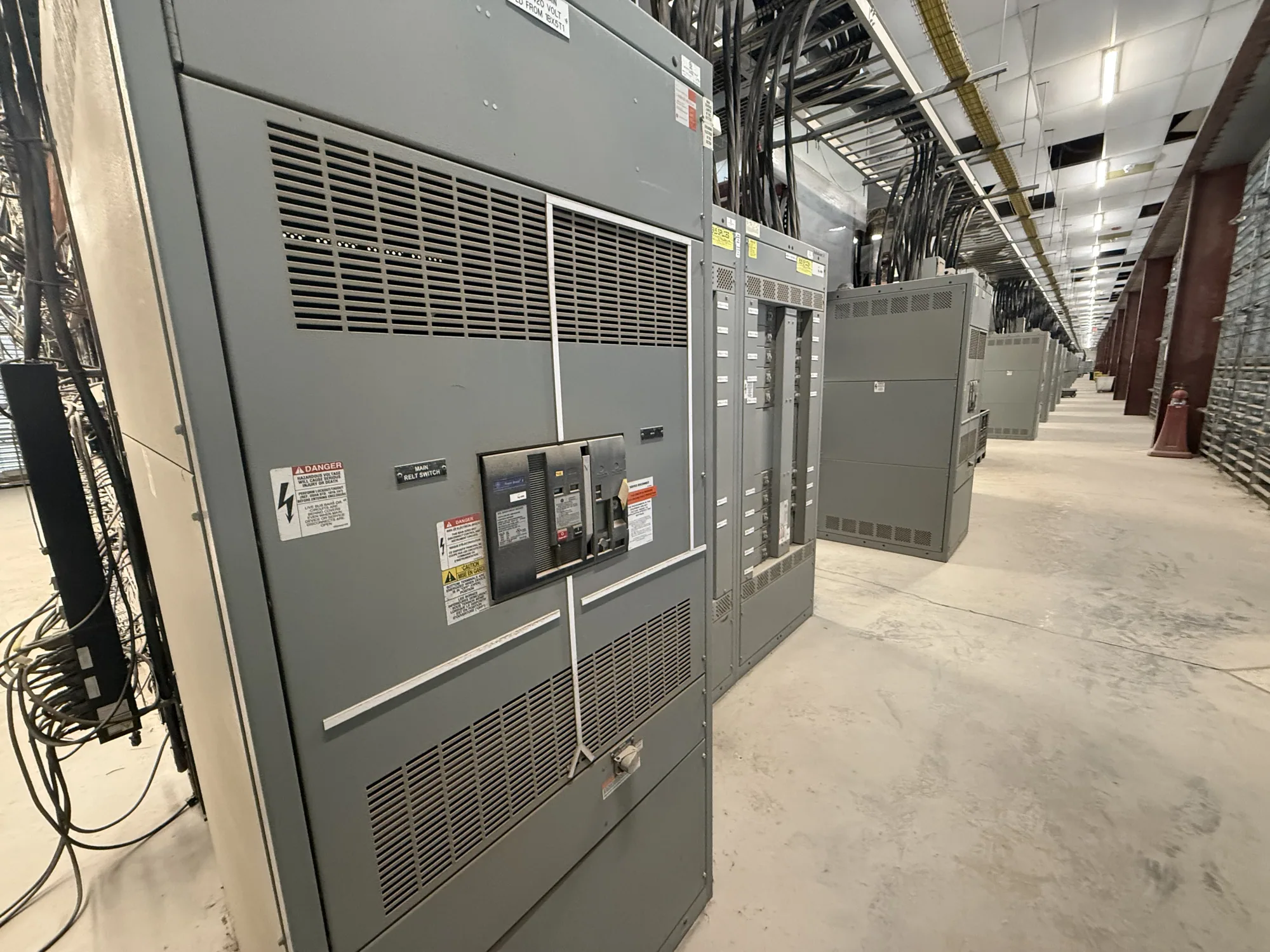
Establish what the project means by high voltage
“High voltage” can describe different parts of a power system depending on the project, utility, and governing specification. It is not a precise equipment rating by itself. Start by identifying where the proposed assembly sits: a transmission or utility-side installation, a substation interface, or another defined point in the system. The responsible engineer should establish the voltage class and determine whether the required equipment falls within the manufacturer’s confirmed offering.
Map the project boundary on the one-line diagram. Identify which equipment is being supplied, what remains utility-furnished, and where cables, bus, transformers, metering, protection, and control interfaces connect. High-voltage switchgear should not be assumed to mean medium-voltage switchgear, nor should an equipment maximum voltage be mistaken for nominal system voltage. Those values serve different purposes and must be confirmed for the actual design.
Confirm voltage and insulation requirements
Provide both the system’s nominal voltage and the maximum voltage relevant to the equipment specification. Ask the project engineer to confirm insulation level and coordination with the connected system, including any requirements for clearances, impulse withstand, switching conditions, and environmental exposure. Do not derive an equipment voltage rating from a general label such as “high voltage”; the specified system and applicable design documents control.
Switching technology and insulation approach are also design decisions, not generic product attributes. The project may prescribe a technology or leave alternatives open, but suitability depends on the system, location, operating needs, maintenance plan, and applicable requirements. State required switching functions and any restrictions in the inquiry. The manufacturer can then assess whether a new assembly can be configured to the specification, subject to technical review and confirmation.
Specify fault duty, grounding and protection
Fault-current information is essential to equipment selection. Request confirmed available fault data at the connection point, including the assumptions and time basis used by the engineer. Identify system grounding and relevant operating configurations, such as alternate sources or tie arrangements. Do not substitute a project estimate or a nominal voltage for verified fault-duty requirements; the responsible engineer must establish the design inputs and confirm the equipment’s suitability.
Describe the protection and control scope clearly. Depending on the project, the inquiry may need to identify relaying functions, instrument transformers, metering, trip and close circuits, interlocks, communications, and interfaces with upstream or downstream equipment. Specify which elements are required from the switchgear manufacturer and which are furnished by others. Protection settings and coordination remain project engineering matters, and the proposed scope should be checked against the approved protection design.
Coordinate utility and site interfaces
Utility-side projects often have defined requirements for ownership boundaries, metering, protection, access, operating procedures, and accepted equipment arrangements. Obtain the applicable utility documents rather than assuming that a common arrangement will be accepted. Confirm connection points, cable or bus terminations, control power, communications, and responsibilities for review and approval. Requirements may vary by project and utility, so they should be provided to the manufacturer for evaluation.
Site conditions influence enclosure, layout, access, and installation planning. Provide indoor or outdoor location, ambient conditions, altitude if specified, exposure concerns, available footprint, cable entry direction, and required working clearances. Include transport route constraints and the planned installation sequence when relevant. These details help identify interface conflicts early, but they do not establish a delivery date or prove that a particular configuration is available.
Keep product categories and scope distinct
Projects sometimes use “high voltage” loosely while their equipment schedules identify a different voltage class or a specific switchgear function. Reconcile the terminology across the one-line, equipment schedule, and procurement specification before requesting a quote. If the intended item is actually medium-voltage equipment, identify that explicitly and provide its stated voltage class. A separate product category or familiar name does not resolve rating, insulation, or application questions.
Document the complete supply boundary: main equipment, protection and control components, accessories, documentation, testing requirements, and any interface materials. Flag exclusions and items furnished by the utility, installer, or other suppliers. Listing, standards, ratings, testing, and delivery particulars must be verified against the proposed assembly and project specification; none should be inferred from a broad product label.
Prepare a complete manufacturer inquiry
For a useful technical review, send the latest one-line diagram, equipment schedule, system nominal and maximum voltage, grounding method, confirmed fault data, and applicable utility or owner specifications. Include site conditions, layout constraints, cable or bus interface details, control and protection requirements, and requested standards or testing. Mark unresolved values as open questions rather than inserting assumptions, and identify the engineer responsible for final approval.
South Carolina Switchgear Builders manufactures new equipment, with US-built construction and all-American components, and ships nationwide. Custom configurations are subject to review against the project requirements. Availability and lead time depend on the confirmed order and must be verified; no delivery date should be assumed before that review. Once the technical documents and supply boundary are clear, the manufacturer can assess fit, identify missing inputs, and develop a quote for the specified equipment.