Start with the project and operating context
Planning new switchgear for a project in Anderson begins with defining what the equipment must serve, not simply selecting a product by location. A production expansion, a commercial facility fit-out, and replacement of aging distribution equipment can have different load profiles, operating constraints, and shutdown windows. Treat these as planning scenarios; the responsible project team should establish the actual site conditions and requirements.
Document the existing distribution arrangement and the intended changes. Useful inputs include one-line diagrams, available fault-current information, load and feeder schedules, upstream protective devices, grounding details, and the physical equipment area. If records are incomplete, identify what must be field-verified by qualified personnel. The manufacturer can use a clear, current project package to assess a custom-to-specification configuration rather than make assumptions about the installation.
Review feeder protection and coordination
Operational changes can alter feeder loading, fault exposure, and the consequences of an interruption. Review which loads are critical, how feeders are grouped, and what isolation or selective coordination objectives the project engineer requires. Protection cannot be chosen from a generic city profile: device functions, ratings, sensing inputs, and settings depend on the electrical study, connected equipment, and upstream and downstream devices.
For a quote, identify the intended protective functions and any relay or trip-unit requirements, including available control power and the interfaces needed for monitoring or communication. Clarify who will provide final settings and coordination documentation. Questions about protective-relay selection should be resolved with the responsible electrical engineer, since a device family or feature list alone does not establish that a complete design will perform as intended.
Assess low-voltage equipment and access
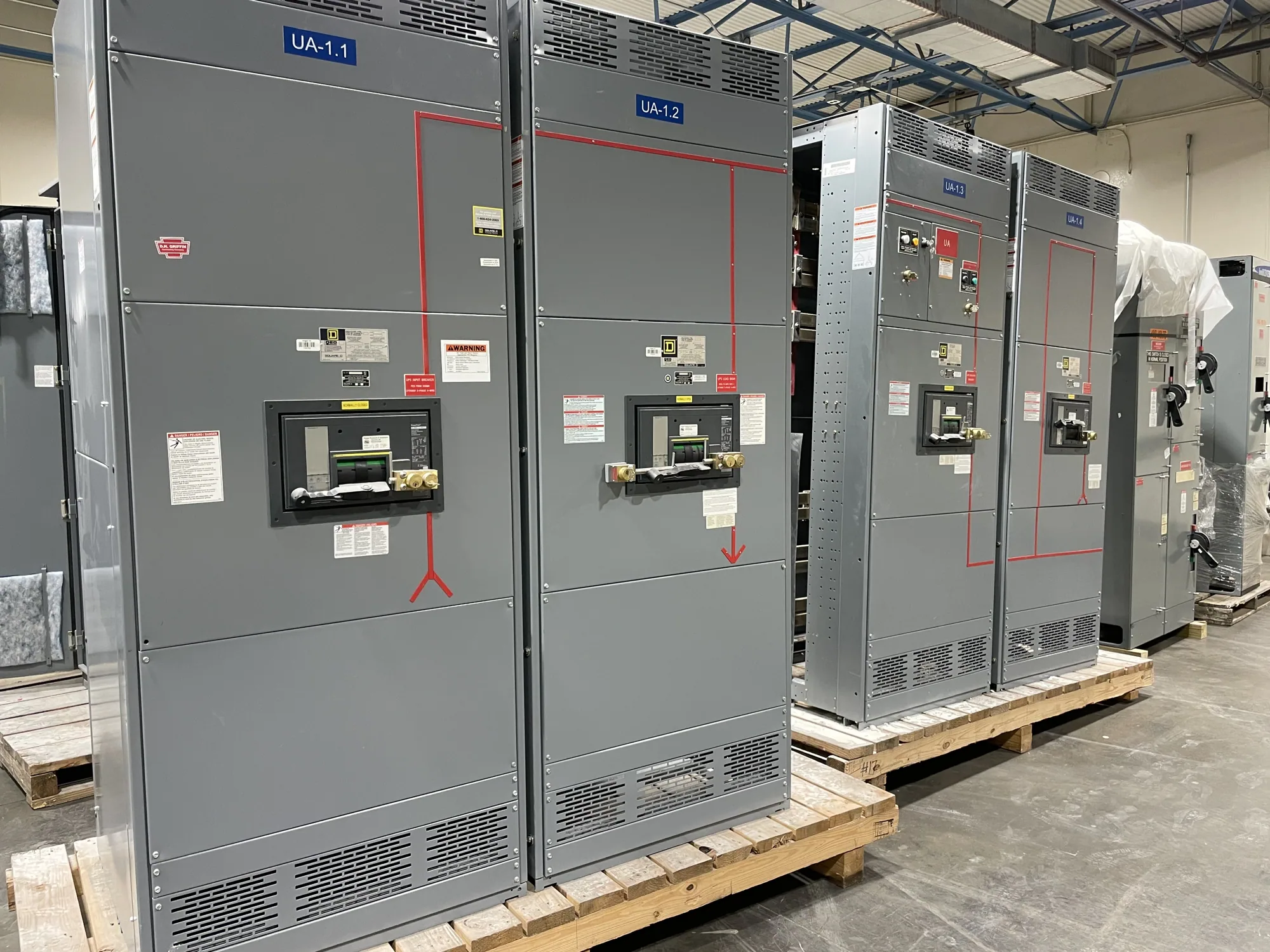
Low-voltage switchgear may be relevant where a project calls for a low-voltage distribution assembly, but the required voltage class and equipment type must come from the design. For a 480 V class application, confirm the specified system voltage, bus and feeder arrangement, interrupting and withstand requirements, enclosure, and incoming connection method against the project documents. Do not infer these values from the facility type or assume every assembly has the same listing or configuration.
Physical access is part of the design review. Confirm the available footprint, working and maintenance clearances required by the project, cable entry and bending space, lifting route, door swing, and any room or environmental constraints. Consider how operators and qualified maintenance personnel will reach controls and removable components under the applicable procedures. The project team should verify dimensions and access against the actual room, installation plan, and equipment drawings before release.
Balance continuity, flexibility, and cost
For a hypothetical automotive manufacturing project, a production line change might prompt review of new feeders, motor-related loads, controls, or capacity for future equipment. These are decision points, not claims about a specific Anderson facility. The team should identify which loads can be interrupted, whether planned isolation is needed, and how the distribution arrangement supports the operating plan. Any redundancy or sectionalizing approach should be justified by the project’s continuity objectives and engineering analysis.
More compartments, monitoring, or specialized protection can add functional flexibility, but also affect footprint, interfaces, engineering scope, and procurement. A simpler arrangement may suit a stable load plan; a more adaptable one may be appropriate when future changes are defined and supported by the design. Compare options using documented requirements and lifecycle needs, not an assumed benefit. Confirm compatibility with connected equipment and upstream systems before selecting a configuration.
Prepare a complete manufacturer RFQ
A useful request for quotation includes the project location, requested equipment type and voltage class, one-line diagram, equipment schedule, quantity, and required ratings or standards for the specific assembly. Include bus arrangement, feeder and main-device details, control and metering needs, enclosure conditions, cable entry, and any specified communication interfaces. Mark unresolved items clearly so they can be reviewed rather than silently treated as settled requirements.
Also provide the desired submittal milestones, approval process, shipping destination, receiving constraints, and target delivery window. State whether the scope includes drawings, accessories, or other specified components, and identify who reviews and approves technical submittals. Availability and lead time depend on the order and must be confirmed. Delivery dates, testing, listing, ratings, and standards should be verified against the actual specification and supplied equipment.
Coordinate engineering, production, and delivery
South Carolina Switchgear Builders manufactures new switchgear and switchboards, offers US-built equipment with all-American components, and ships nationwide. Equipment can be custom to specification; the requested design, applicable assembly details, and availability require project-specific review. For eligible low-voltage switchboards, UL 891 applicability and assembly listing must be verified for the specific design; it does not apply as a blanket claim to all equipment or to medium-voltage switchgear.
Keep the project engineer, purchasing team, installation contractor, and manufacturer aligned on drawing review, approved changes, shipping readiness, and site receiving plans. Qualified personnel are responsible for installation, testing, and maintenance under applicable safety procedures. A clear specification and timely answers to design questions help the manufacturer assess the requested equipment and confirm order-specific schedule details, giving the Anderson project team a sound basis for its next procurement decision.