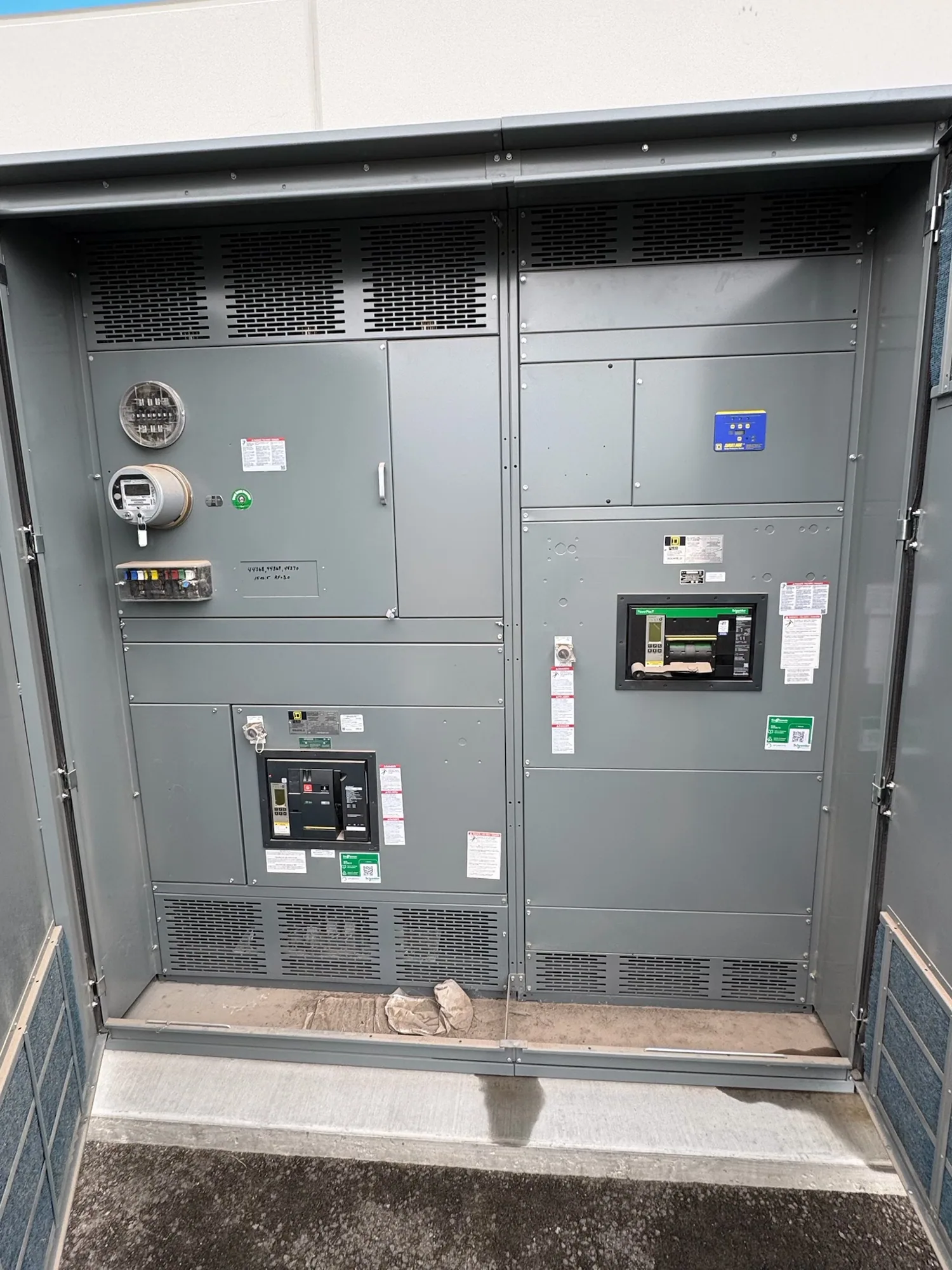
Define the project before selecting equipment — Switchgear Planning for Clemson, South Carolina
For a hypothetical project in Clemson, South Carolina, begin with the facility and electrical scope rather than a product label. A campus building, laboratory, or central-plant interface may involve different service boundaries and operating priorities. Identify whether the purchase covers a new service entrance, a distribution lineup, a building feeder section, or equipment coordinated with a larger campus system.
Those distinctions affect the equipment class, arrangement and interfaces that need engineering review. The location alone does not establish utility requirements, owner standards, site conditions, or an applicable service area. Confirm those facts with the project engineer and owner. South Carolina Switchgear Builders manufactures and supplies new equipment, custom to specification, and ships nationwide; configuration and availability depend on the actual order.
Map feeders, loads and system boundaries
Provide a current one-line diagram showing the source, transformers, main devices, bus connections, feeder destinations and any tie or transfer arrangements in scope. Mark the boundary between owner and utility equipment and identify existing gear that the new assembly must interface with. The responsible engineer should confirm system voltage class, available fault current, grounding approach and protective-device requirements from project information, not assumptions about Clemson.
For laboratory loads, describe equipment characteristics that affect distribution and continuity, including known starting or operating profiles, critical circuits and planned future capacity. For central-plant interfaces, identify which pumps, controls or other loads are included, who owns upstream and downstream devices, and how the proposed equipment coordinates with those systems. Avoid treating a room name as an electrical specification; actual loads and operating needs govern the design.
Select equipment class and configuration
Specify whether the project needs low-voltage switchboards, medium-voltage switchgear, or another defined assembly. A 480 V class application is low voltage; 5 kV and 15 kV class equipment are medium voltage. Do not infer the required class from building type. The one-line, service conditions and engineer’s design establish what is appropriate. If switchboards are under consideration, discuss lineup layout, main and feeder provisions, metering, and termination requirements.
Configuration choices bring tradeoffs. A compact arrangement may reduce space demands but can affect access, cable routing and future work. Spare provisions can support planned expansion, but should be based on a documented load-growth strategy. Selective coordination, where required by the design, depends on the protective devices and their settings across the relevant system; the engineer should define the study and acceptance criteria. Listing, ratings, testing and standards are specific to the proposed assembly and must be confirmed.
Coordinate campus operation and construction stages
Owner review should occur early enough to resolve standards, labeling, metering, access and operating preferences before fabrication details are finalized. Ask who approves the submittal, what documents are needed, and whether campus facilities, the electrical engineer, contractor and utility have separate review roles. Record decisions and open items in a responsibility list so unresolved interfaces do not disappear between design and procurement.
Staged construction may require separate delivery or installation phases, temporary arrangements, or work around occupied buildings. Describe each phase and identify any outage constraints, temporary power design responsibilities and sequence assumptions. Do not presume an existing lineup can be altered or a system can remain energized during work. Installation, testing and maintenance must be performed by qualified personnel under applicable safety procedures and project controls.
Check the site and delivery path
Equipment dimensions and shipping configuration need to fit the actual route from receiving point to electrical room. Share door and corridor clearances, floor and lifting constraints, access restrictions, receiving hours, unloading arrangements and any site-specific delivery rules. Confirm these details with the contractor and owner; campus access can be governed by project logistics that are not apparent from the city name.
Also document environmental conditions that may influence the enclosure or assembly, such as the installation location, exposure, ventilation and other conditions identified by the project team. Request that the responsible engineer assess these inputs against the specification. No particular enclosure, rating or environmental suitability should be assumed before the site conditions and equipment design are reviewed together.
Prepare a complete request for quotation
A useful inquiry includes the project location, equipment scope, one-line diagram, load information, system data available to the buyer, preliminary layout, required submittals and owner standards. Add target procurement and construction dates, review milestones, shipping access details and known environmental conditions. State which items are firm and which remain under engineering review, and identify the person authorized to resolve technical questions.
South Carolina Switchgear Builders can review requirements for new switchgear and switchboards custom to specification. US-built equipment and all-American components are available propositions, while actual configuration, component selection, availability and lead time must be confirmed for the order. Share the project documents and request a scope review so the team can clarify equipment boundaries, outstanding engineering decisions and coordination needs before a proposal is finalized.