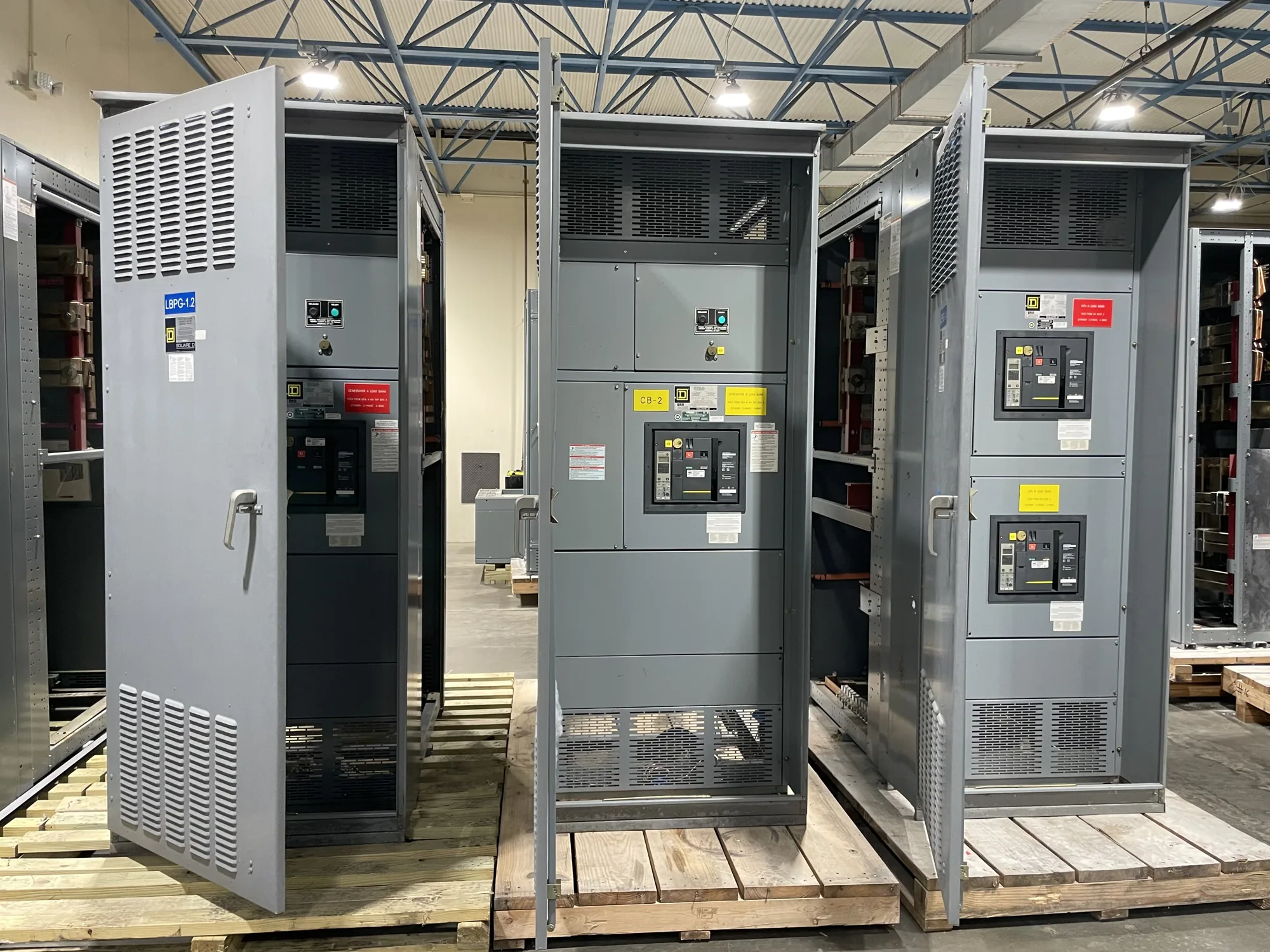
Plan around buildings, phases, and service boundaries
Columbia-area project teams evaluating new switchgear may be planning for an institutional building, a commercial campus, or a phased capital program. These are useful planning scenarios, not assumptions about a particular site. The first task is to understand how electrical service is arranged today and how the proposed work changes it: identify each building, service point, distribution path, and planned expansion before choosing equipment.
On a multi-building property, one central service arrangement may not fit every phase or building. Separate services, utility interfaces, and distribution responsibilities can affect the equipment scope and who must review it. A one-line diagram, site plan, and written description of existing and proposed work help the manufacturer understand whether the request concerns service-entrance equipment, downstream distribution, or a coordinated set of assemblies.
Define the electrical requirements before selecting equipment
Specify the system voltage class and available project ratings from the responsible engineer’s documents rather than relying on a generic product label. Identify the intended application, incoming and outgoing arrangements, number and type of circuits, protective devices, metering needs, and any physical or access constraints. Where details are not settled, mark them as open engineering decisions; assumptions about a neighboring building or an earlier phase can produce an unsuitable configuration.
For a 480 V class project, confirm whether a low-voltage switchboard or another assembly is intended and what the project specification requires. UL 891 applies to eligible low-voltage switchboards; applicability and assembly listing must be verified for the specific design. Medium-voltage equipment is a distinct category: specify its intended application and voltage class, and do not transfer low-voltage switchboard requirements to it without confirmation by the project engineer.
Coordinate service entrances and utility interfaces
Service-entrance switchgear may be relevant when the equipment is intended to receive and distribute a building’s incoming electrical service. Confirm the service point, ownership boundary, metering arrangement, utility review process, and required protective functions with the responsible parties. The required configuration depends on the actual service and project documents; a product category alone does not establish suitability or satisfy a utility’s review.
For a hypothetical commercial-campus project, a buyer might compare a dedicated service entrance for one building with a coordinated arrangement for multiple buildings. The decision turns on documented service boundaries, future phases, operations, and engineering requirements—not simply on the number of structures. Map which equipment serves which loads, how additions would connect, and what must remain available during staged construction. Ask the engineer to resolve interface questions before the equipment scope is finalized.
Resolve grounding, bonding, and neutral details
Grounding and bonding requirements are system-specific. The responsible engineer should identify the grounding method, bonding points, neutral configuration, and any separation or connection requirements shown by the project design. These choices can depend on the service arrangement and the relationship between upstream and downstream equipment. Buyers should provide the relevant one-line diagram and specifications rather than asking a manufacturer to infer a site’s grounding scheme from location or building type.
Also clarify whether the scope includes provisions for future circuits, control or monitoring interfaces, and connection points needed by the project. Additional space or features can affect dimensions, component selection, and coordination with adjacent equipment. Confirm the available electrical and physical information, and have qualified project personnel review unresolved design questions before release. Installation, testing, and maintenance belong to qualified personnel following applicable safety procedures.
Plan approvals, outages, and phased work
Institutional and campus projects can involve several reviews, such as engineering, facilities, procurement, construction, and utility coordination. Establish who approves the drawings, who resolves comments, and which documents are needed at each milestone. If work will occur in phases, show the proposed sequence and identify any required outage windows. These schedules are project-specific; coordinate them with the owner, contractor, and other responsible parties rather than assuming a particular equipment delivery or shutdown date.
Before procurement, verify dimensions, access routes, working clearances, room conditions, cable entry, and interfaces with existing equipment. Confirm who is responsible for field measurements and for validating the final arrangement. A schedule that includes drawing review, approval, manufacturing, shipping, receiving, and installation planning is more useful than a single requested arrival date. Actual availability and lead time depend on the order and must be confirmed.
Prepare a useful equipment request
A clear request for quotation should include the project location, application, voltage class, one-line diagram, written equipment specification, circuit and protective-device schedule, and any required metering or control features. Add the planned quantity, preferred arrangement, space limitations, drawing and approval milestones, requested shipping destination, and target dates. Identify requirements that remain pending so they can be reviewed instead of silently treated as confirmed design inputs.
South Carolina Switchgear Builders manufactures new switchgear and switchboards to specification, with US-built equipment, all-American components, and nationwide shipping. For a Columbia project, submit the project documents and explain the intended phase and service boundaries so the proposed scope can be evaluated. Confirm configuration, applicable listing, ratings, availability, and delivery timing against the final specification. A complete, coordinated request gives the project team a practical basis for reviewing the equipment and planning the next procurement steps.