Plan around the project, not just the location
For a Florence, South Carolina project, switchgear planning starts with the building’s electrical design and operating needs—not a standard package selected by city alone. A commercial expansion, an industrial facility, and a healthcare project can each require different arrangements, protection, and coordination. South Carolina Switchgear Builders manufactures new equipment to specification and ships nationwide; the actual design and delivery plan depend on the project information supplied.
Use the early planning stage to align the electrical engineer, equipment manufacturer, contractor, and site team. Confirm where the equipment will be installed, what it will serve, and how it connects to the service and downstream distribution. If a project schedule depends on a shutdown, construction sequence, or constrained receiving area, identify those conditions before equipment details and delivery expectations are finalized.
Define the electrical scope and equipment class
Start with the one-line diagram and the project specification. Identify the required equipment function, system voltage class, incoming and outgoing arrangements, number and type of circuits, protective devices, metering, and any control or communications needs. A 480 V class design is low voltage; 5 kV and 15 kV class designs are medium voltage. The responsible engineer must establish the project’s actual ratings and requirements.
Clarify whether the scope calls for switchgear, a switchboard, or a coordinated combination of distribution equipment. Service-entrance switchgear may be appropriate where the project design requires service equipment at the incoming supply, but its configuration and suitability cannot be determined from the building type alone. Ask the engineer to identify the applicable service conditions, protection scheme, and project requirements, then have the proposed assembly checked against that specification.
Coordinate protection and critical loads
Where continuity matters, identify critical loads and the consequences of an outage before choosing a protective-device arrangement. The time-current behavior of upstream and downstream devices affects coordination, but the appropriate settings and selectivity depend on the system study, equipment, and applicable project requirements. Provide the engineer’s coordination criteria and relevant study information; do not assume a generic arrangement will deliver a particular result.
For a hypothetical hospital or healthcare project, the design team may need to distinguish essential electrical loads from other building loads and coordinate the distribution plan with the facility’s operational and code requirements. That scenario does not establish what any particular Florence facility needs. The project engineer should define required source arrangements, transfer equipment interfaces, monitoring, and acceptable outage windows. Qualified personnel handle installation, testing, and maintenance under applicable safety procedures.
Make receiving and delivery part of the design plan
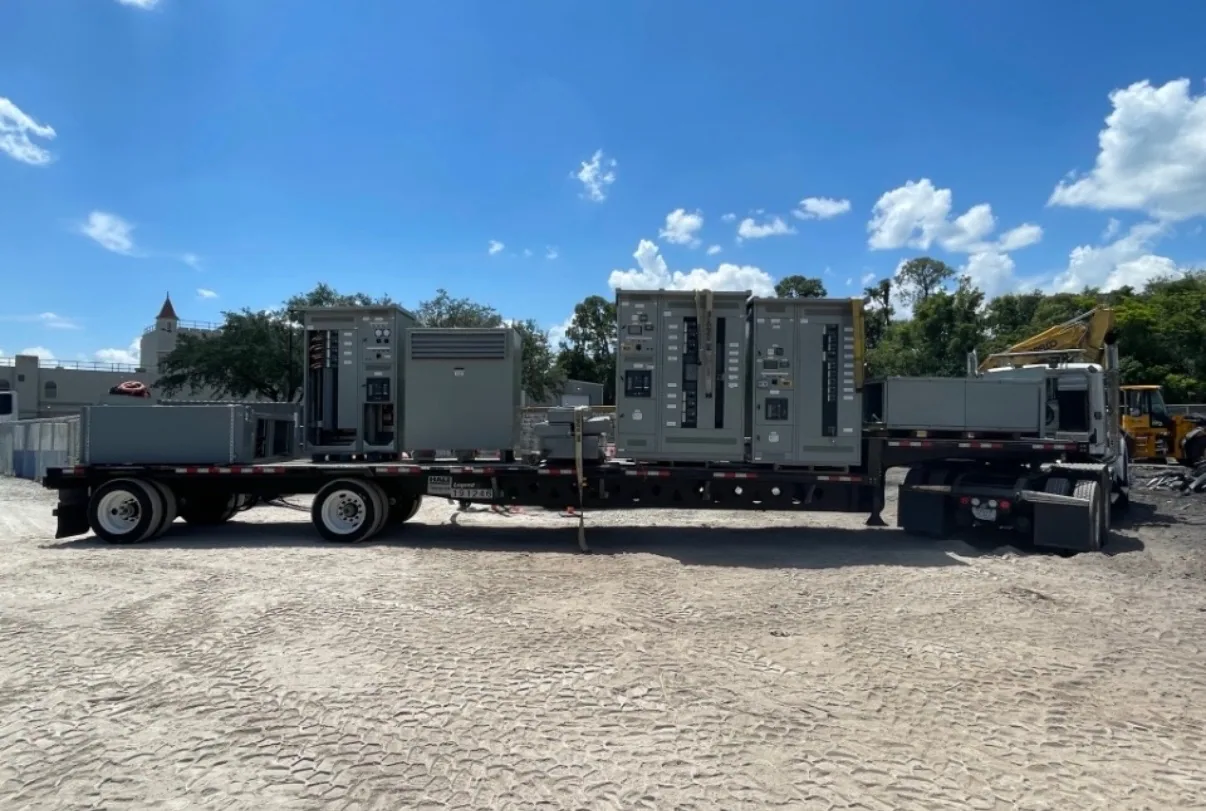
Large electrical assemblies require a receiving plan that matches the specified equipment and site conditions. Confirm the delivery address, receiving hours, access route, unloading responsibility, staging space, and any restrictions on vehicle access or storage. Check whether the equipment’s shipping configuration and handling needs fit the planned route from the receiving point to its final location. Resolve building access and construction sequencing questions before delivery dates are confirmed.
For critical-load work, connect the shipment plan to the outage and installation sequence. The contractor and site team should identify when existing equipment can be isolated, what temporary arrangements the project engineer approves, and how the new assembly will be introduced into the system. These decisions are project-specific; do not treat a target shipment date as a confirmed delivery commitment or assume equipment availability before the order is reviewed.
Balance configuration, space, and future needs
Custom equipment can be configured to the supplied specification, but adding features may affect footprint, connections, coordination, cost, and schedule. Ask which provisions are required now and which are justified for anticipated expansion. Confirm working space, cable entry and exit, access for operation, and interfaces with adjacent equipment against the actual drawings. Dimensions, ratings, and arrangement must be verified for the specific proposed design.
For eligible low-voltage switchboards, UL 891 may apply; whether it applies and whether the specific assembly is listed must be verified against the design and specification. Do not assume that a standard, listing, test, or rating applies to every product. Ask the manufacturer to identify what is included in the offered configuration and to resolve any discrepancies with the project documents before approval.
Prepare a useful request for quotation
A focused RFQ helps the manufacturer evaluate the actual scope. Provide the current one-line diagram, equipment schedules, specifications, system voltage and available ratings established by the engineer, circuit and protective-device requirements, metering and control needs, and relevant coordination criteria. Include drawings, site constraints, requested delivery location, receiving limitations, and the project milestone dates that affect procurement or installation.
Also identify open decisions, required submittals, review responsibilities, and the person authorized to resolve technical questions. Ask for confirmation of configuration, applicable listing or testing details, availability, and an order-specific delivery estimate. South Carolina Switchgear Builders offers US-built equipment with all-American components, custom to specification, and nationwide shipping. Availability and lead times depend on the order and must be confirmed.
Coordinate the next project decisions
Before releasing an order, reconcile the quote with the final project specification, one-line diagram, and approved submittals. Confirm that equipment boundaries and interfaces are understood by the engineer, contractor, and site team, including who supplies adjacent components and who coordinates receiving. Record any approved changes so procurement, installation planning, and outage coordination work from the same configuration.
For a Florence project, the useful next step is to assemble the electrical documents and delivery constraints, then request a specification-based review. That gives the project team a grounded basis for comparing configurations, resolving technical questions, and planning the transition to new equipment without relying on assumptions about local installations or unverified delivery promises.