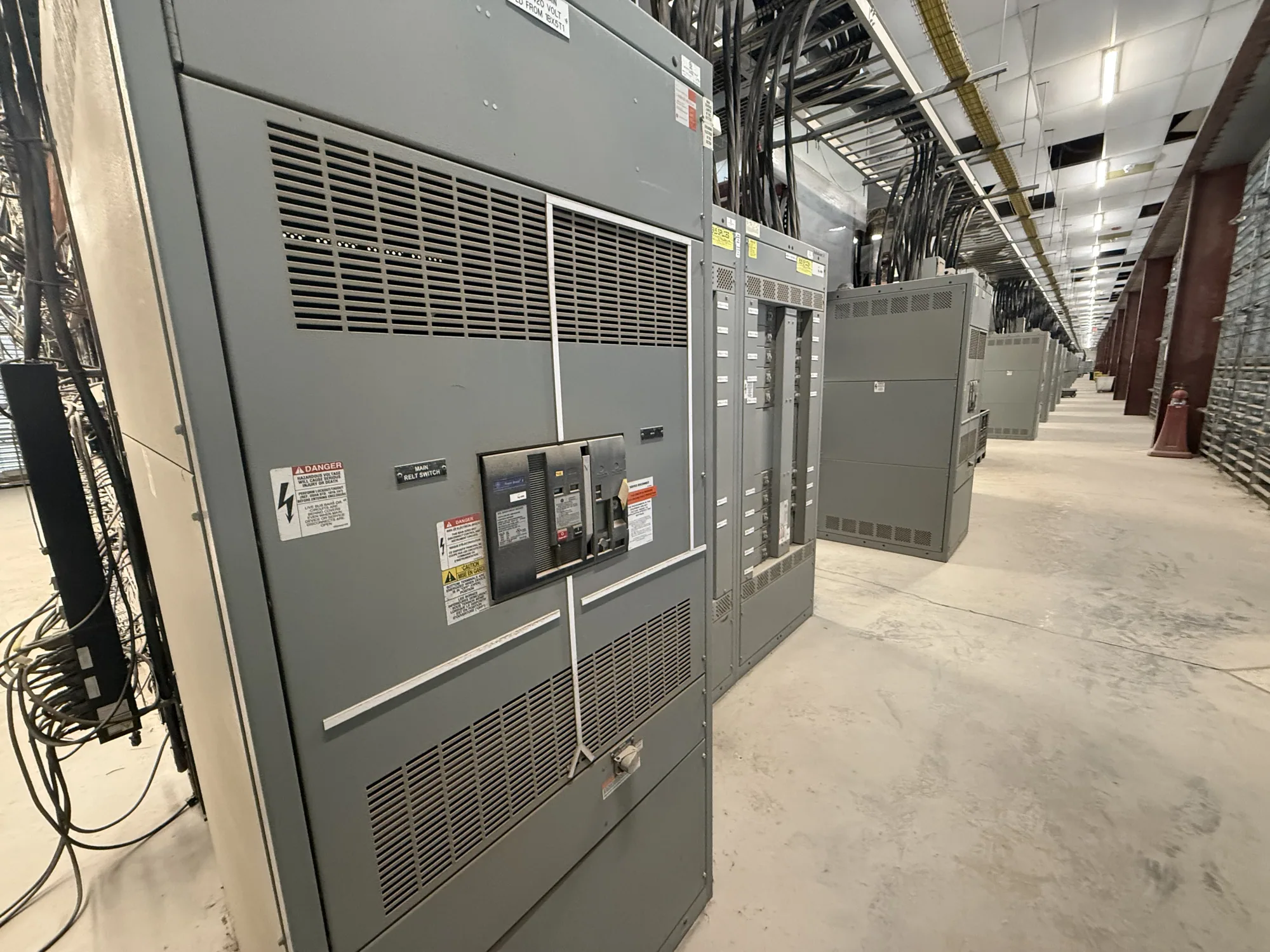
Start with the project, not a standard lineup
For a project in Rock Hill, begin by documenting what the electrical distribution system must do, rather than selecting equipment from a generic description. A commercial building, campus expansion, or industrial facility may each have different service arrangements, load profiles, operating priorities, and space limitations. Treat these as planning scenarios—not assumptions about a particular site—and have the responsible electrical engineer establish the project requirements.
South Carolina Switchgear Builders manufactures new equipment to specification and ships nationwide. Buyers can discuss a project from Rock Hill without assuming a local office or facility. Early coordination helps clarify whether the requested equipment is a low-voltage switchboard, medium-voltage switchgear, or another defined assembly, and which project documents are needed before a design and quotation can be evaluated.
Define the service interface
Describe how the equipment connects to the utility service and the rest of the distribution system. Provide the available one-line diagram, service voltage and phase information, conductor or bus connection expectations, incoming-source arrangement, and any required metering or protective-device provisions. The serving utility and project engineer should confirm interface requirements; do not rely on a generic configuration to settle utility-specific details.
Also identify the loads and operating relationships the lineup must support. Explain whether the scope includes feeders, ties, multiple sources, or provisions for future circuits, and distinguish firm requirements from options. Future capacity has physical and electrical consequences: spare spaces, bus provisions, and reserved footprint may affect equipment size and cost. Ask the design team to state which provisions are necessary now and which are simply being considered.
Resolve ratings from project data
Available fault current is site-specific and must be established by the responsible engineer using the applicable system information. The equipment’s interrupting capacity and assembly short-circuit withstand or current ratings must be coordinated with that analysis and the protective-device arrangement. Provide the required values and their basis in the RFQ, or identify them as open items for engineering review. Do not assume one rating fits every service or facility.
Specify the equipment voltage class clearly. A 480 V class assembly is low voltage; 5 kV and 15 kV class equipment are medium voltage, and these categories are not interchangeable. Identify the intended application and ask the project engineer to confirm the required ratings, construction, and standards for the specific design. UL 891 applies only to eligible low-voltage switchboards; applicability and listing of the proposed assembly must be confirmed rather than presumed.
Choose switchboards where they fit
For a hypothetical commercial campus project, a low-voltage switchboard may be appropriate for distributing power to building-level panels or major loads, depending on the service design. Compare that option with the project’s actual distribution architecture, required devices, feeder count, metering needs, available space, and maintenance approach. A product category alone does not determine whether an assembly meets a particular project’s electrical or operational requirements.
Discuss how the lineup will be accessed and installed. Confirm room dimensions, door and aisle clearances, cable entry direction, routing space, floor or housekeeping-pad details, and any restrictions on moving equipment through the building. These questions can reveal conflicts before manufacture. If a future addition is anticipated, ask the engineer whether an extendable arrangement or reserved space is practical, and define how future work would interface with the initial design.
Plan delivery and receiving early
Receiving constraints deserve attention alongside electrical design. Share the site’s delivery address, receiving hours, unloading equipment and capacity, access route, door or loading-dock dimensions, and any limits on package size or delivery vehicle. Confirm who can receive and inspect the shipment, where it can be staged, and how it will be protected before installation. Do not assume a delivery date or handling method until the order and logistics are reviewed.
Equipment dimensions and shipping arrangements depend on the approved configuration. Coordinate the planned delivery sequence with the general contractor, electrical contractor, and facility representative so the route and installation area are ready. Discuss packaging, shipment splitting, and access limitations during quotation, especially where a project has restricted staging or a tight construction schedule. Availability and lead times depend on the order and must be confirmed for the actual specification.
Prepare a useful request for quotation
A focused RFQ should include the one-line diagram, equipment schedule, project voltage class, required ratings, protective-device and feeder information, utility-interface notes, and applicable project specifications. Add dimensions or room plans, cable entry expectations, environmental conditions, preferred options, and any required documentation. Identify the project location as Rock Hill, South Carolina, and state the requested delivery window as a planning target—not a guaranteed date.
Mark uncertainties plainly. Ask which design details require confirmation, what information is needed to evaluate the proposed assembly, and whether requested listing or testing provisions apply to that configuration. South Carolina Switchgear Builders can review requirements for new, custom-to-specification equipment; actual availability, delivery timing, ratings, listing, testing, and standards must be confirmed against the order and design. A complete RFQ gives both parties a clearer basis for resolving open points before commitment.
Coordinate the handoff to installation
Before approving the equipment submittal, compare it with the project’s latest drawings and confirm that connection points, lineup arrangement, access, and receiving plans remain consistent. Assign responsibility for resolving engineering comments and communicating revisions so the approved configuration matches the installation documents. Confirm the expected shipment and receiving details with the manufacturer as the project advances; do not treat preliminary schedules as a delivery guarantee.
Installation, testing, and maintenance should be performed by qualified personnel under applicable safety procedures. With the service interface, electrical ratings, physical constraints, and procurement details addressed together, Rock Hill project teams can request equipment against a defined scope rather than an incomplete location-based description. That approach supports a more useful quotation and a coordinated path from design review through receiving and installation.