Planning around a changing facility
For a Spartanburg-area facility, a switchgear purchase may support a production expansion, a new distribution area, or replacement of equipment as part of a broader electrical project. These are planning scenarios, not assumptions about a particular site. Begin with the project’s intended operating conditions: what loads are being added, what distribution equipment remains, and whether construction or commissioning will happen in stages.
South Carolina Switchgear Builders manufactures new switchgear and switchboards to specification, with nationwide shipping. The right equipment depends on the one-line diagram, system conditions, and the project engineer’s requirements—not the city name alone. Confirm the service area and shipping arrangements for the actual destination, and establish early which parties are responsible for system studies, installation, field connections, and commissioning.
Map motor loads and feeder coordination
Motor loads can influence feeder and protective-device selection because starting and operating conditions differ from a simple steady load. Provide motor schedules where available, including motor sizes, starting methods, expected simultaneous operation, and the loads considered critical. Ask the responsible engineer to confirm how feeder protection and upstream coordination should be addressed for the actual system. Do not assume a device choice based on motor horsepower alone.
For staged production changes, identify which loads will be present in each phase and how the distribution arrangement is expected to evolve. The engineer can assess whether the planned configuration supports those phases and whether future provisions are needed. Clarify how shutdown windows, temporary operating arrangements, and construction sequencing affect the equipment scope. These details help prevent a quote from describing a configuration that fits only the final phase but not the intended project sequence.
Confirm ratings for actual site conditions
Specify the required voltage class and system information rather than relying on a generic description such as “industrial switchgear.” A 480 V class assembly is low voltage; 5 kV and 15 kV class equipment are medium voltage. The project engineer should define the applicable system voltage and required equipment characteristics. Also provide available fault-current information and other study results when available, so the proposed design can be reviewed against the project basis.
Normal load current is only one part of selection. Bus and device current ratings, enclosure and installation conditions, ambient temperature, and any applicable derating considerations must be checked for the particular design and location. Ask which ratings and operating assumptions the proposal uses, and have the responsible engineer verify that they align with the plans. If the project requires a specific listing, test documentation, or standard, state it in the RFQ and confirm applicability for the offered assembly.
Consider motor control centers where appropriate
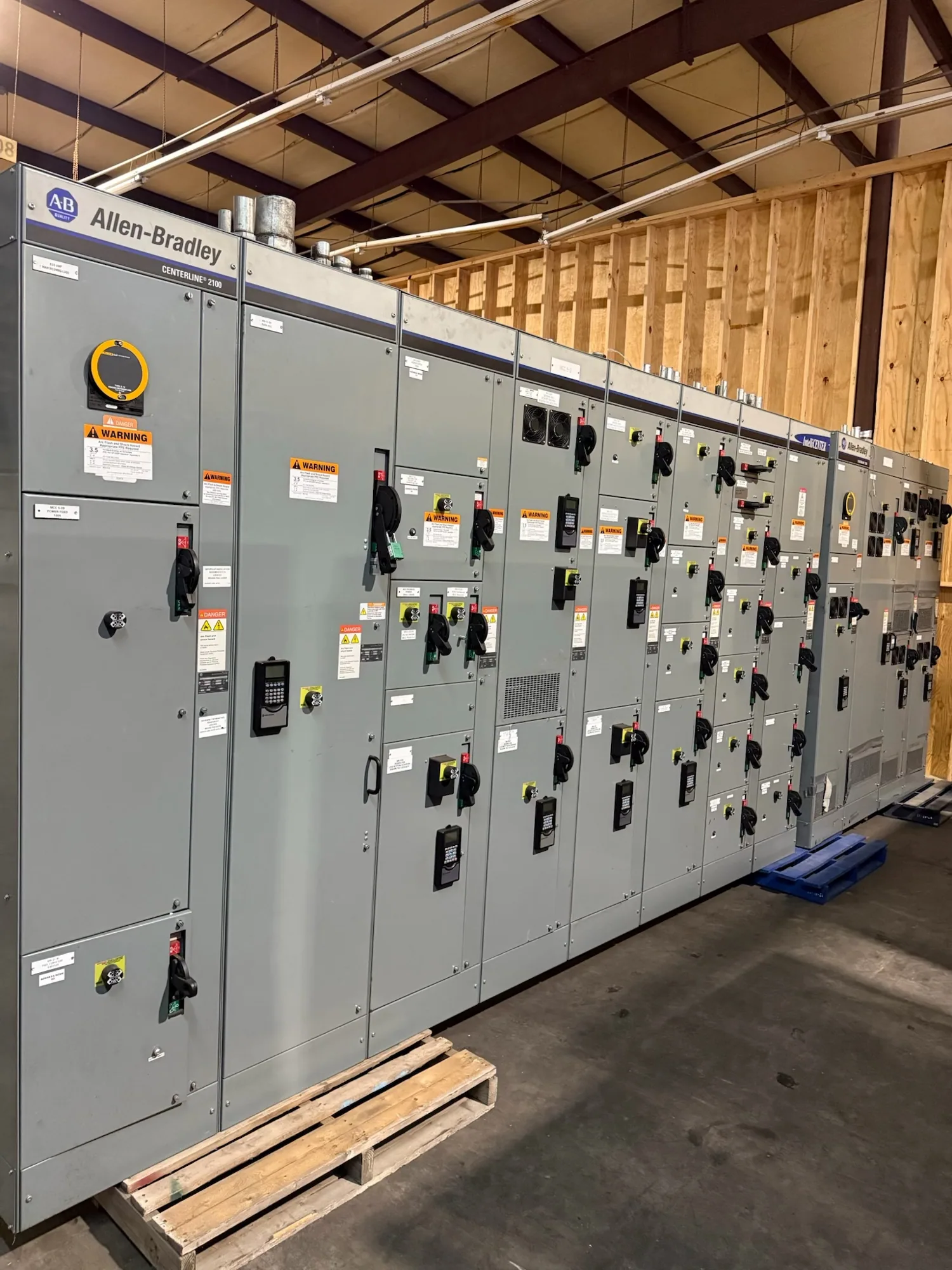
In a hypothetical automotive manufacturing project, an engineering team might compare a motor control center with separately arranged switchgear and motor feeders. The choice depends on the equipment’s intended function, motor grouping, control requirements, available space, and how operators or maintenance teams are expected to access and isolate equipment. A motor control center may suit a defined group of motor circuits, but it does not replace every distribution function or automatically fit every production layout.
Compare the complete scope rather than product labels. Confirm which circuits belong in the assembly, what control or protection components are specified, and how the proposed arrangement relates to upstream and downstream equipment. Review access, cable entry, enclosure requirements, and provisions for later changes with the project team. If both motor control centers and switchgear are under consideration, send the same load and system basis for each option so the tradeoffs can be evaluated fairly.
Prepare a complete equipment request
A useful RFQ includes the one-line diagram, voltage class, phase and frequency, available fault-current data, load schedules, and the required ratings and enclosure details. Include the installation environment, cable-entry preferences, dimensions or space constraints, and any project specifications that apply. Identify required drawings, submittals, testing documentation, or listing requirements for confirmation. Mark unresolved items clearly instead of letting assumptions become hidden design inputs.
For a project with staged construction, provide the sequence, target delivery windows, and any required drawing-review milestones. State the ship-to location, receiving limitations, and who will coordinate unloading and site access. Availability and lead time depend on the final configuration and order details; confirm actual schedule and delivery arrangements with the manufacturer. Distinguish requested dates from approved commitments, and allow time for engineering review and purchaser approval of submittals.
Coordinate the decision through delivery
Before placing an order, have the responsible engineer review the proposed ratings, device and feeder arrangement, interfaces, and stated assumptions. Resolve discrepancies between the equipment proposal, one-line diagram, and project specifications in writing. Confirm what is included and excluded, how changes are handled after approval, and what documentation accompanies the supplied equipment. Listing, testing, and standards applicability must be verified for the specific design rather than presumed from a product category.
South Carolina Switchgear Builders supplies new, US-built equipment with all-American components and custom configurations; actual availability and lead times should be confirmed for the order. A clear project package gives the manufacturer a sound basis to develop a proposal and helps the buyer compare options against the facility’s real requirements. Keep the engineer, purchasing team, contractor, and receiving contact aligned through submittal approval and delivery planning so the selected equipment fits both the electrical design and the project sequence.