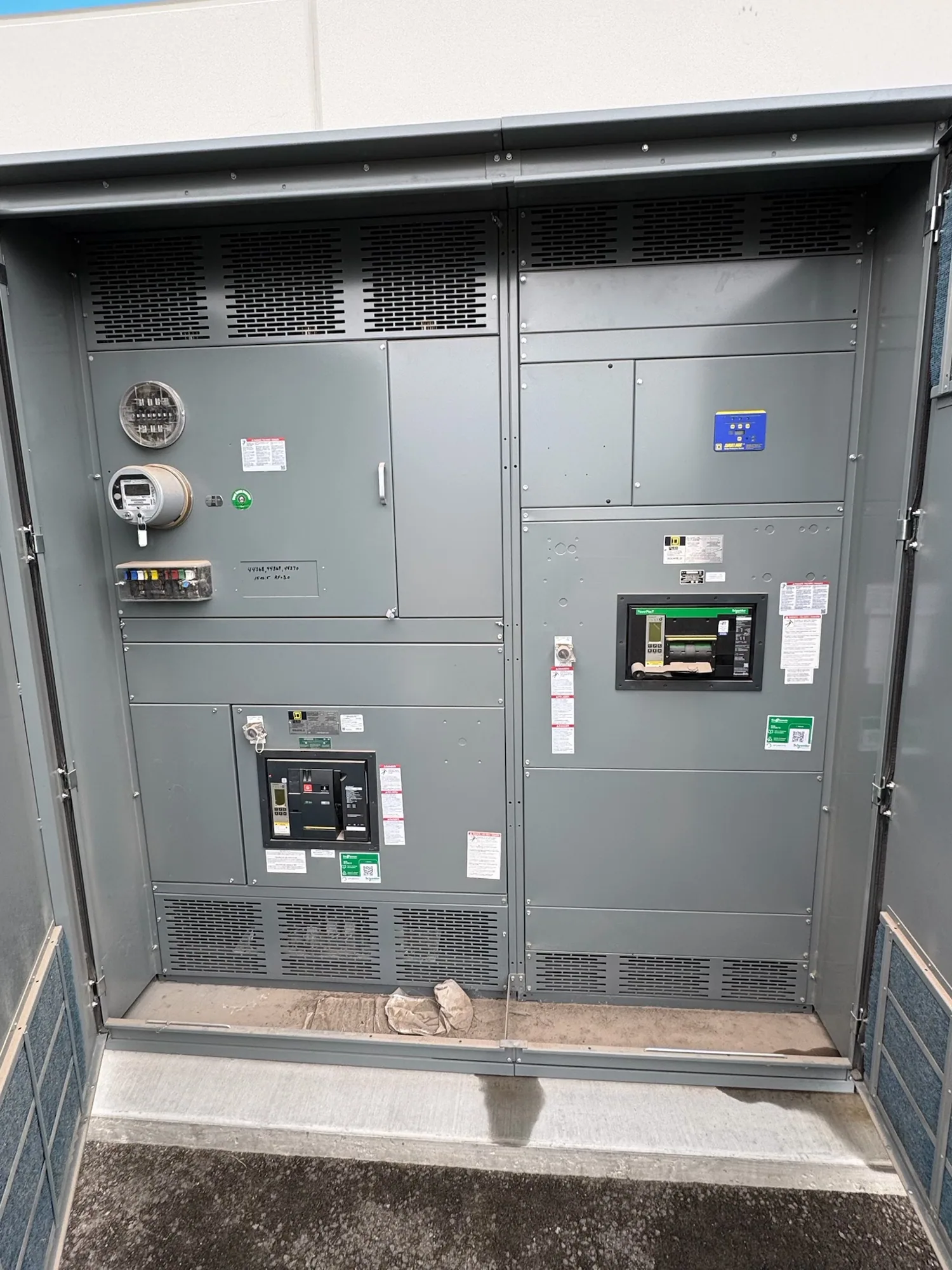
What a 15 kV designation tells you
In a project specification, 15 kV generally identifies the medium-voltage class or nominal system voltage under discussion. It does not, by itself, tell a buyer the equipment’s maximum rated voltage, insulation withstand capability, interrupting duty, or suitability for a particular installation. Those values must be stated and checked in the applicable equipment documentation.
Keep nominal system voltage and equipment voltage rating distinct when reviewing a one-line diagram, utility service information, and switchgear submittals. A 15 kV label is a useful starting point, not a complete electrical specification. Ask the responsible engineer to confirm the actual system voltage and required equipment class, including any applicable maximum-voltage and insulation requirements.
Confirm the incoming service arrangement
Before selecting new switchgear, establish how power reaches the equipment. The source may have a particular phase and conductor arrangement, grounding method, and number of incoming circuits; the switchgear must be designed around the project’s actual interface. Do not infer these details from a 15 kV designation or assume that a typical utility arrangement applies to every site.
Provide the available utility or source data, service point, expected operating configuration, and the project one-line diagram. Identify whether the design includes incoming and outgoing feeders, a bus tie, metering, or other specified compartments. The responsible project engineer should resolve missing or conflicting information with the utility and design team before the equipment configuration is finalized.
Insulation and equipment class are related, not interchangeable
Medium-voltage equipment insulation is selected to suit the system and the specified equipment class. The project documents should identify applicable insulation levels and other required electrical characteristics rather than relying on “15 kV” as shorthand for every withstand or clearance requirement. Confirm that the proposed design documentation addresses the specified operating conditions and interfaces.
Consider how the equipment will connect to cables, terminations, bus, and other components. The cable type, termination approach, entry direction, and physical arrangement can affect compartment design and coordination. These are project-specific choices: provide the required information and have the responsible engineer and manufacturer confirm that the proposed configuration matches the actual installation. Do not assume a particular insulation technology or construction is automatically appropriate.
Protection depends on the system and fault duty
Voltage class does not establish short-circuit capability. The available fault current, system grounding, source characteristics, and protective-device scheme all inform equipment selection and coordination. Request the applicable fault-current data and protection requirements from the responsible utility or engineer, and make sure the specification identifies the required equipment ratings and the basis for them.
Protection design should account for the complete system, not just a switchgear label. Relay functions, instrument transformers, trip interfaces, and coordination with upstream and downstream devices may need to be specified. Confirm who supplies and configures each element, what information is needed for coordination studies, and which settings or study deliverables are part of the project. Qualified engineering personnel should determine the protection design.
Resolve assumptions before comparing proposals
Two proposals described as 15 kV equipment may not be equivalent if they differ in voltage ratings, insulation requirements, fault-duty capability, arrangement, or specified accessories. Compare the actual data sheets and exceptions against the project requirements. A lower-level label match is not proof that the equipment satisfies the project’s electrical or physical needs.
Document assumptions explicitly. For example, if utility data or final fault-current values are not yet available, identify them as outstanding inputs and state how they affect final selection. Confirm the applicable equipment standard and whether any project-specific listing or testing requirements apply to the proposed design. Such applicability must be verified for the specific assembly; it should not be inferred from the voltage class alone.
Information to include in a specification request
For a useful manufacturer review, provide the one-line diagram, nominal system voltage, phase and conductor configuration, grounding method, source and utility requirements, available fault current, and applicable equipment standard. Include the requested equipment ratings, insulation criteria, protection scheme, metering needs, cable entry and termination details, physical arrangement, and any environmental or installation constraints relevant to the design.
Identify project milestones, submittal expectations, shipping destination, and who will approve technical clarifications. South Carolina Switchgear Builders manufactures new switchgear and switchboards to specification, with US-built equipment, all-American components, and nationwide shipping. Availability and actual lead times depend on the order and must be confirmed. A complete request lets the project team resolve open engineering questions before configuration and delivery details are agreed.
Verify suitability with project documents
Use 15 kV as a prompt to verify the system and equipment requirements, not as a stand-alone purchase specification. The responsible engineer should check that the proposed medium-voltage equipment class, ratings, insulation, fault duty, protection interfaces, and utility connection align with the approved design and source information.
Once those inputs are consistent, the manufacturer can review the requested configuration and identify details requiring confirmation. Keep final decisions tied to the project’s documented electrical conditions and equipment submittals. That process helps buyers specify new 15 kV-class equipment accurately while avoiding assumptions that a nominal voltage designation cannot support.