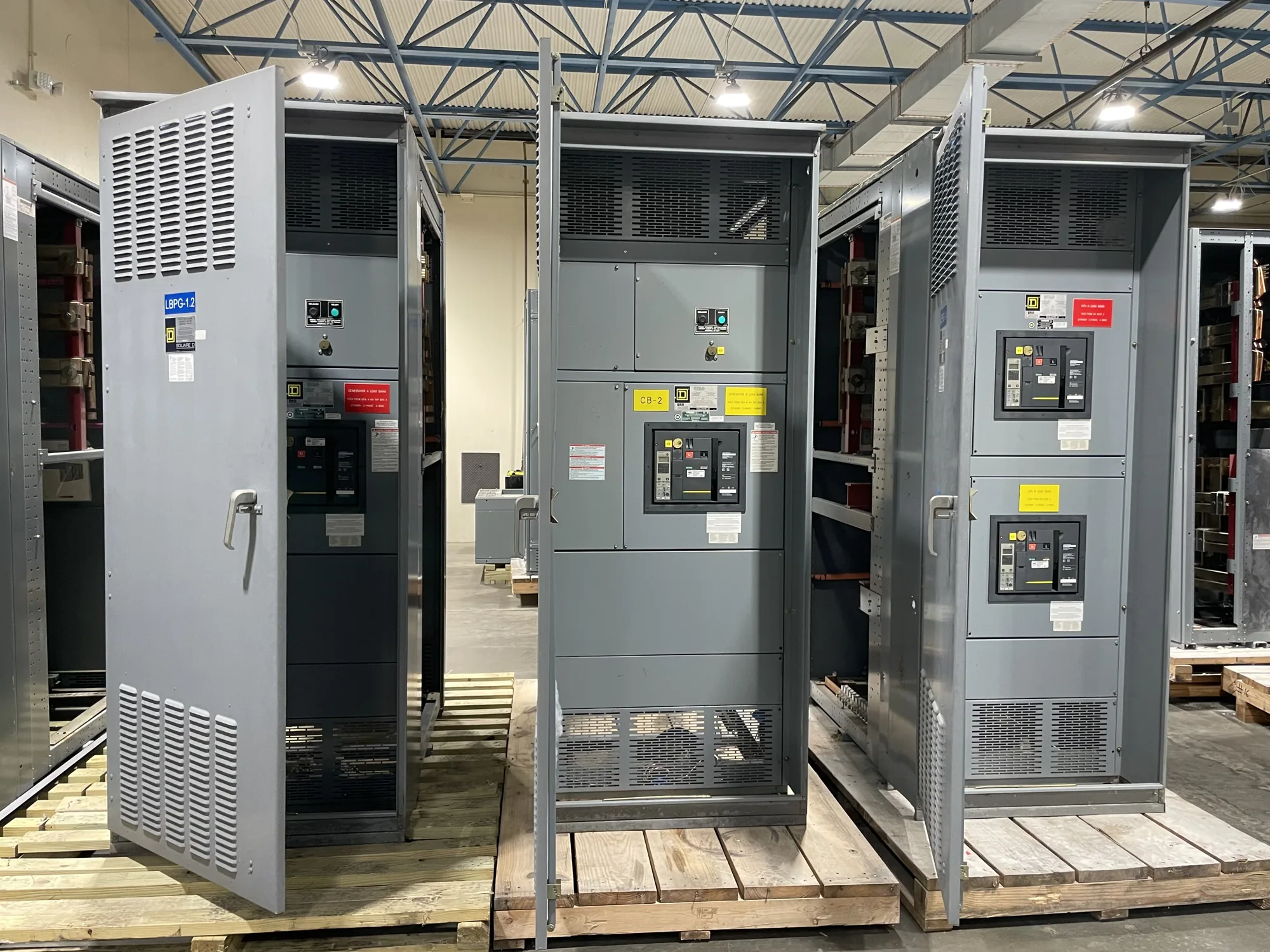
Start with what “27 kV” describes
In a switchgear specification, 27 kV can refer to the nominal voltage of a power system or to a voltage pair stated on project documents. It does not, by itself, establish the equipment’s rated maximum voltage or prove that a particular assembly is suitable. First identify where the value appears: utility information, a one-line diagram, an equipment schedule, or a design note. Those sources may use voltage labels differently.
Ask the responsible project engineer or source-data provider to confirm the system’s nominal voltage, the voltage between phases, and any relevant voltage to ground. Then compare those values with the equipment nameplate data and manufacturer documentation for the proposed design. A manufacturer can build new equipment to specification, but the specified system and the equipment rating must be checked together rather than inferred from a “27 kV” label.
Nominal voltage and maximum equipment voltage
Nominal voltage is a system designation used to identify the network. Maximum equipment voltage is a rated value associated with the equipment’s ability to operate at specified system conditions. These terms are related, but they are not interchangeable. A nominal 27 kV system should not automatically be assigned an equipment rating based only on its nominal number, nor should a higher number on an equipment schedule be accepted without engineering review.
Request the manufacturer’s voltage-class information for the exact proposed equipment and confirm its intended application with the project engineer. The review should consider the system’s normal operating voltage and the conditions the equipment must withstand, as documented for the project. Do not assume that a familiar class name, catalog description, or voltage printed in a preliminary schedule settles suitability. The approved design documents and equipment documentation need to agree.
Insulation coordination and system conditions
Voltage selection also connects to insulation coordination: the insulation capability of equipment must be considered against the electrical stresses expected in the system. The project engineer should determine the applicable insulation requirements from the system design and relevant project criteria. Switching events, grounding arrangement and other system conditions may matter to that engineering assessment. A nominal voltage alone is not enough to specify insulation performance or determine that the equipment is appropriate.
Provide the intended installation environment and any project-specific insulation requirements for review. Ask the equipment supplier to identify the applicable values and documentation for the proposed configuration, and have the engineer verify them against the system study and design basis. Avoid filling gaps with assumed ratings or treating a general product description as confirmation. Requirements, ratings and standards must be verified for the actual equipment and project.
Confirm phase, conductors and grounding
Voltage data needs context. State the phase arrangement, number of wires, conductor configuration and grounding method shown in the project design. Clarify whether the listed voltage is line-to-line, line-to-ground, or another stated system value. These details affect how the equipment is applied and how its interfaces are specified. If utility documents and the one-line use different conventions, resolve the discrepancy before the purchase specification is finalized.
Also identify the source and load connections, feeder arrangement, and any transition to transformers or other equipment. These interfaces help the design team review system voltage and insulation requirements in context, rather than as an isolated number. The manufacturer needs the approved project requirements to configure new equipment; the engineer remains responsible for confirming that the selected design suits the electrical system.
Fault duty is a separate selection check
A voltage designation does not state how much fault current the switchgear must withstand or interrupt. Provide the available fault-current information and identify the study or source used to establish it. The responsible engineer should verify the applicable duty and confirm that the proposed equipment ratings and configuration meet the project requirements. Do not infer short-circuit capability from the voltage class, physical size, or a rating stated for a different assembly.
Where the available fault current is preliminary or depends on future system changes, identify that status and ask the engineer to establish the design basis. The supplier should receive the required ratings and relevant assumptions with the request for quotation. Any ratings, testing and standards applicable to the delivered assembly require confirmation against its specific design and documentation.
What to send for a specification review
A useful request includes the latest one-line diagram, the nominal system voltage and voltage pair, source or utility data, phase and conductor arrangement, grounding method, and available fault-current information. Include the project specification, installation conditions, equipment interfaces, required insulation criteria and applicable equipment standard. Flag unresolved or conflicting data instead of silently choosing one value. This gives the manufacturer a clear basis for proposing equipment to specification.
Before release, have the project engineer confirm the equipment maximum-voltage rating and insulation coordination against the actual system, then review the approved equipment documentation for consistency. Confirm the proposed configuration, applicable ratings, standards, availability and delivery schedule with the manufacturer; these depend on the specific order. With system data, engineering decisions and procurement documents aligned, the 27 kV designation can be handled as one part of a complete medium-voltage equipment specification, not as a stand-alone selection rule.