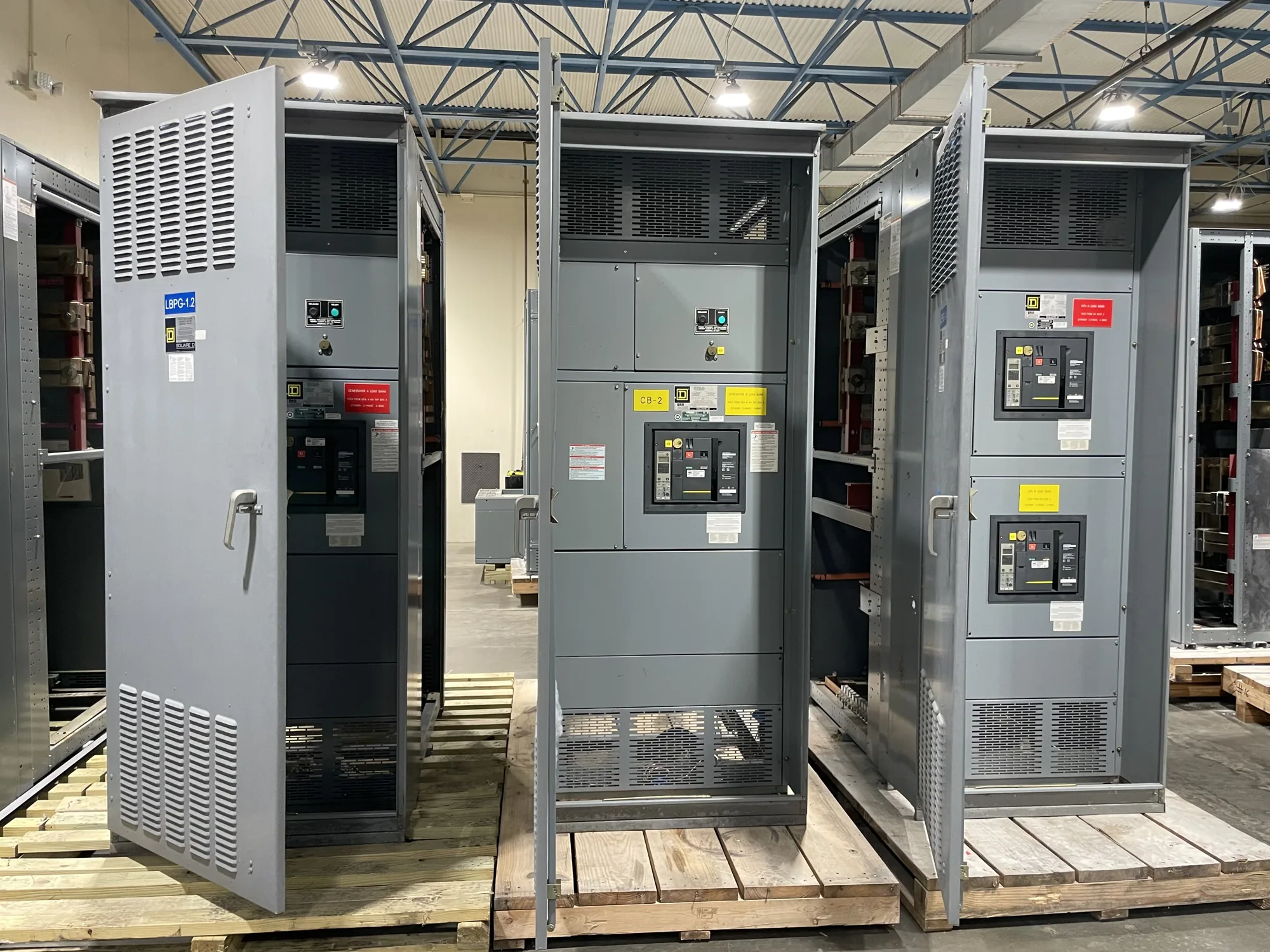
What a 1600 A rating tells you
A 1600 A designation describes a nominal continuous-current rating only when that value is supported by the specific equipment nameplate and manufacturer documentation. It does not establish how much load a project can serve in every installation, nor does it mean every connected feeder may draw 1600 A. The complete assembly, its main bus, protective devices, operating conditions and approved configuration all matter.
For a buyer, the useful question is whether the documented rating fits the project’s calculated demand and anticipated operating profile. A responsible project engineer should confirm how applicable codes and the equipment’s instructions affect selection. South Carolina Switchgear Builders manufactures new switchgear to specification; the proposed configuration, ratings and availability must be confirmed against the actual project requirements.
Connect calculated demand to the assembly
Consider a hypothetical facility planning staged expansion. The engineer might evaluate a 1600 A switchgear assembly after reviewing existing loads, expected additions, operating schedules and the project’s load calculation. That review—not the number alone—establishes whether the proposed rating is appropriate. The estimate should distinguish present demand from later phases and identify assumptions that could change, such as equipment additions or revised operating patterns.
Then verify how the 1600 A value applies to the main bus and incoming arrangement in the specific design. Individual feeder breakers or other devices have their own ratings and functions; they are not automatically rated at 1600 A because the assembly carries that designation. The equipment schedule should identify the intended main and branch devices, their duties and any required coordination with the connected distribution system.
Short-circuit conditions and project environment
Continuous-current selection is separate from short-circuit capability. The available fault current at the installation point and the required equipment short-circuit ratings need review using project-specific information. A 1600 A label does not establish an adequate fault rating. Provide the applicable study or design criteria so the responsible engineer and manufacturer can check the requested assembly and protective devices against the actual conditions.
Also document the installation environment and arrangement. Ambient conditions, enclosure requirements, indoor or outdoor placement, service access and connections to upstream and downstream equipment can affect the proposed configuration. Confirm those details with the project engineer and the manufacturer rather than assuming a standard arrangement will suit the site. Ratings, applicable standards, listing and testing are specific to the equipment design and must be verified for the offered assembly.
Plan staged growth without overbuilding blindly
A 1600 A continuous-current decision can support a growth plan, but future capacity is not created by the main rating alone. Map the loads expected in each phase and determine which feeders are needed at startup, which may be added later, and what space or provisions should be specified now. Spare positions can support flexibility only if the assembly design accommodates the intended devices and connections.
Ask the engineer to distinguish a spare physical position from a complete future-ready feeder provision. A later addition may require device compatibility, bus and termination review, fault-duty confirmation, space, access and coordination with the installation schedule. Clearly stating which future loads are firm and which are possibilities helps the design team balance usable flexibility against unnecessary equipment or an unsuitable initial configuration.
Choose equipment class and configuration carefully
Identify the system voltage and the product category before requesting a quote. A 480 V class assembly is low-voltage equipment; 5 kV and 15 kV class equipment are medium-voltage switchgear. Do not infer the voltage class from a 1600 A current value. The project one-line diagram, service arrangement and engineer’s requirements should guide selection of the appropriate equipment and interfaces.
Where a low-voltage switchboard is under consideration, confirm the intended product type and whether a particular assembly listing or standard applies to its design. UL 891 applies to eligible low-voltage switchboards, but applicability and assembly listing must be verified for the specific design. It should not be assumed for every switchboard, or applied to medium-voltage switchgear. Request manufacturer documentation for the actual proposed equipment.
Information to provide for a useful review
Prepare a request package with the load schedule and calculation, system voltage, one-line diagram, main and feeder requirements, installation conditions, and available short-circuit study. Include planned expansion phases, desired spare positions, incoming and outgoing connection details, and any project-specific documentation or compliance criteria. Flag unresolved assumptions so the design review can identify what still needs confirmation.
South Carolina Switchgear Builders builds new switchgear in the United States using all-American components and ships nationwide. Configurations are custom to specification; availability and actual lead times depend on the order and must be confirmed. Submit the project information for review, then have the qualified project engineer confirm equipment selection and ratings before procurement. Installation, testing and maintenance belong to qualified personnel following applicable safety procedures.