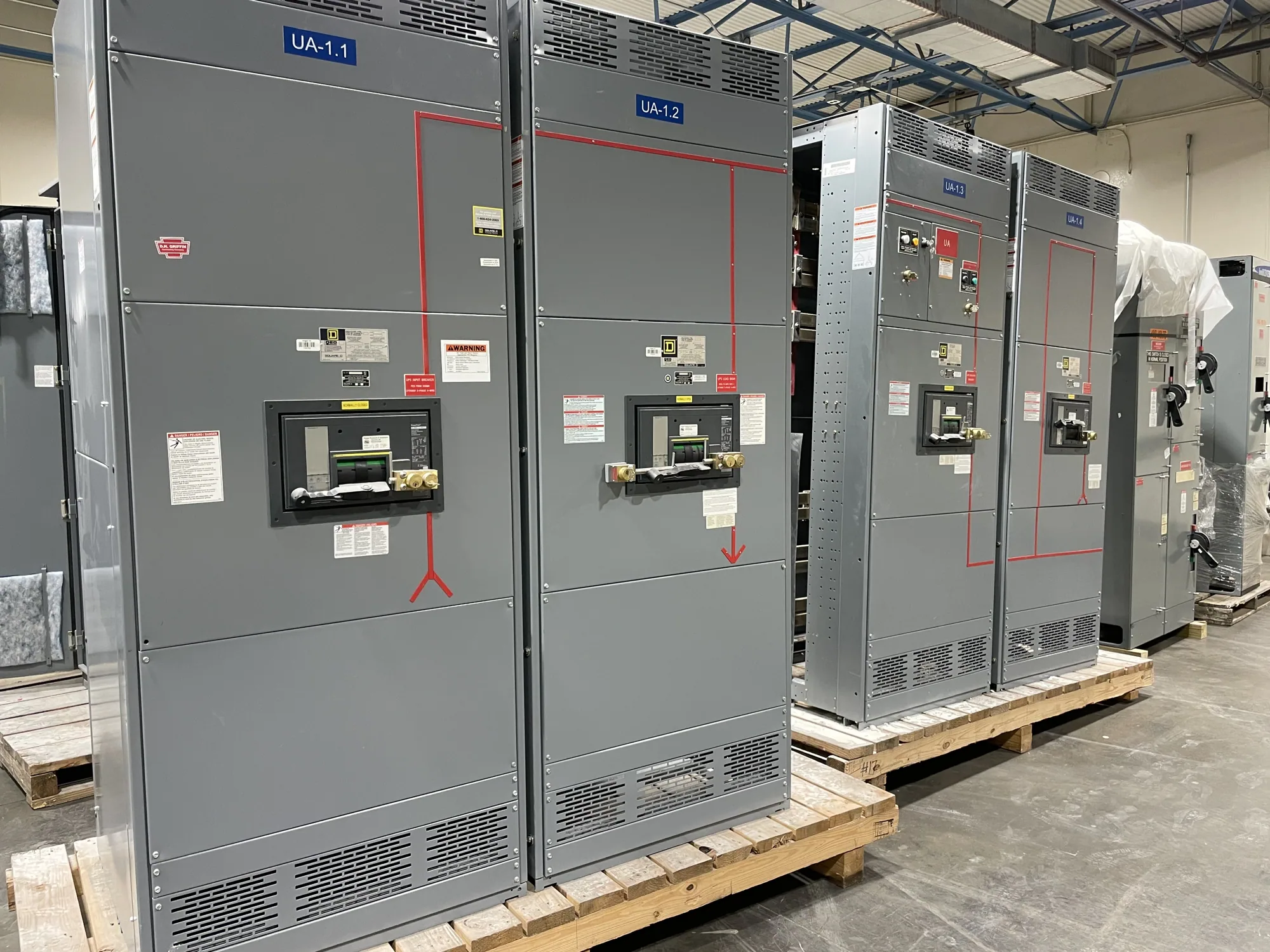
Read 277/480 V as system context
A 277/480 V designation commonly describes a three-phase wye system, with 480 V between phases and 277 V from phase to neutral. That relationship can serve projects combining three-phase distribution with line-to-neutral loads, including lighting where the design calls for it. The designation is useful context, but it is not a complete switchgear specification or proof that a particular assembly suits the project.
Keep the system’s nominal voltage distinct from an equipment maximum-voltage rating. The equipment documentation identifies the voltage class and other limits applicable to a specific design. A buyer should not infer those limits from the 277/480 V label alone. The responsible engineer needs to confirm the source and proposed equipment are compatible, including any applicable operating conditions and project requirements.
Confirm the source and load interfaces
Start with the actual source arrangement shown in the project one-line diagram. Confirm whether the system is three-phase, four-wire wye, and identify the neutral and grounding approach. Do not assume that every 480 V system provides a 277 V line-to-neutral connection, or that every 277/480 V installation uses the same grounding or neutral treatment. Those details affect how loads connect and how protective and distribution equipment is specified.
Next, document the intended outgoing circuits and load mix. Lighting loads may use 277 V line-to-neutral connections where appropriate, while motors and other three-phase loads may connect phase-to-phase at the voltage specified by their equipment. Confirm phase, conductor count, neutral requirements, and any load-specific needs with the electrical designer. The switchgear lineup, bus, and protective devices must be selected around the actual design—not a broad assumption about typical building service.
Voltage is only one part of suitability
Equipment selection also depends on available fault current and the short-circuit duty required at the installation point. Provide the source data and system configuration used for the fault-current study, and have the project engineer verify the required ratings against the proposed equipment documentation. Do not treat a voltage designation as evidence of adequate fault withstand, interrupting capability, or coordination with upstream and downstream devices.
Ask the manufacturer to confirm the proposed design’s voltage class, insulation details, ratings, and other specified characteristics against the project documents. Applicable standards and listing status are assembly- and design-specific and should be verified rather than presumed. The same caution applies to environmental conditions, enclosure requirements, metering, controls, and protective-device features: include them in the specification if they matter to the installation.
Account for trade-offs and design boundaries
A shared 277/480 V distribution system can support different load interfaces, but combining them does not remove the need for clear circuit and neutral planning. The project team should check load balance, expected operating conditions, and how lighting circuits are distributed across phases. Confirm the neutral sizing and treatment required by the actual loads and design; do not assume a particular conductor arrangement based solely on nominal voltage.
Likewise, do not equate the system designation with a universal switchgear product configuration. The required lineup, bus arrangement, incoming connection, outgoing devices, metering, and protective functions depend on the one-line and project scope. If the source is not a 277/480 V wye system, or if a different voltage relationship is intended, the specification must say so clearly. The engineer should resolve discrepancies before equipment is ordered.
Information to provide for a specification review
For a useful review, send the current one-line diagram, source or utility data available to the project, nominal voltage, phase, wire configuration, grounding method, and available fault current at the equipment location. Include load schedules or a clear description of lighting, motor, and other distribution needs. Identify upstream protective devices and any coordination or metering requirements that affect the lineup.
Also provide the applicable project standard, environmental and enclosure requirements, connection preferences, and required documentation. Mark assumptions and open questions instead of treating missing data as settled. If the design includes a transformer, generator, or other alternate source, identify its relationship to the switchgear and whether transfer equipment or other interfaces are part of the scope. The responsible engineer can then confirm which details govern.
Coordinate the equipment around the approved design
South Carolina Switchgear Builders manufactures new switchgear and switchboards to specification, with US-built equipment, all-American components, and nationwide shipping. Configuration, availability, actual lead time, delivery timing, applicable ratings, testing, and listing must be confirmed for the specific order and design. Share the project requirements early so the equipment scope can be reviewed against the approved electrical documents rather than relying on the voltage label alone.
Before release, coordinate the approved drawings, connection details, protective-device requirements, and project interfaces with the engineer, manufacturer, and installation team. Resolve changes in source voltage or fault-current assumptions before they become procurement or field issues. Installation, testing, and maintenance belong to qualified personnel following applicable safety procedures. A complete specification turns 277/480 V from a shorthand label into a defined system requirement that can be checked against the equipment being proposed.